How To Spend a Long Layover in Seoul: My Recommendations
Seoul, South Korea: a place where ancient structures and traditions seamlessly blend with modern marvels and trends. Seoul is also a gateway city for many travelers embarking to-and-from Asia and has been on my bucket list for years! I was finally able to get my first taste of Seoul on a recent layover from Hanoi and am happy to say it exceeded all expectations.
With delicious food, brisk weather and iconic landmarks, allow me to take you through my layover experience and recommendations to ensure your own Seoul layover becomes an adventure to remember!
Skip to my
An Early Arrival for a Layover In Seoul
Touching down at Incheon Airport in the wee hours of a Wednesday morning in January, I was brimming with anticipation. My quick solo adventure was about to begin.
Over the next 10 hours, I’d be making it my mission to see three historic sights, get lost in a classic Seoul neighborhood, find a healthy but filling meal, enjoy the city’s cafe scene, and of course, purchase some Korean skincare.
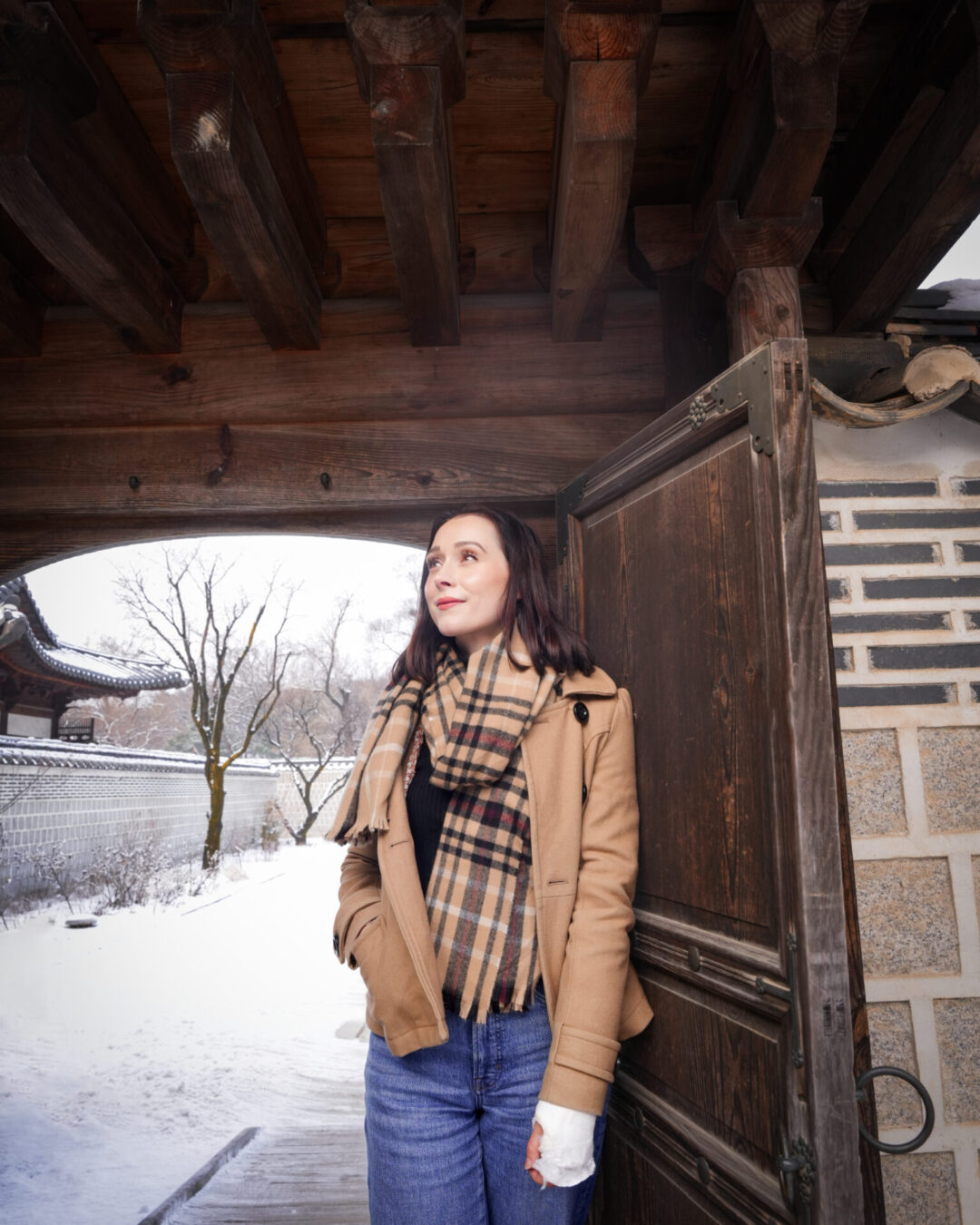
But even before all that, my first task was to use my early landing time to prepare for the weather. Ducking into a bathroom beside customs, I bundled up into my winter gear. January in snowy Seoul would be a stark contrast from humid Hanoi, where I had just been.
Incheon Airport was quiet, but beginning its daily buzz with the arrival of early morning travelers venturing into-and-out of the terminal. Having previously researched my transportation options I had to get into the city, I made my way over to the officially-marked taxis, which were both easy-to-find and without a wait.
Location:
Seoul is located about 45 minutes to 1 hour from Incheon Airport, depending on your transportation mode.
Weather:
Winter in Seoul is cold and dry, with temperatures often dipping below freezing, especially in January and February. Snowfall is common, adding a picturesque touch to the city and making it a great time for sightseeing. You’ll want to dress warmly with layers, a good coat, gloves, and a hat to stay comfortable during this time of the year.
Seoul Transportation Options from Incheon Airport:
Taxi: Door-To-Door Service
- Where: Official Taxi Lines are available outside each Terminal’s Arrival Hall. Follow the signs in English.
- Trip Length: 60-90 minutes into Seoul, depending on traffic.
- Pros: Door-To-Door Service. Private Transfer. Fixed rates based on city zones.
- Cons: More expensive.
- Secret Tip: To get back to the airport by taxi, find a nearby hotel who can help call you a cab.
AREX (Airport Railroad Express) Train:
- Where: Follow the signs within the airport to find the AREX station (signs are posted in English and Korean). Ticket vending machines and counters accept cash or card payments.
- Trip Length: 45 minutes to Seoul Station + Additional Subway Ride or Taxi, depending on your final destination.
- Pros: Door-To-Door Service.
- Cons: Can be expensive.
Airport Bus:
- Where: Ticket Counters and Vending Machines in the Arrival Halls of Each Terminal
- Trip Length: 60-90 minutes, depending on traffic and your stop.
- Pros: Inexpensive. Wi-Fi is sometimes available onboard.
- Cons: Longer Trip Length. Only stops as pre-designated routes.
Additional Information and Helpful Apps:
- KakaoT is the most widely used ride-sharing app in South Korea, and also a transportation option from the airport. However, the app requires a local Korean phone number for use, making it less ideal for long layovers.
- Subway Map: Best to have on hand if you’re planning to take the AREX Train to/from Incheon Airport and Seoul.
- Naver Map and Kakao Map: Google Maps hasn’t been able to map South Korea for ages, so you’ll need to download two local navigation apps to help you get around.
- I found Naver to be more accurate and easy-to-use of the two, but have heard accuracy and user experience varies.
Snowy Enchantment at Gyeongbokgung Palace
Secret Tip:
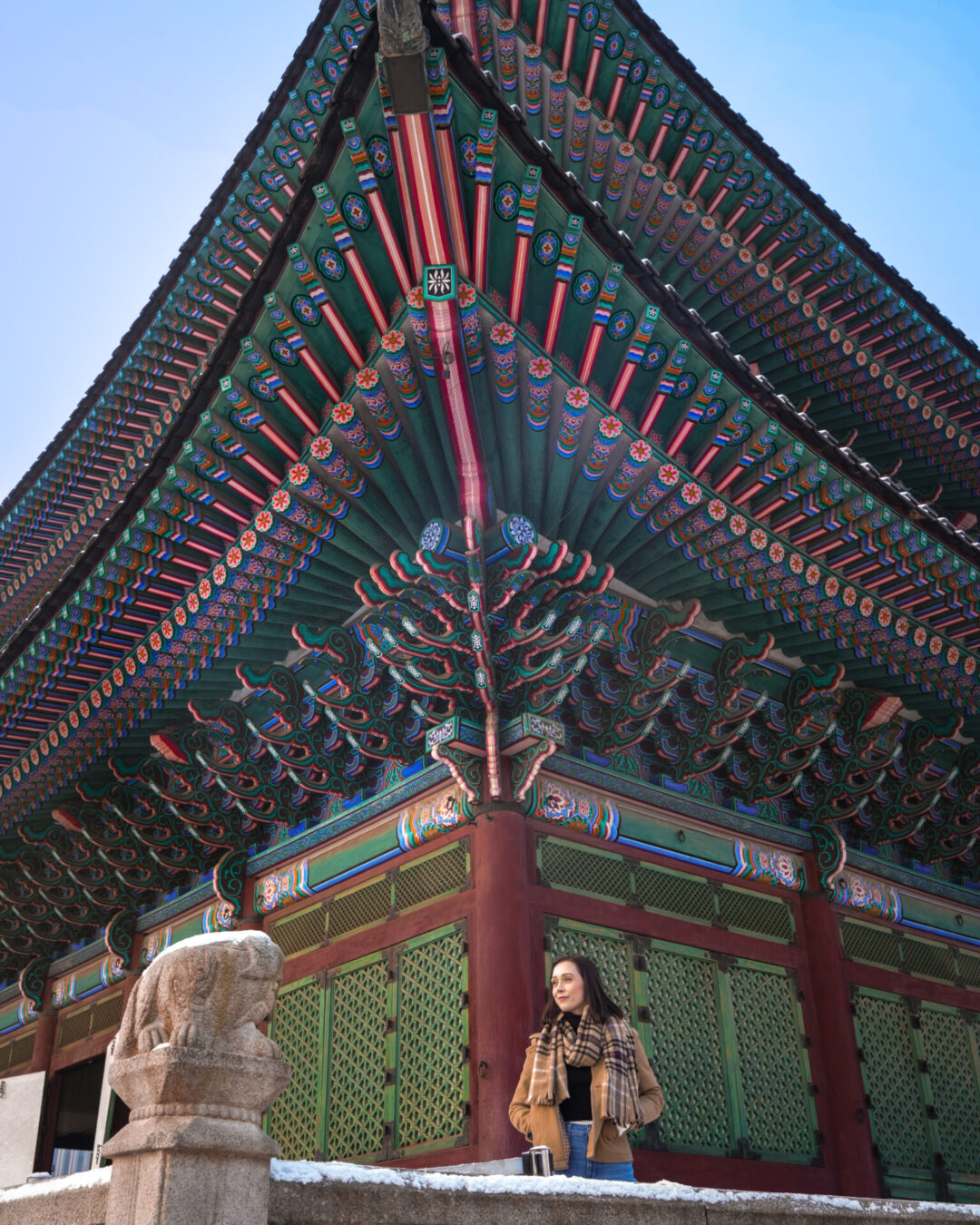
Tickets to Gyeongbokgung are generally 3,000 won/adult (~$2.50 USD)*. If you are keen on renting a hanbok during your trip to Seoul, visiting Gyeongbokgung while wearing the traditional dress can score you free admission to the palace.
The palace is open daily, except Tuesdays.
After an hour long power nap in the back of the taxi, I had made it to the heart of Seoul and was being dropped off at the first stop: Gyeongbokgung Palace.
Traveling via one of Seoul’s official taxis, my driver spoke excellent English and gave me some rough walking directions from the street drop-off to the entrance of the palace so I would waste no time.
After buying my ticket from an electronic kiosk near the front, I met up with a local guide and photographer, Josh. Given my tight schedule, I pre-booked my time with him ahead of my trip so we would be able to hit the ground running at Gyeongbokgung!
It was early on Wednesday morning and so there weren’t lots of crowds yet as we stepped inside. We started with a walk along Geunjeongjeon Hall, arguably the crown jewel of Gyeongbokgung as its the largest hall inside the complex and houses the Joseon Dynasty king’s throne! It was such a thrill to see.
After that, Josh and I explored other areas of the palace including Jagyeongjeon, Gyeonghoeru Pavilion and Heungbokjeon. Josh had previously studied in the U.S. for university so we were able to bond over a few common American college experiences as well as discuss the history of the palace in detail over the course of the adventure.
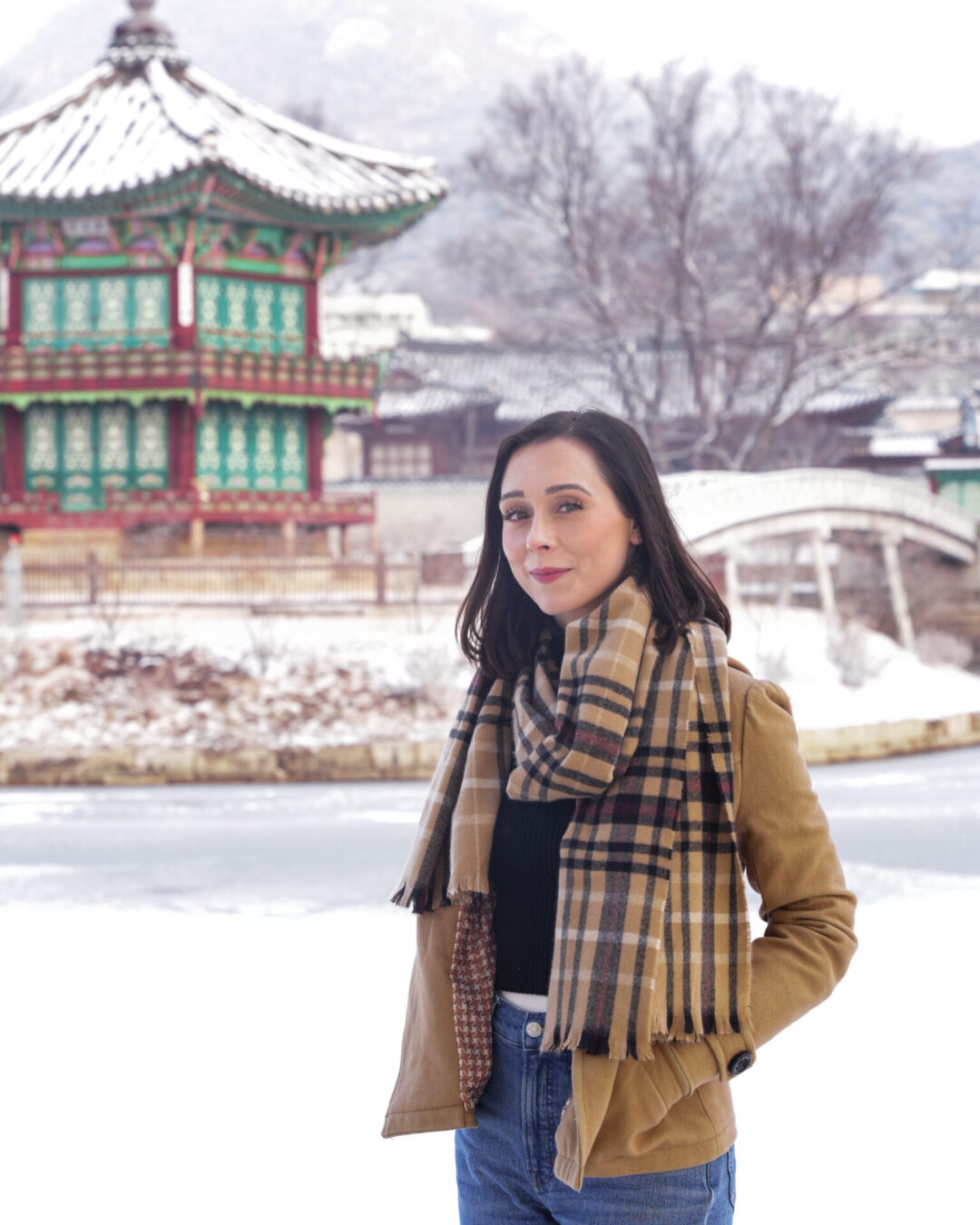
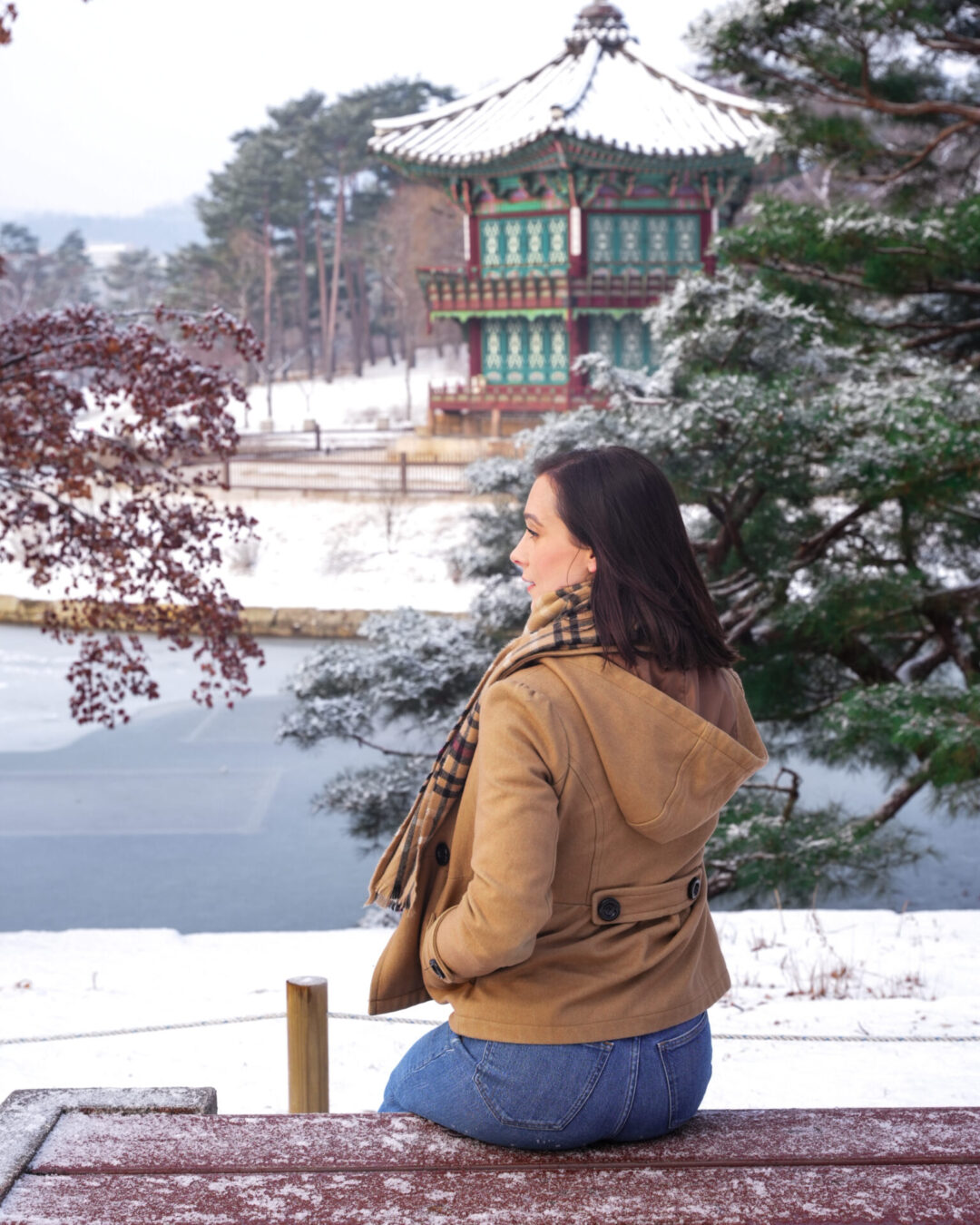
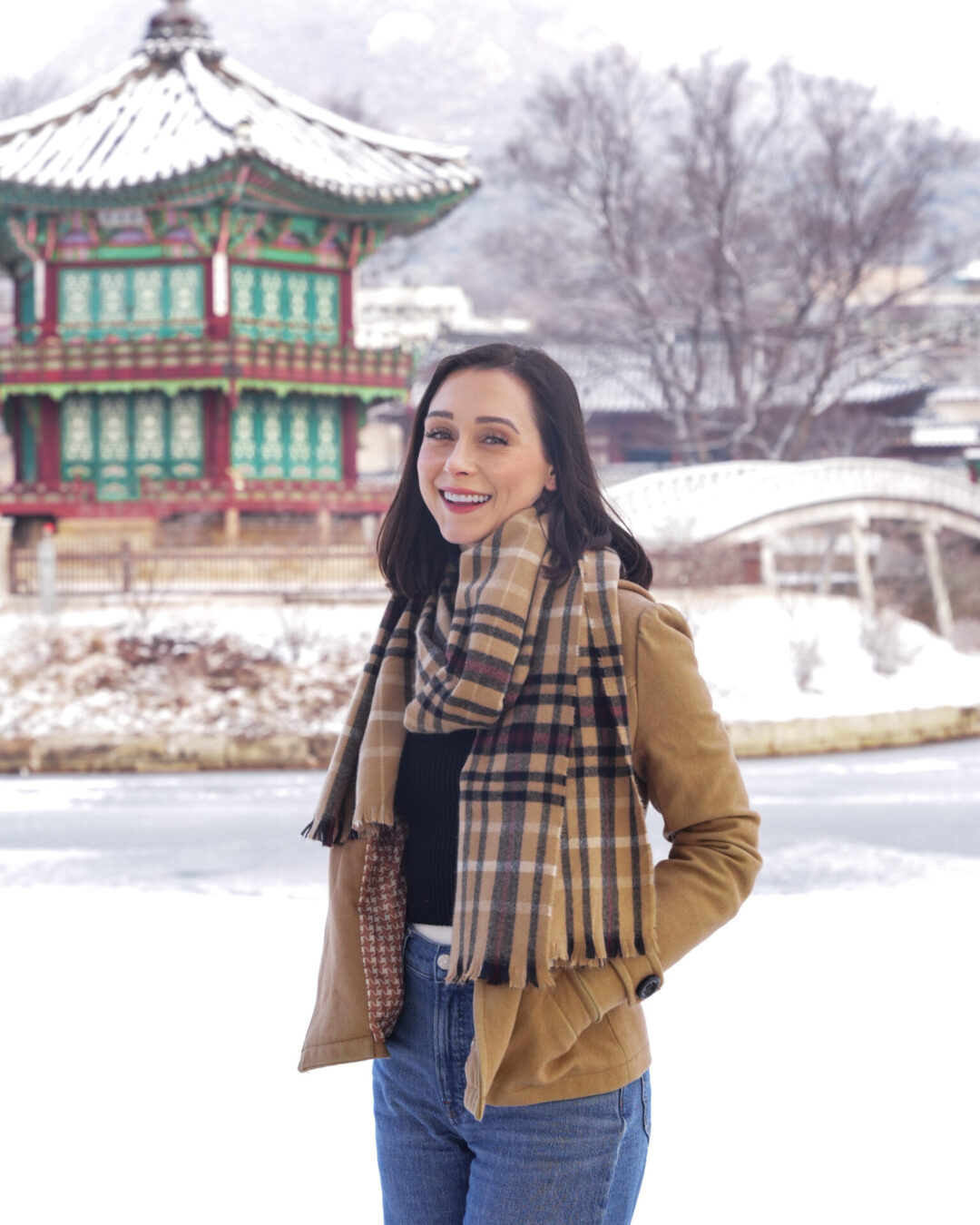
We ended of our Gyeongbokgung visit with a trip to Hyangwonjeong Pavilion and Jibokjae Hall – my absolute favorite places inside the palace! Blanketed in untouched snow, these two sections of the Palace felt forbidden and magical – like something I couldn’t even conjure up in my wildest dreams. Splashes of wine red and turquoise green paint peering out from behind a blanket of snow was a cherry on top of this mystical morning adventure.
A Walk Through Bukchon Hanok Village
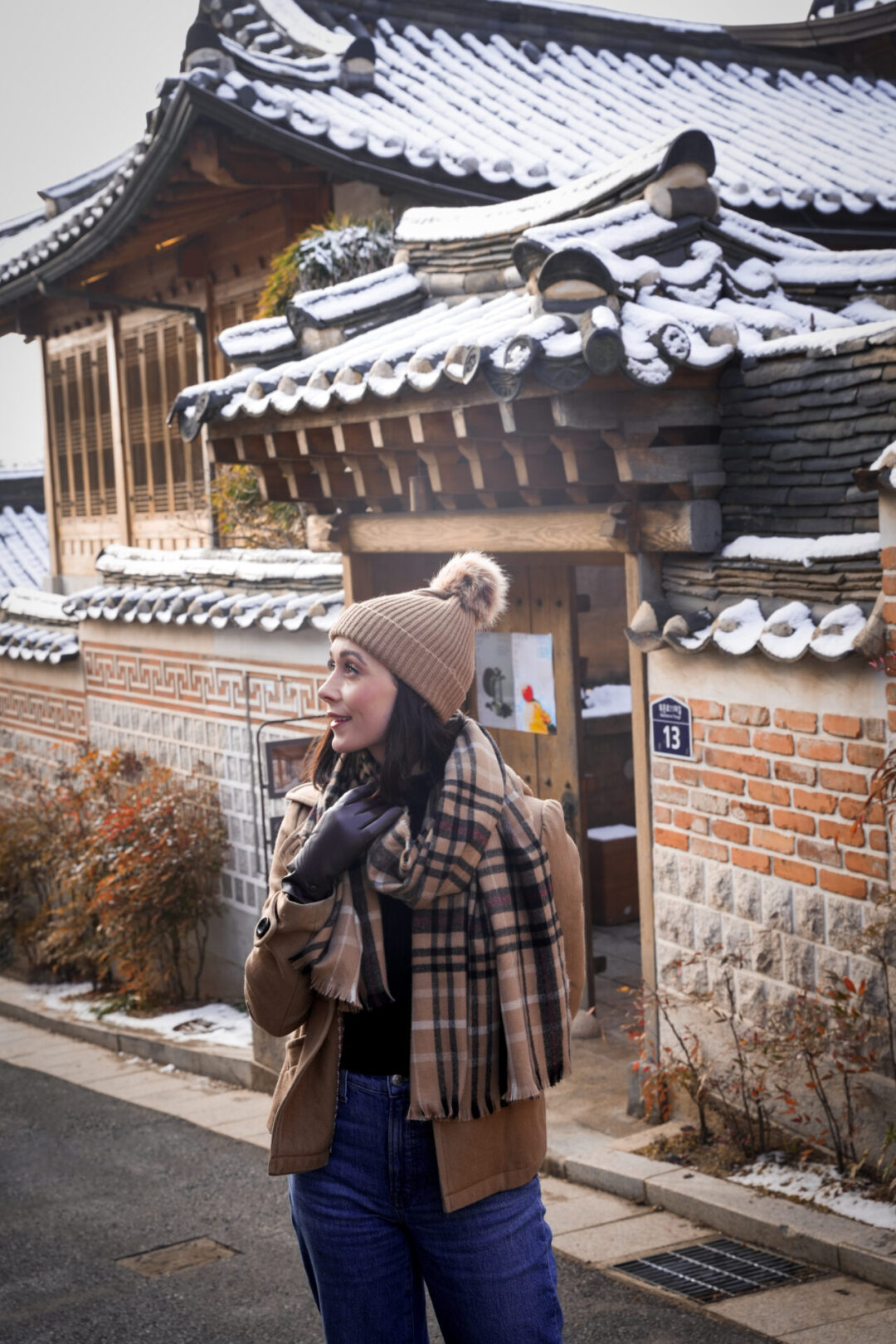
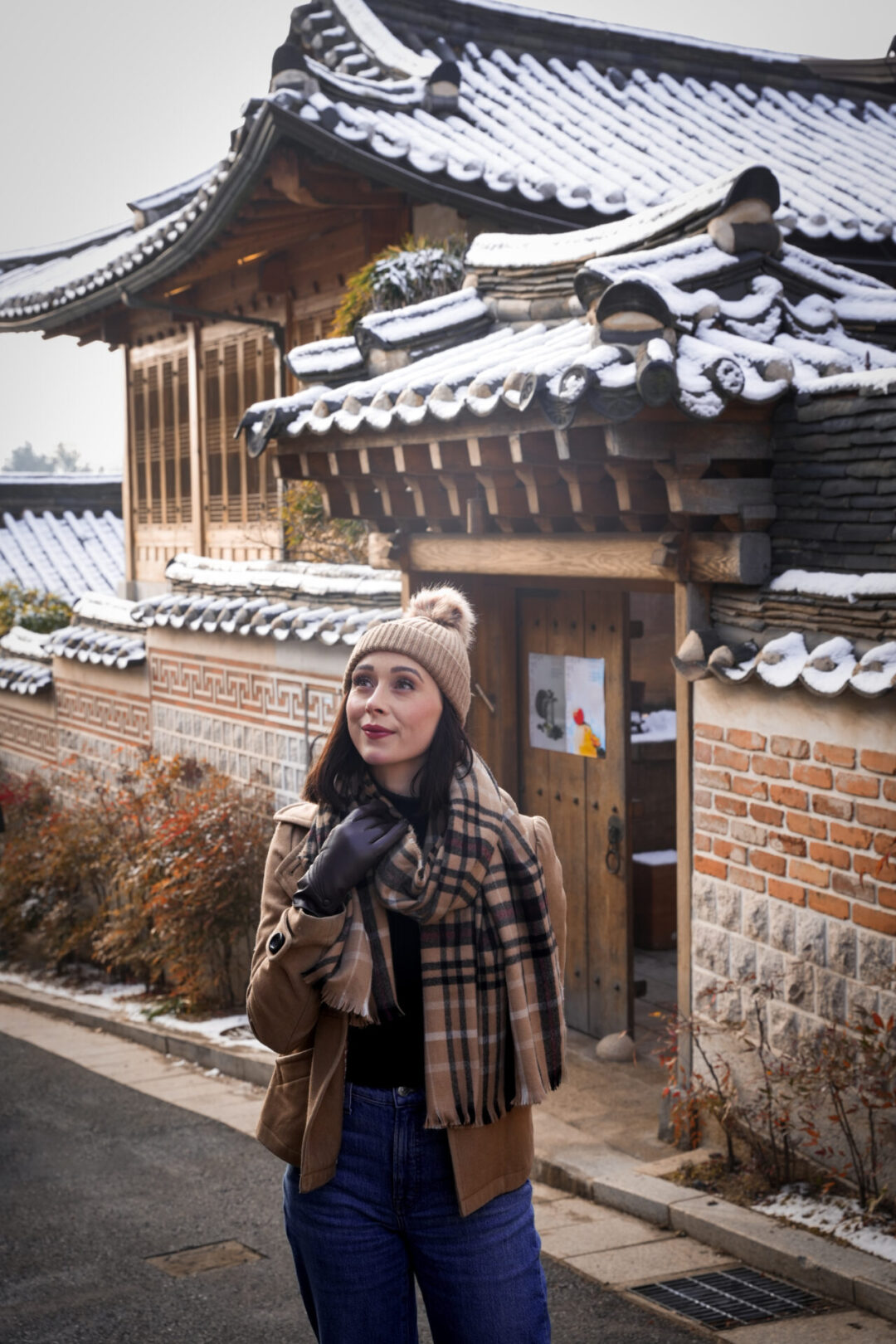
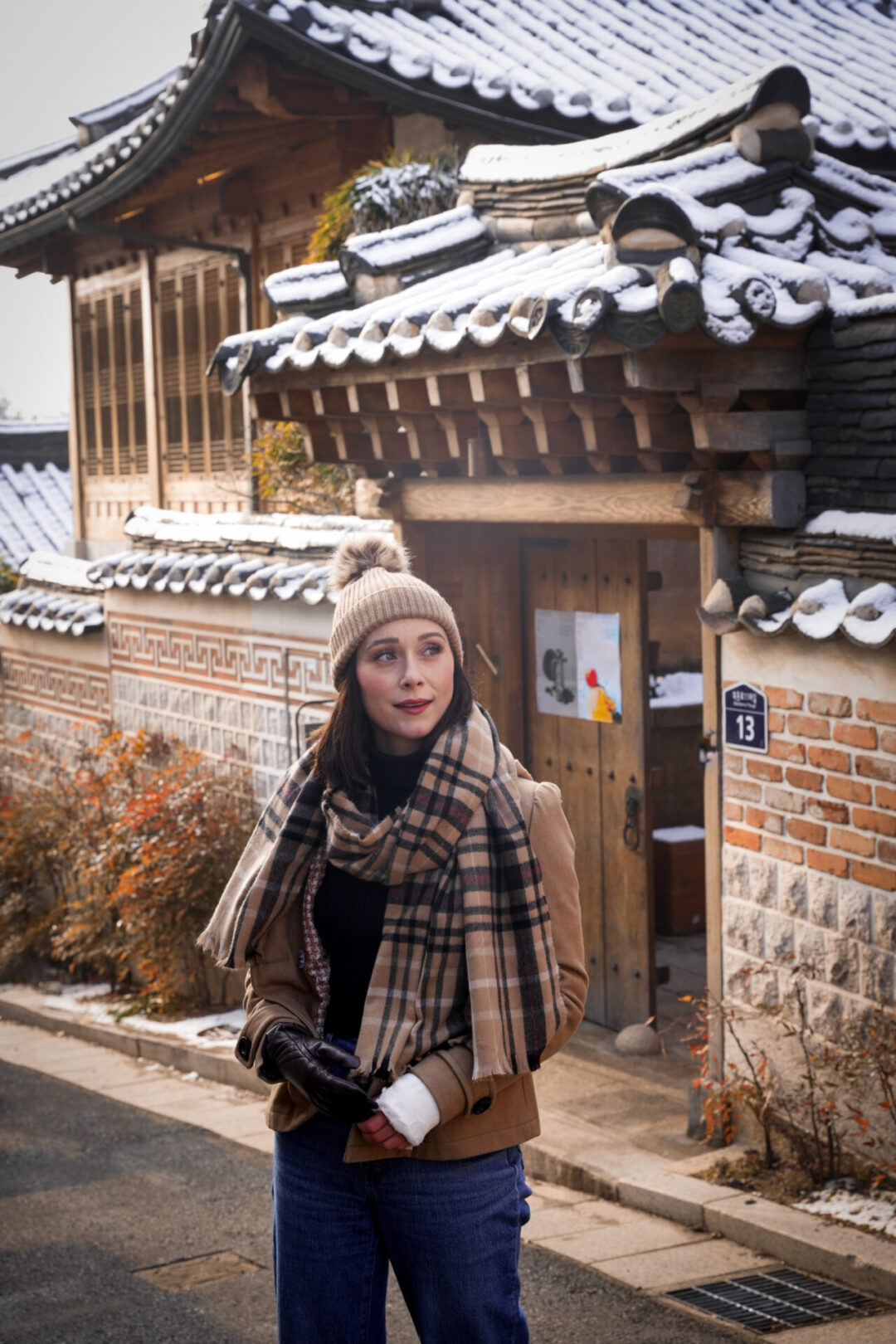
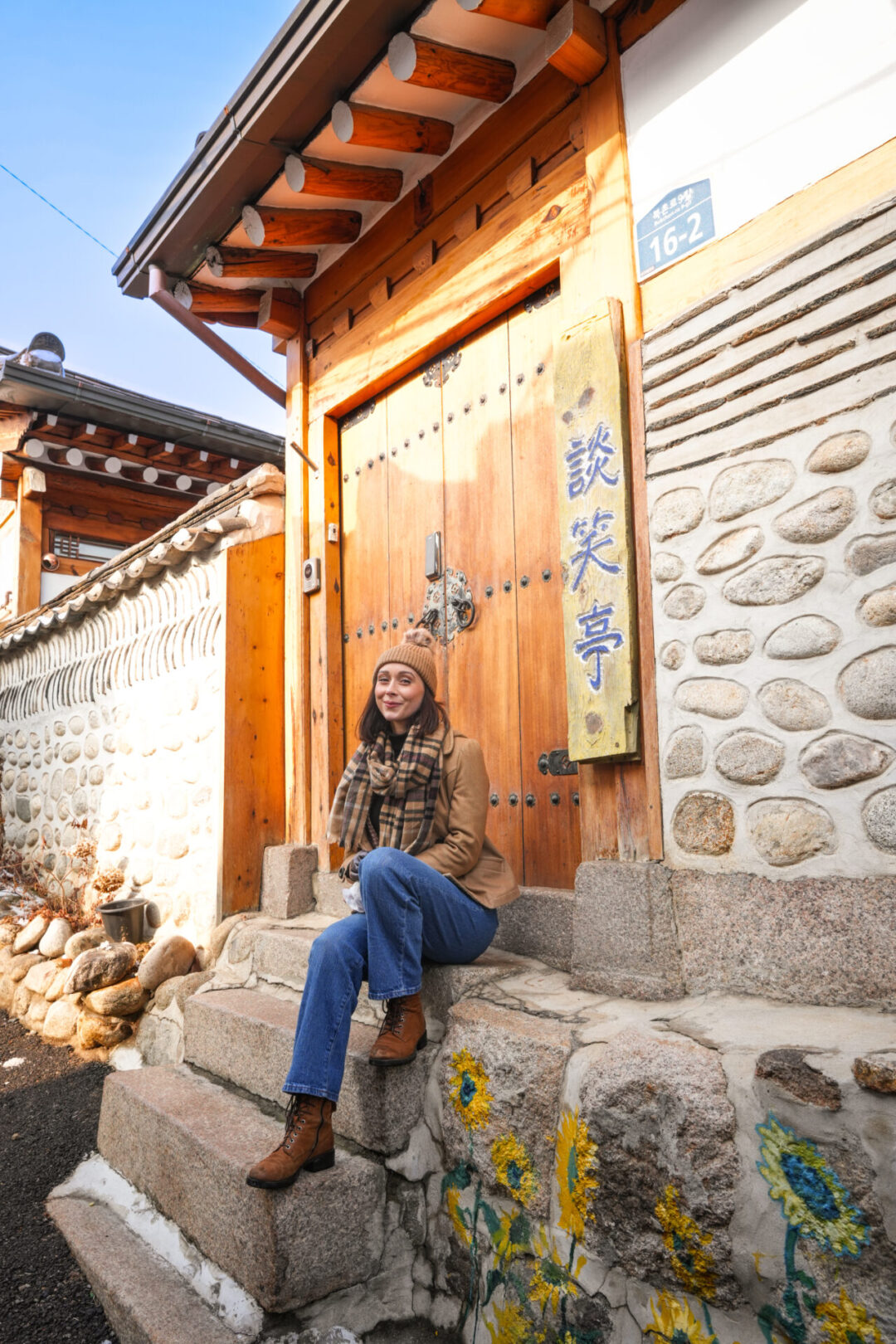
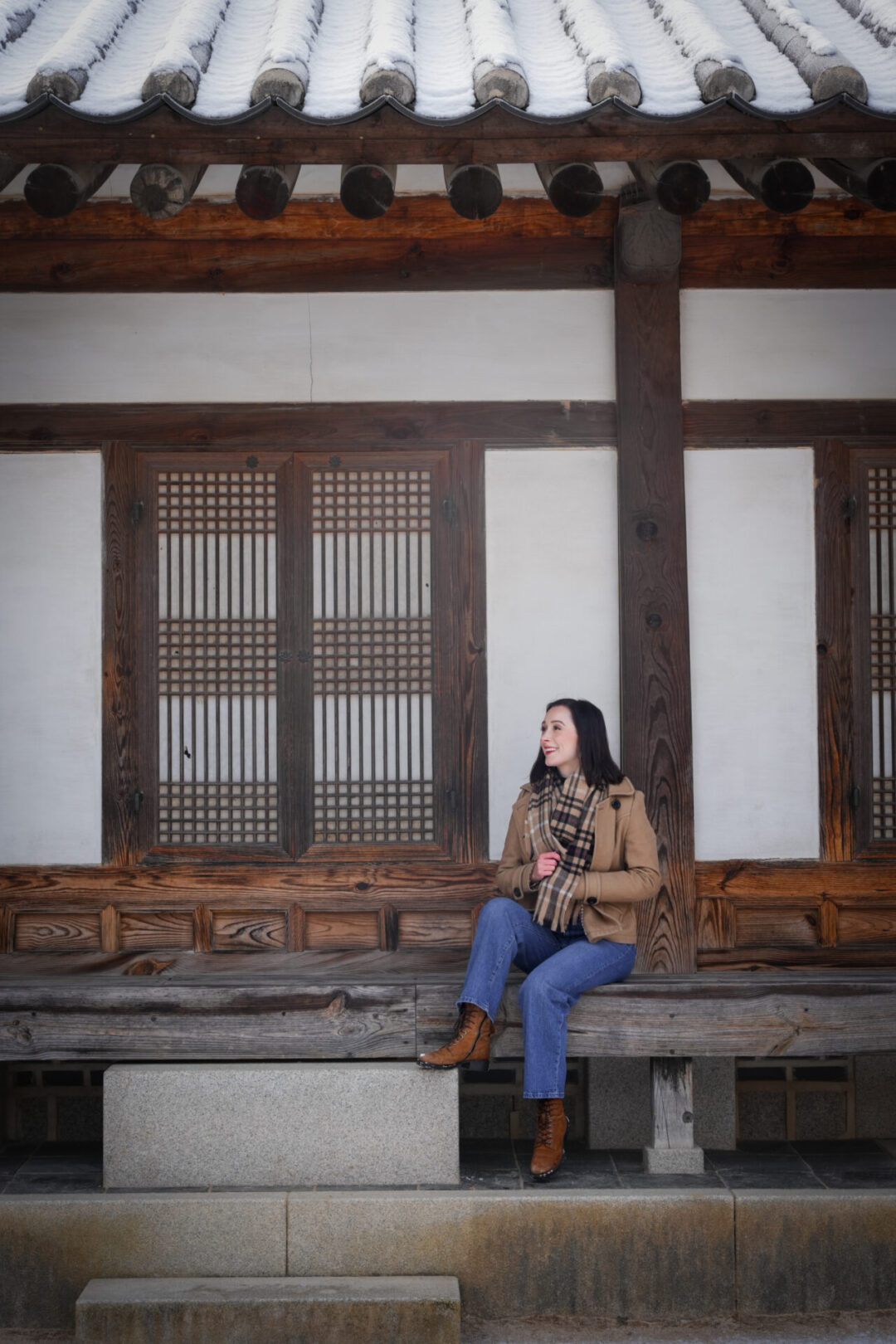
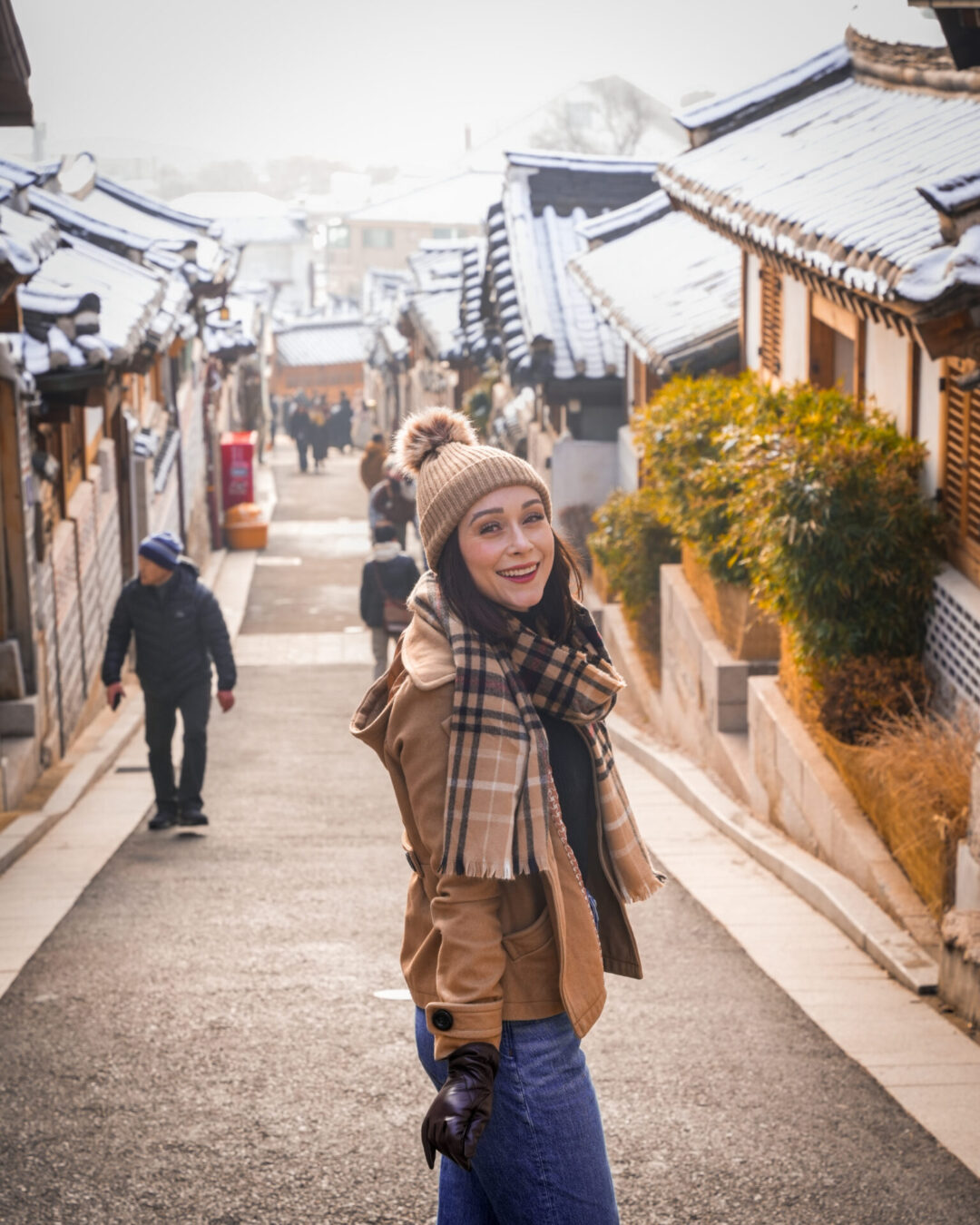
Since it was my first time visiting Seoul, I knew my next stop had to be the famous Bukchon Hanok Village, located near the Palace. Josh continued the adventure with me, braving the snowy trek up the hill toward the 900 traditional Korean houses that make up the area.
When we reached the top, the cold January air nipped at my cheeks. The sight was definitely worth the climb—traditional hanok rooftops glowing underneath the ever rising sun, blending centuries of history with the hum of modern Seoul. My fingers were numb, even with gloves on, but I lingered for a moment, taking in the serenity that contrasted the area’s growing rush.
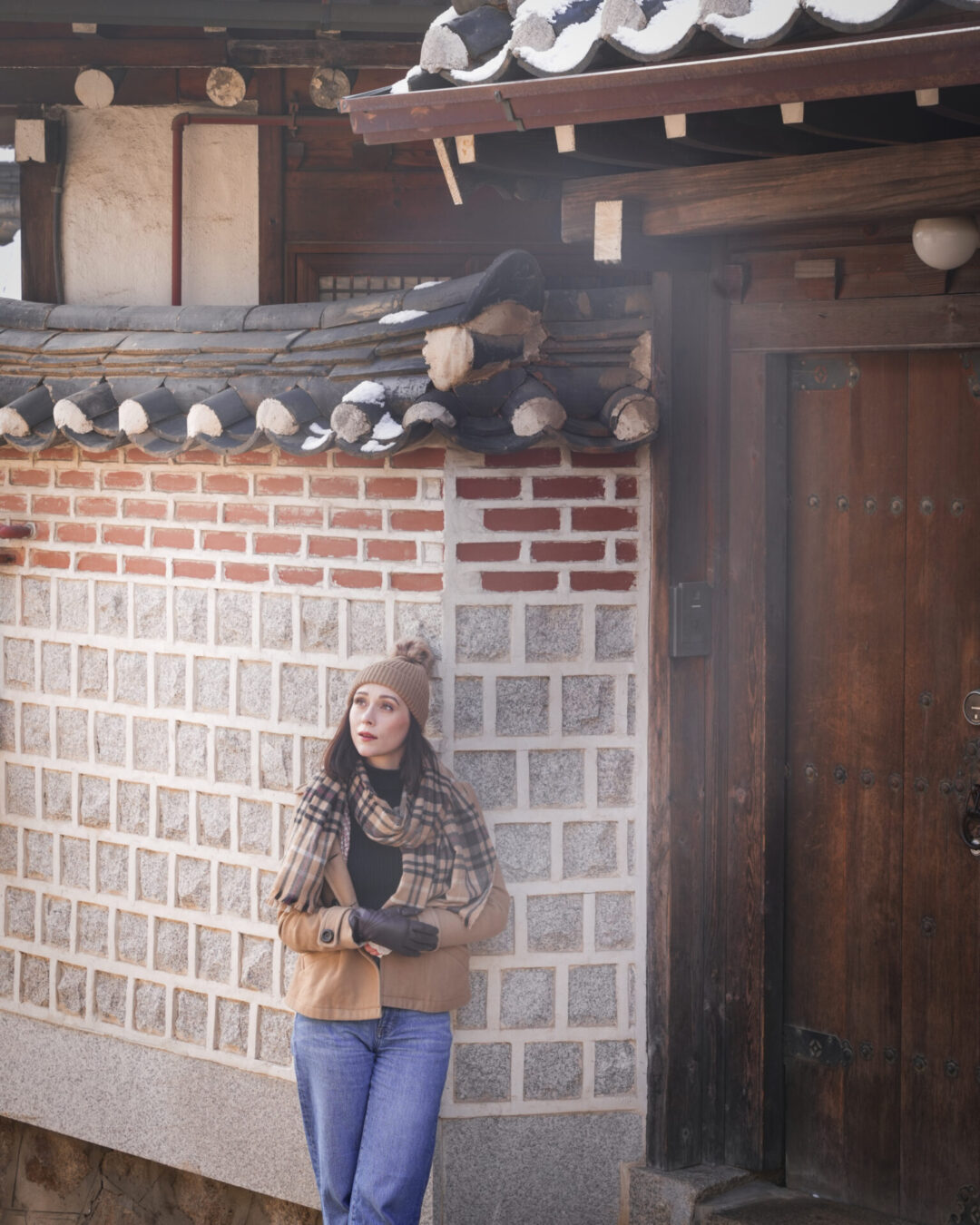
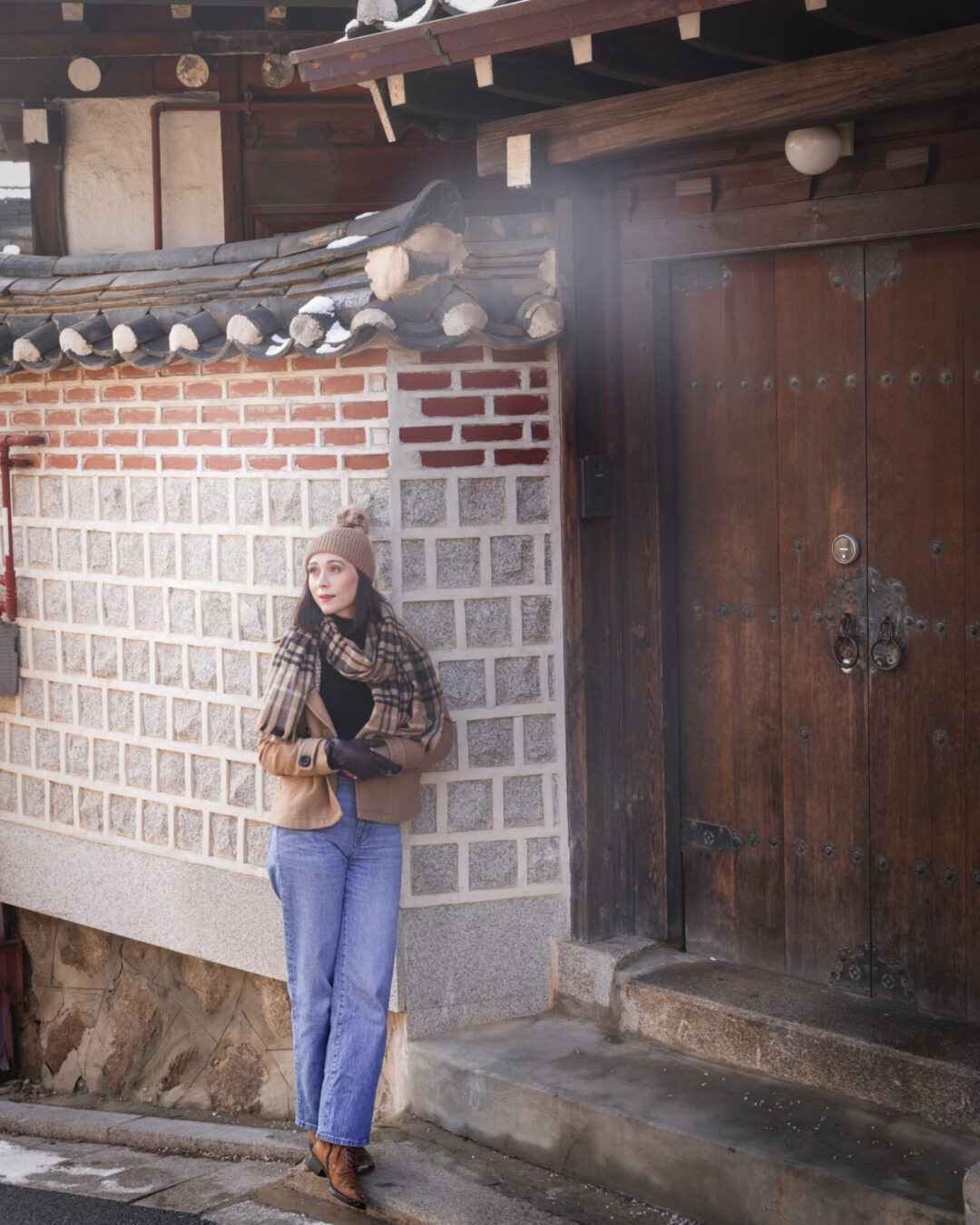
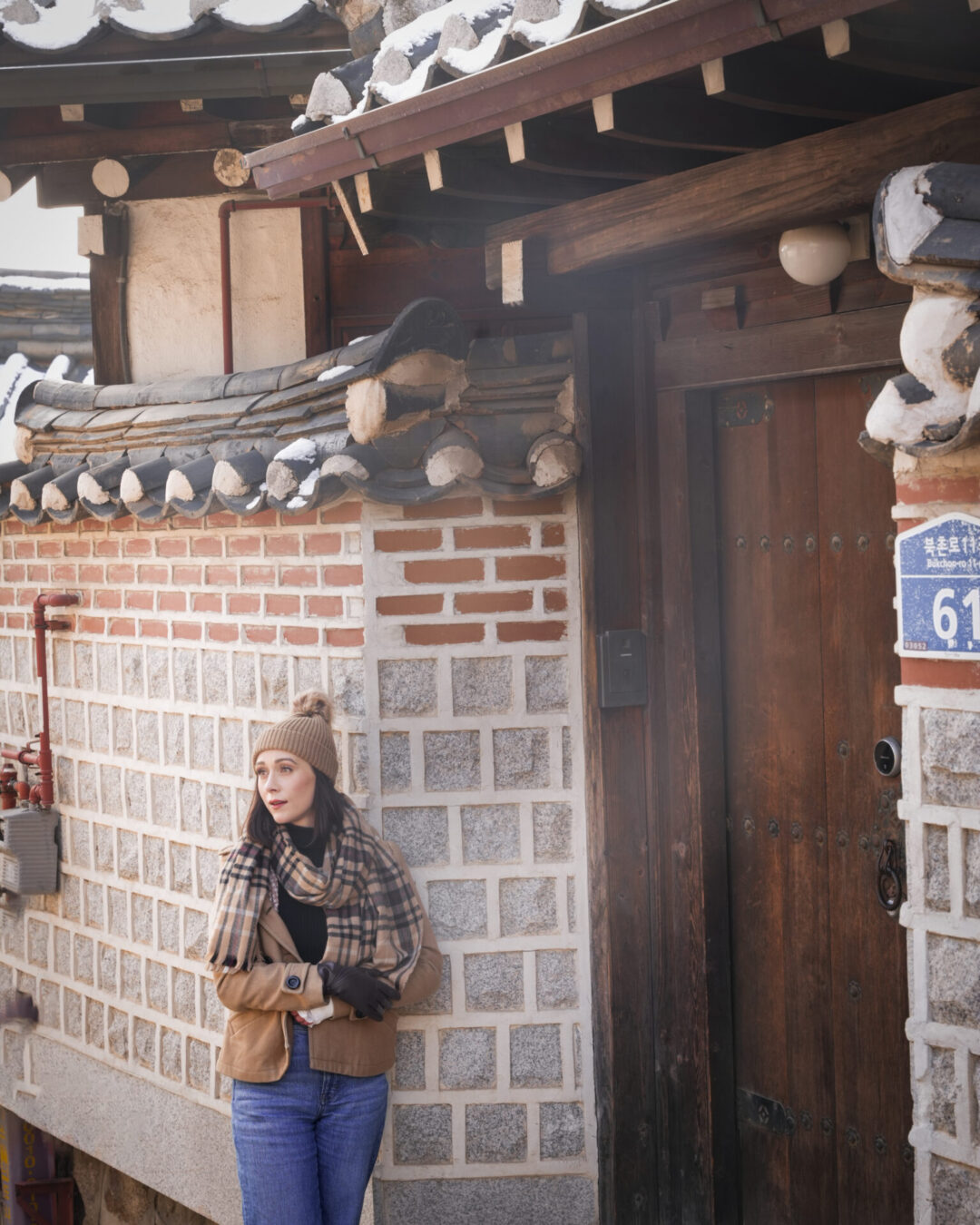
When I finally started my descent, the village’s quiet charm enveloped me. Though I wasn’t dressed in hanbok like a few of the other visitors, the experience still felt timeless. Each narrow alley revealed another hidden corner of Seoul’s past, another cozy tea house or another curated gift shop. Even in the chill, Bukchon had a warmth all its own, one that I carried with me as I made my way down, each step revealing a different layer of the city’s rich history.
A Warm and Cozy Brunch
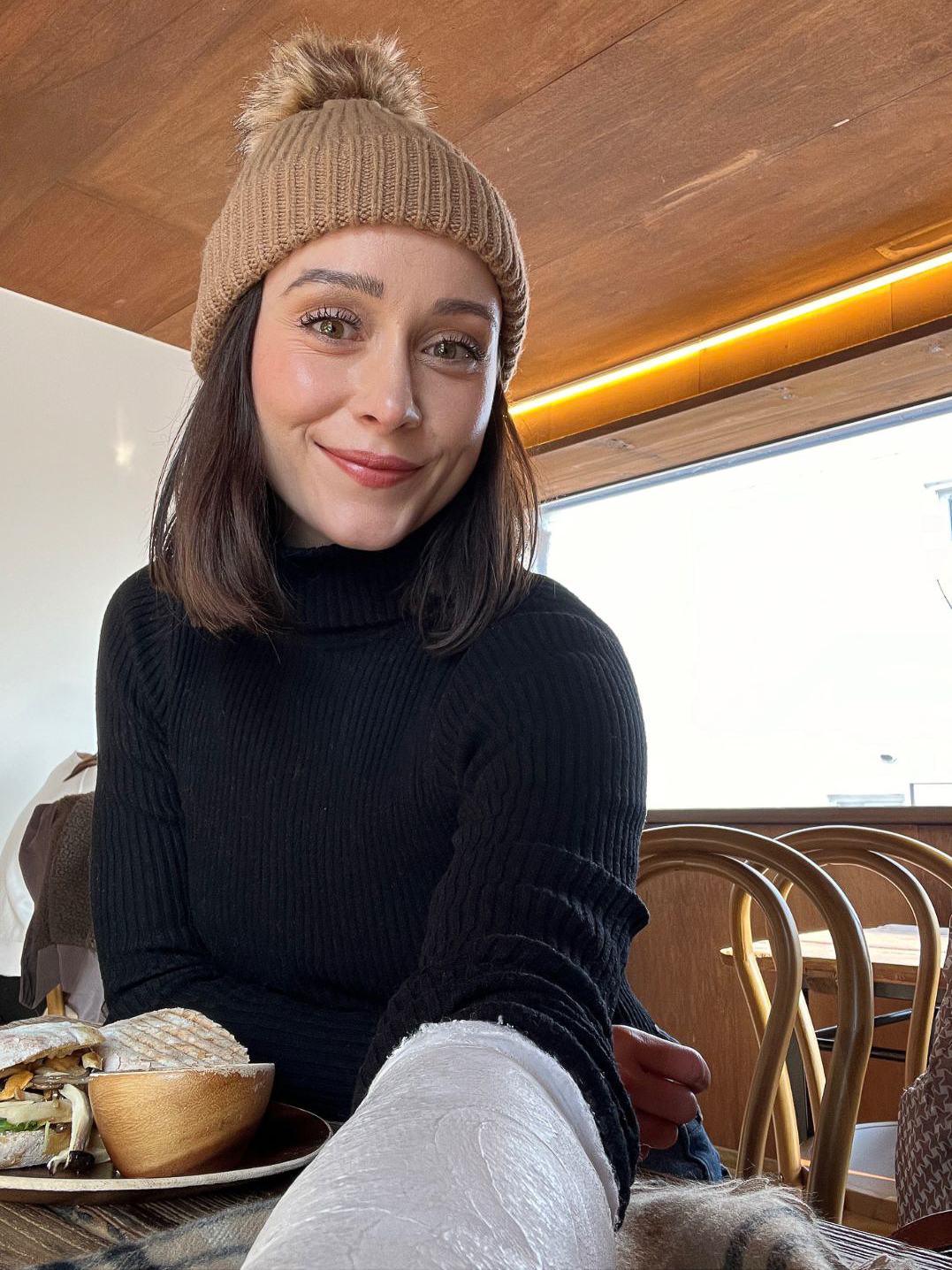
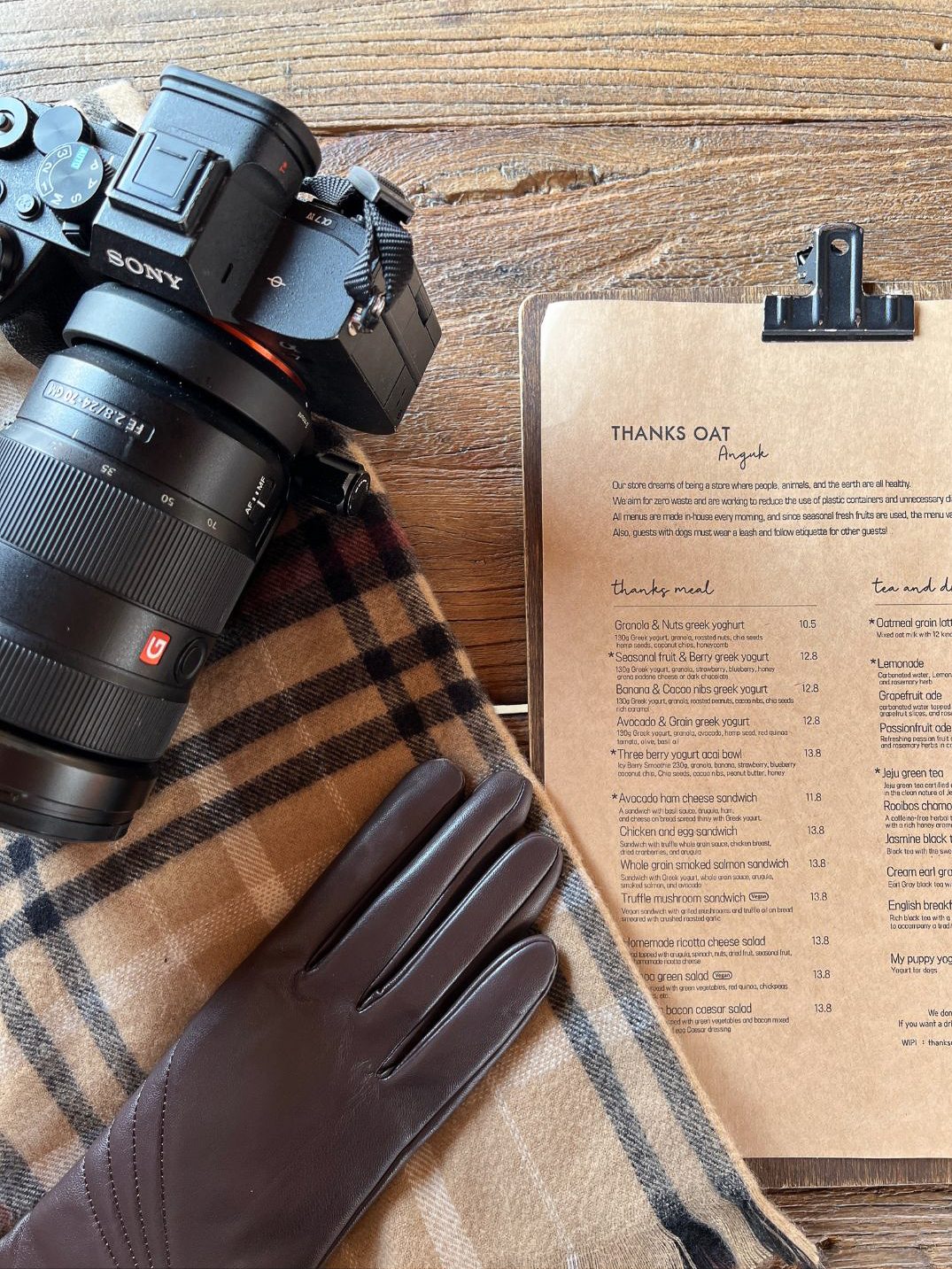
When I reached the bottom of the Bukchon Hanok Village hill, I popped into Thanks Oat to warm up. I would have loved to visit one of Seoul’s classic Korean barbecue joints, but knew that a healthy meal would be the better option for me just ahead of my second long-haul flight.
This local coffee stop and cafe had a minimal, but homey interior and I was immediately greeted by the rich aroma of freshly-brewed coffee and the soft tunes of an indie record.
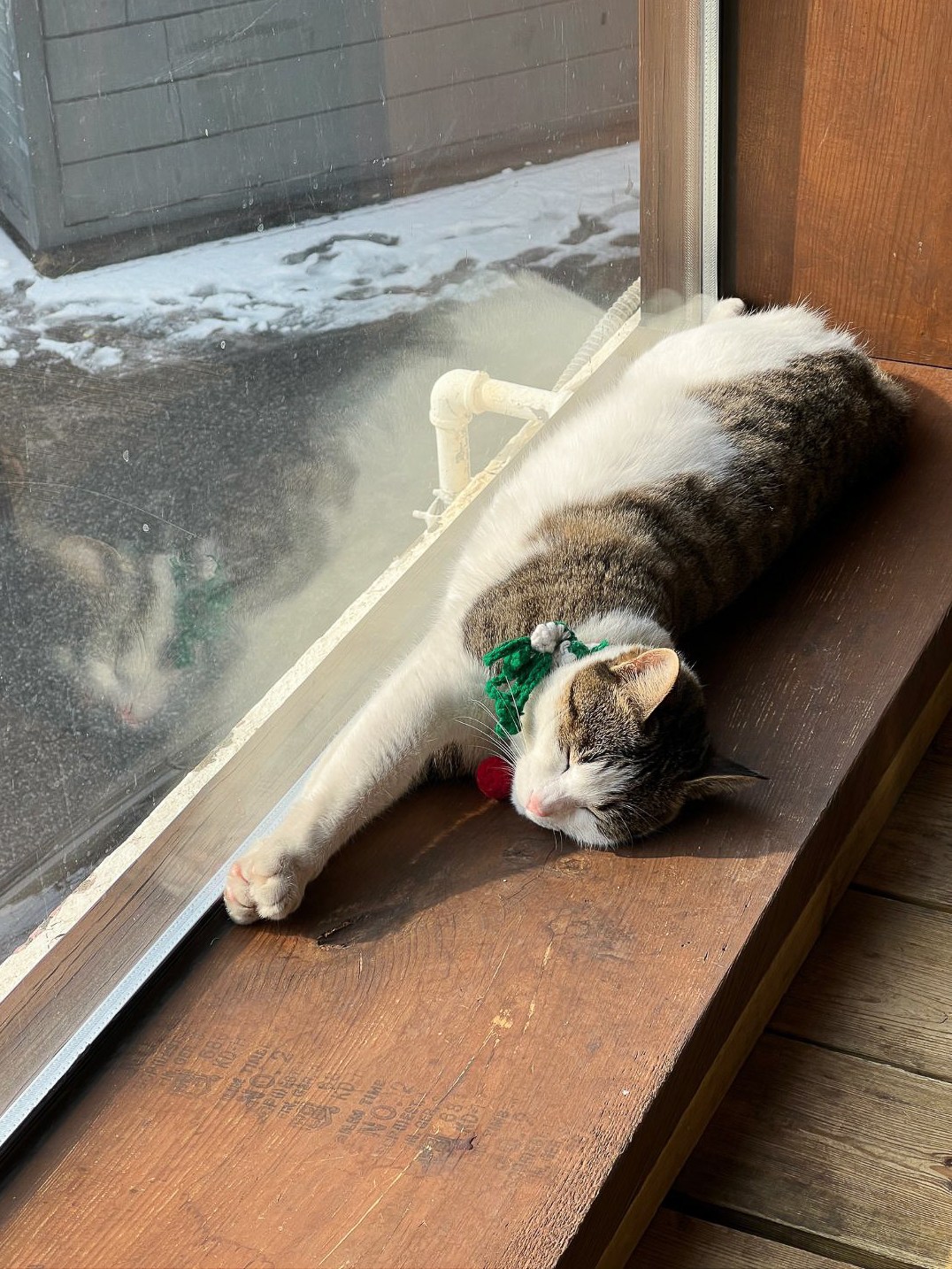
I quickly ordered at the counter and took my seat next to a window, spotting a sleeping cat lounging on the sill and basking in the early afternoon glow. The ambiance inside was perfectly cozy, exactly what I needed after an active winter morning.
For food, I loved Thanks Oat’s Truffle Mushroom Sandwich and Three Berry Acai Bowl, just without the yogurt!
Seeking Skin Care
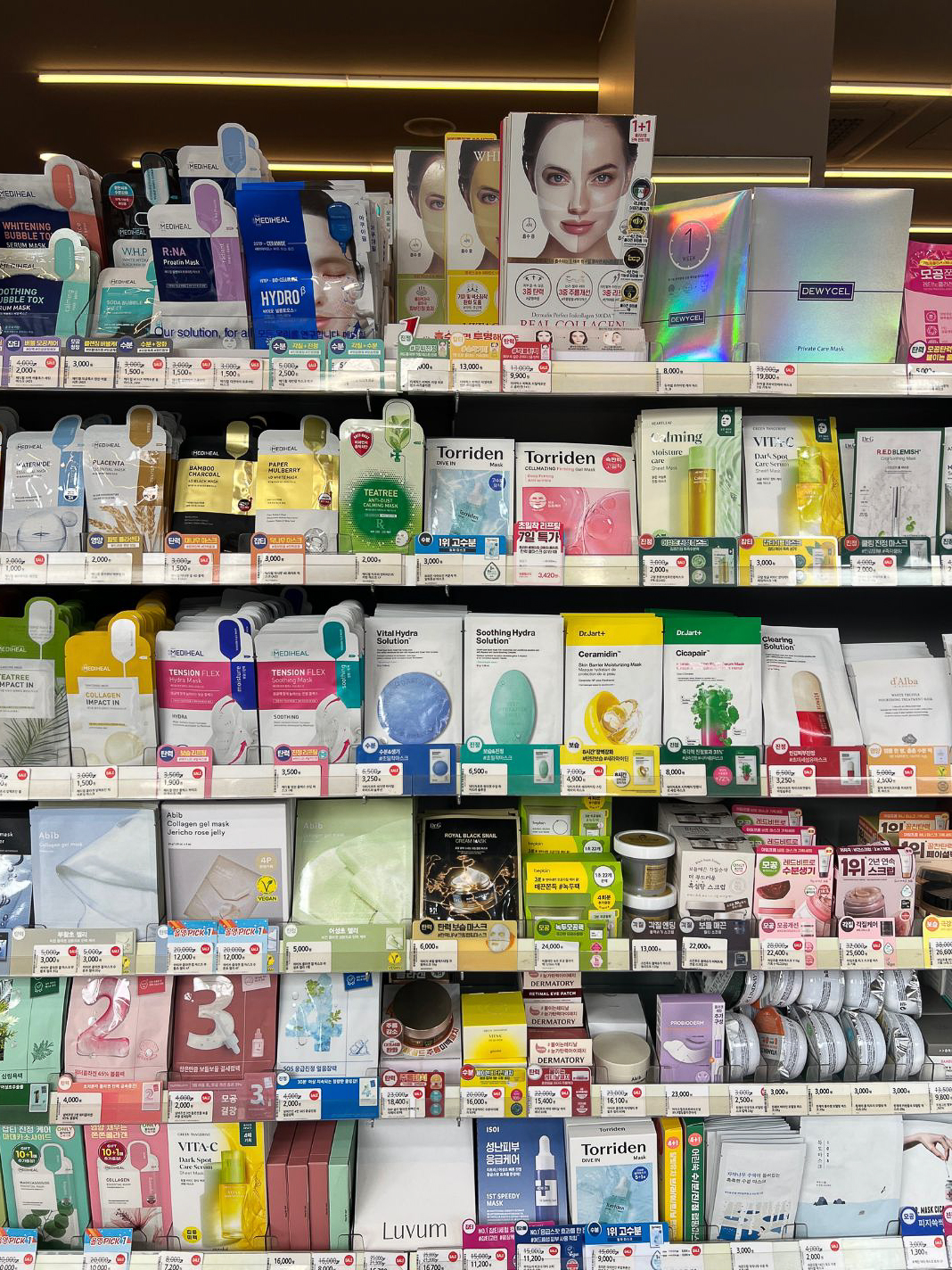
Did you really visit Seoul if you didn’t purchase quality Korean skin care? For me, that answer was a hard no and so post-brunch, I made it my mission to visit Olive Young, South Korea’s go-to K-beauty store.
With the help of Naver Map, I arrived at a local branch within 15 minutes and immediately began scouring the aisles. I don’t think I’ve ever seen so many face masks, lotions and mineral sunscreens all in one place before! It was heaven.
After using a translation app to help me figure out the ingredients of a few nearby products, I quickly realized my best bet would be asking an employee for help. Everyone was super nice and within a few short minutes, I was the proud owner of a bottle of Soon Jung x Director’s Sunscreen and a couple of new face masks.
Well Wishes at Jogyesa Temple
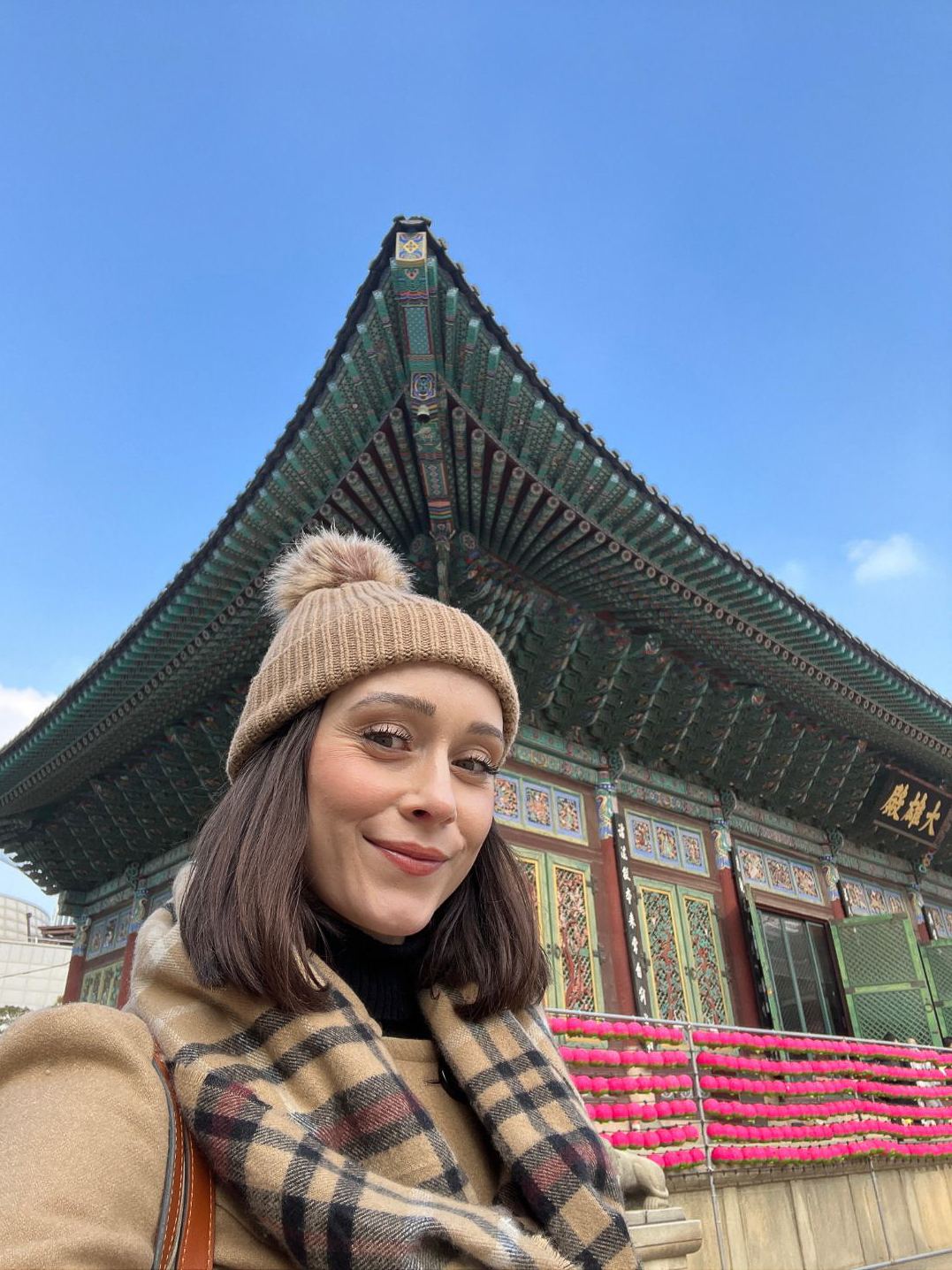
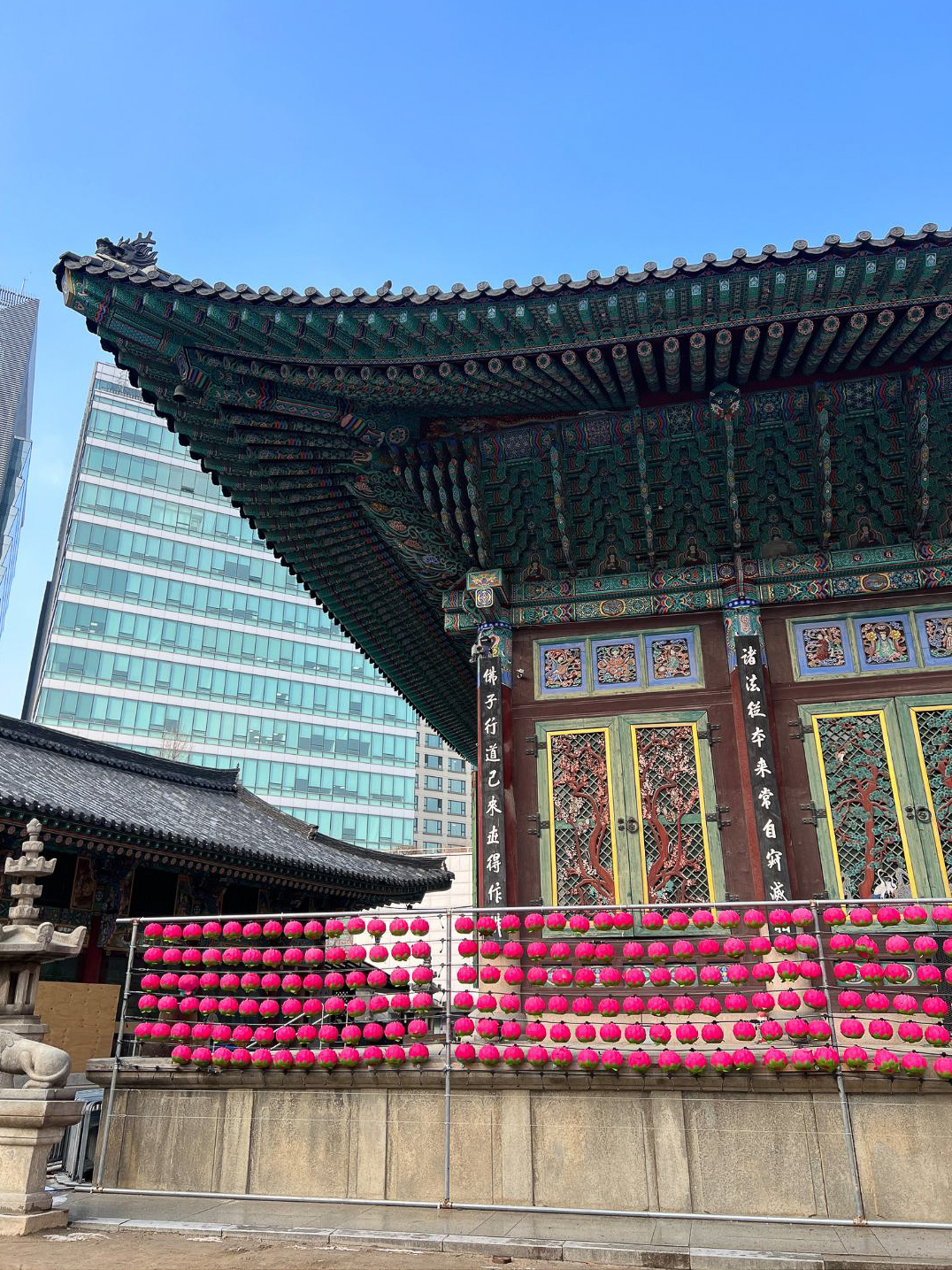
After my success at Olive Young, I was once again braving Seoul’s icy sidewalks on an adventure to the nearby Jogyesa Temple.
Built in the 14th century, Jogyesa is one of the most important Buddhist Temples in Korea as it is the chief temple of the largest denomination in Korean Buddhism, the Jogye Order.
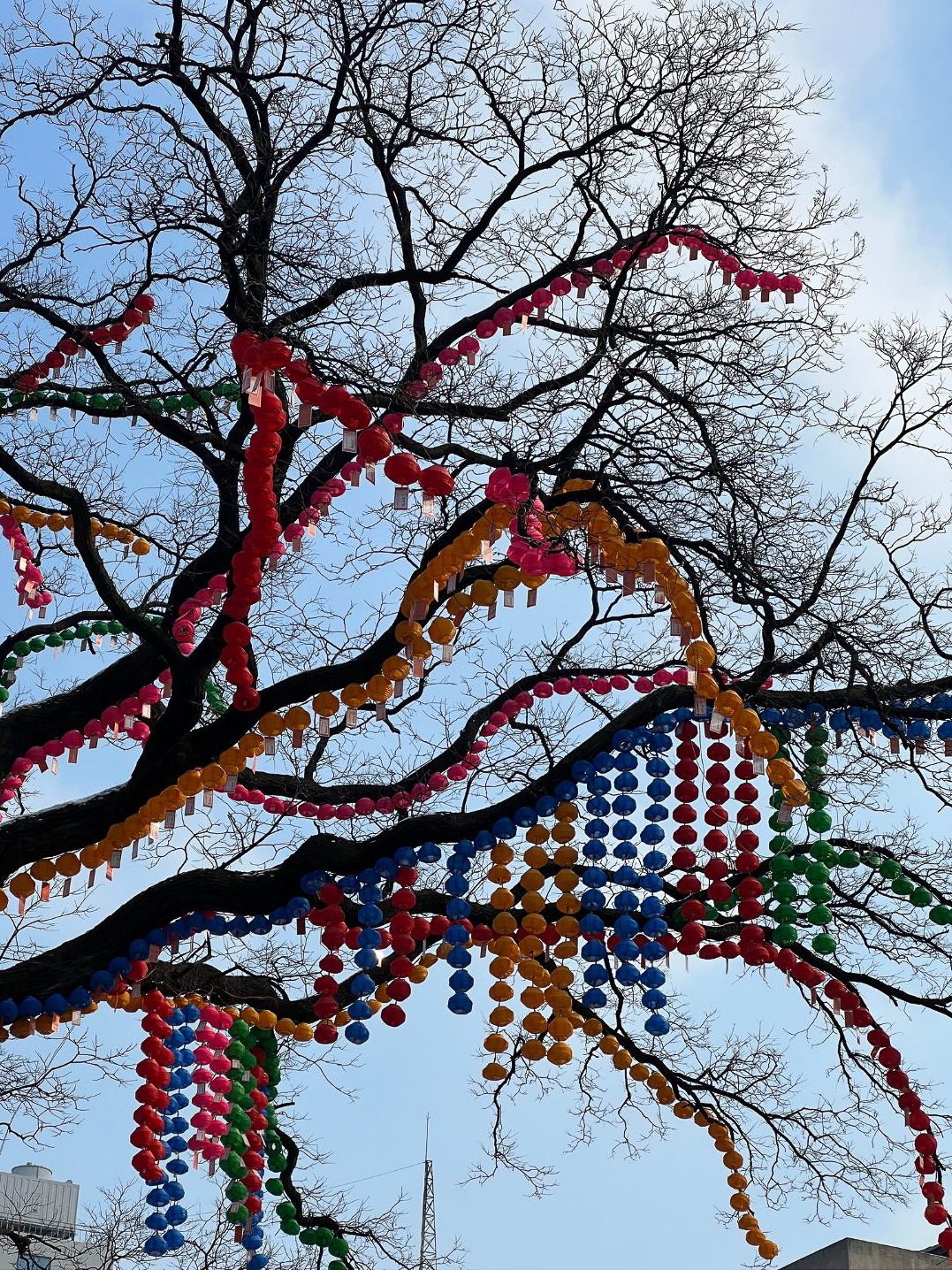
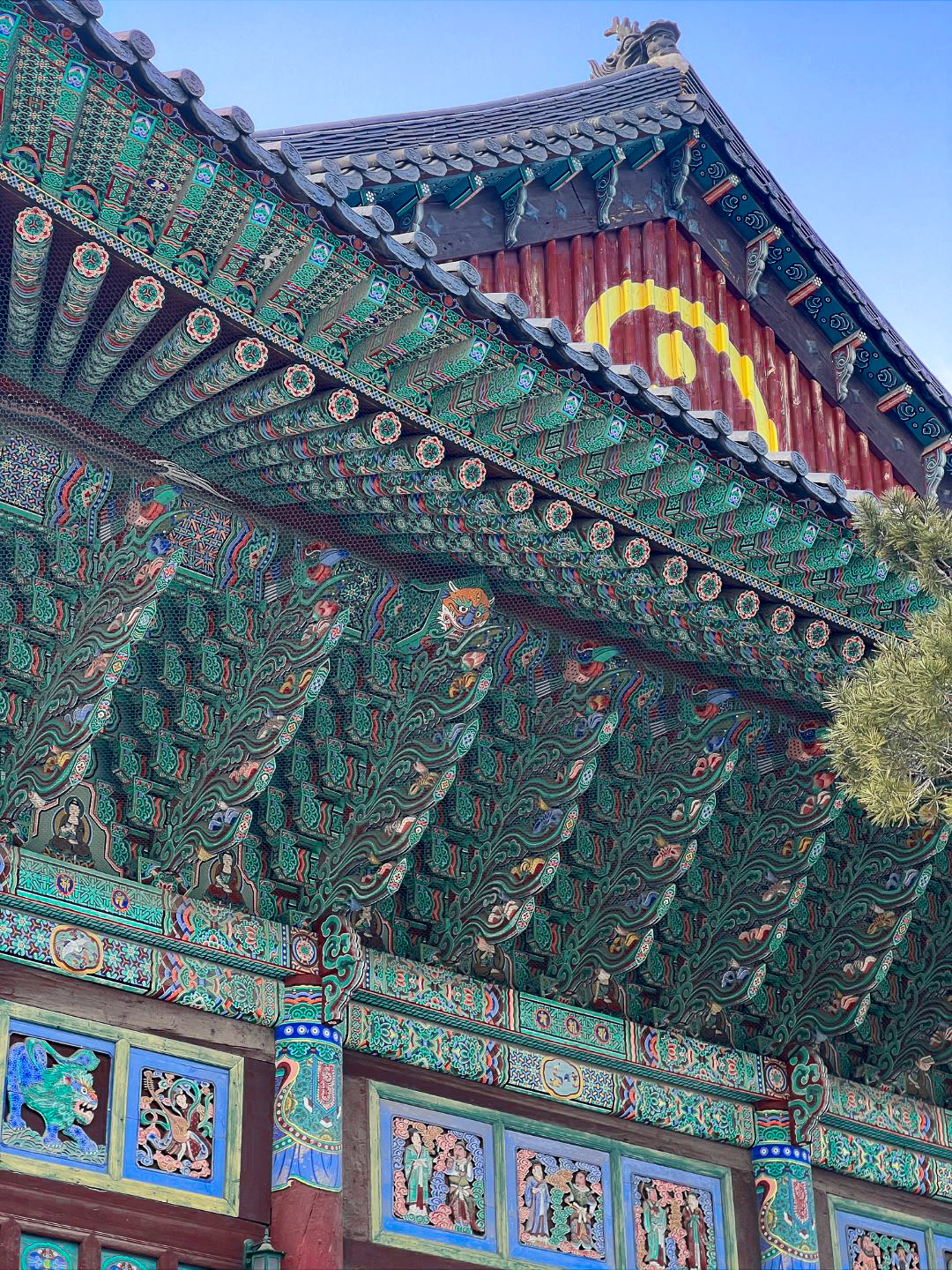
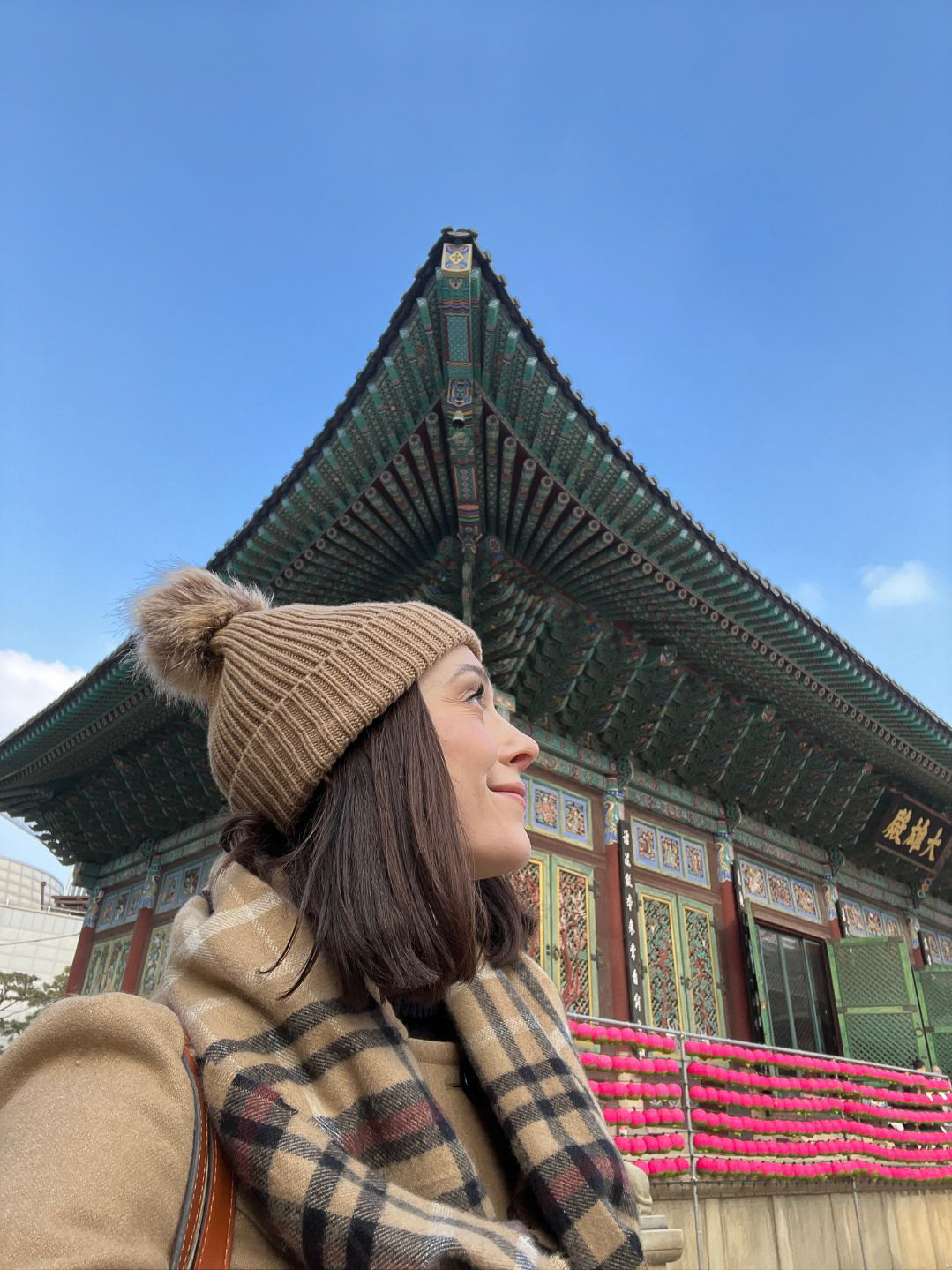
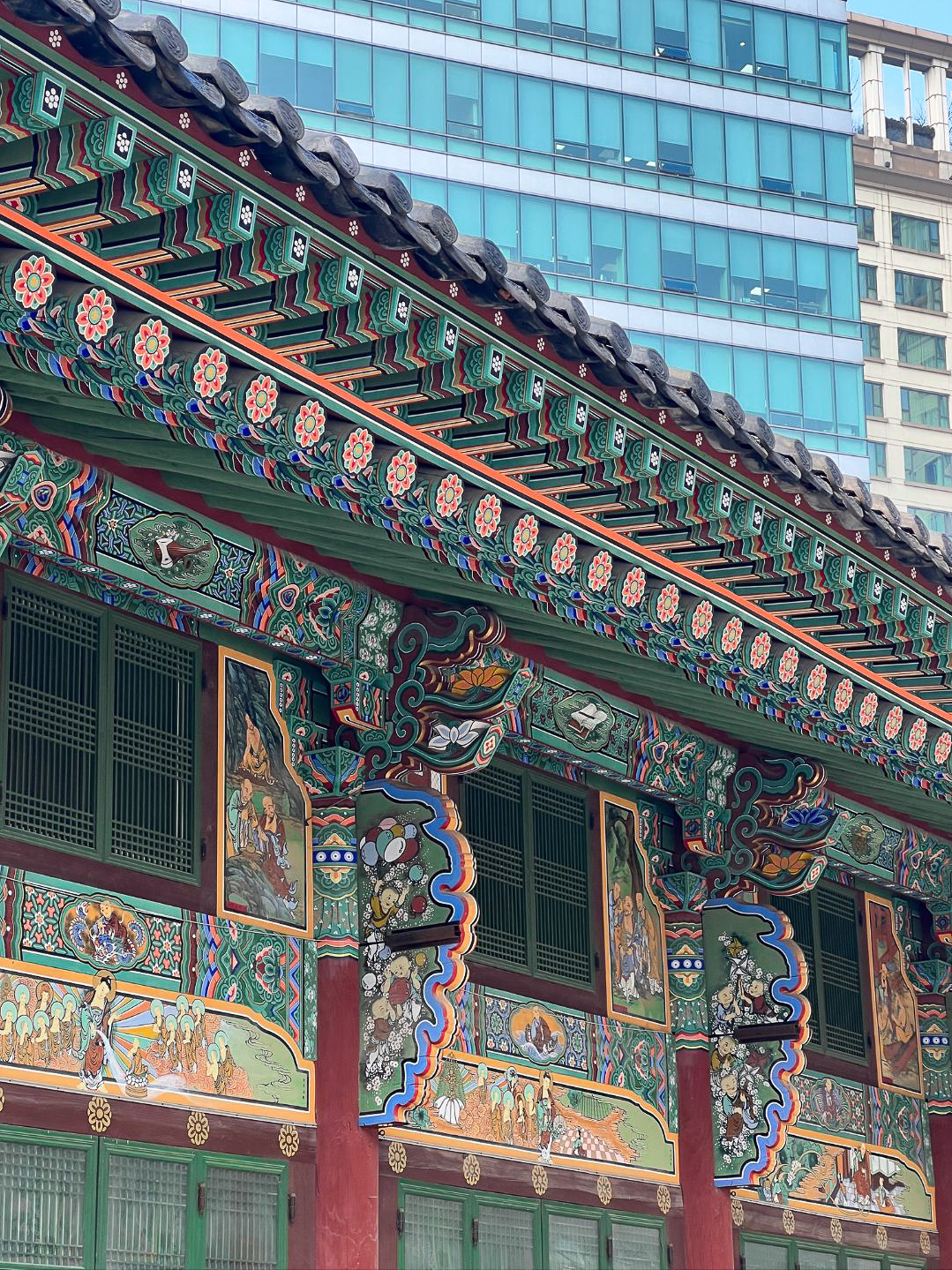
It was about midday when I reached Jogyesa’s Daeungjeon Hall (main hall), amongst a rush of patrons who were already taking off their shoes to enter. As the temple was actively being used for prayer, I decided to limit my visit to just the exterior. Between the colorful paper lanterns and the mix of traditional temple design and palace architecture, Jogyesa stood out against the backdrop of modern skyscrapers. It was a perfect visual nod to Seoul’s unique blend of the old and the new.
Tea and A Final Discovery
Once I had my fill of the chilly winter air, I headed back toward the bottom of Bukchon Village, in search of some warm shops and cafes. I had no real agenda at this point into the layover – my main goal was just warmth and comfort before my long-haul flight ahead. Off of Yulgok-ro 3-gil, I spotted perfume and fragrance shop, GRANHAND.
The upscale shop was filled with luxurious body and and creams, perfumes and more. Had I not had limited space in my carry-on, I would have bought their Marine Orchid scented candle, but alas, I did not. So instead, I vowed to make a return trip one day and continued on my journey.
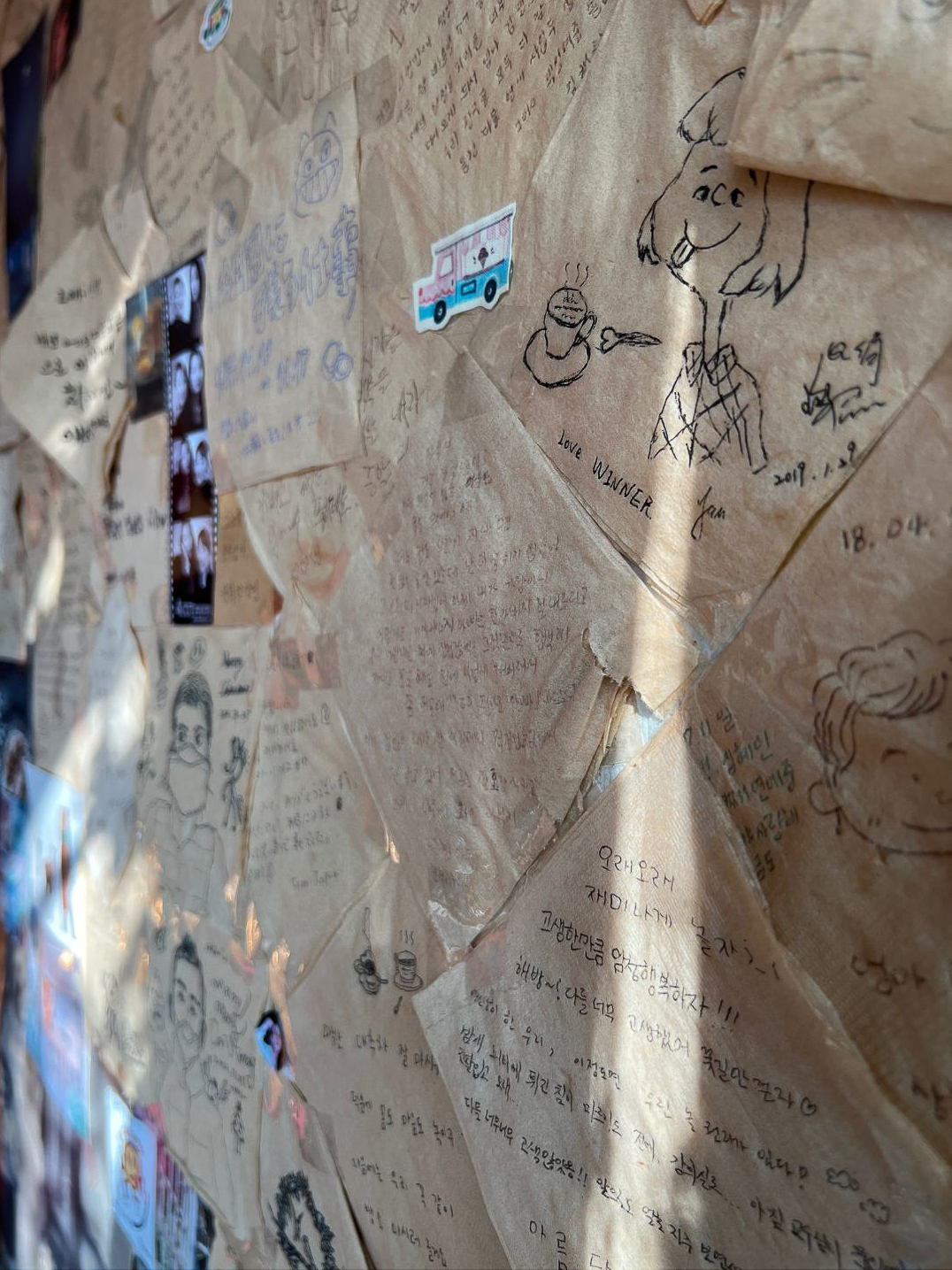
Down the street from GRANHAND, I stumbled into Whitebirch Story Tea House – a retro cafe that I later learned was a filming location of the K-drama, Goblin (Guardian: The Lonely and Great God)!
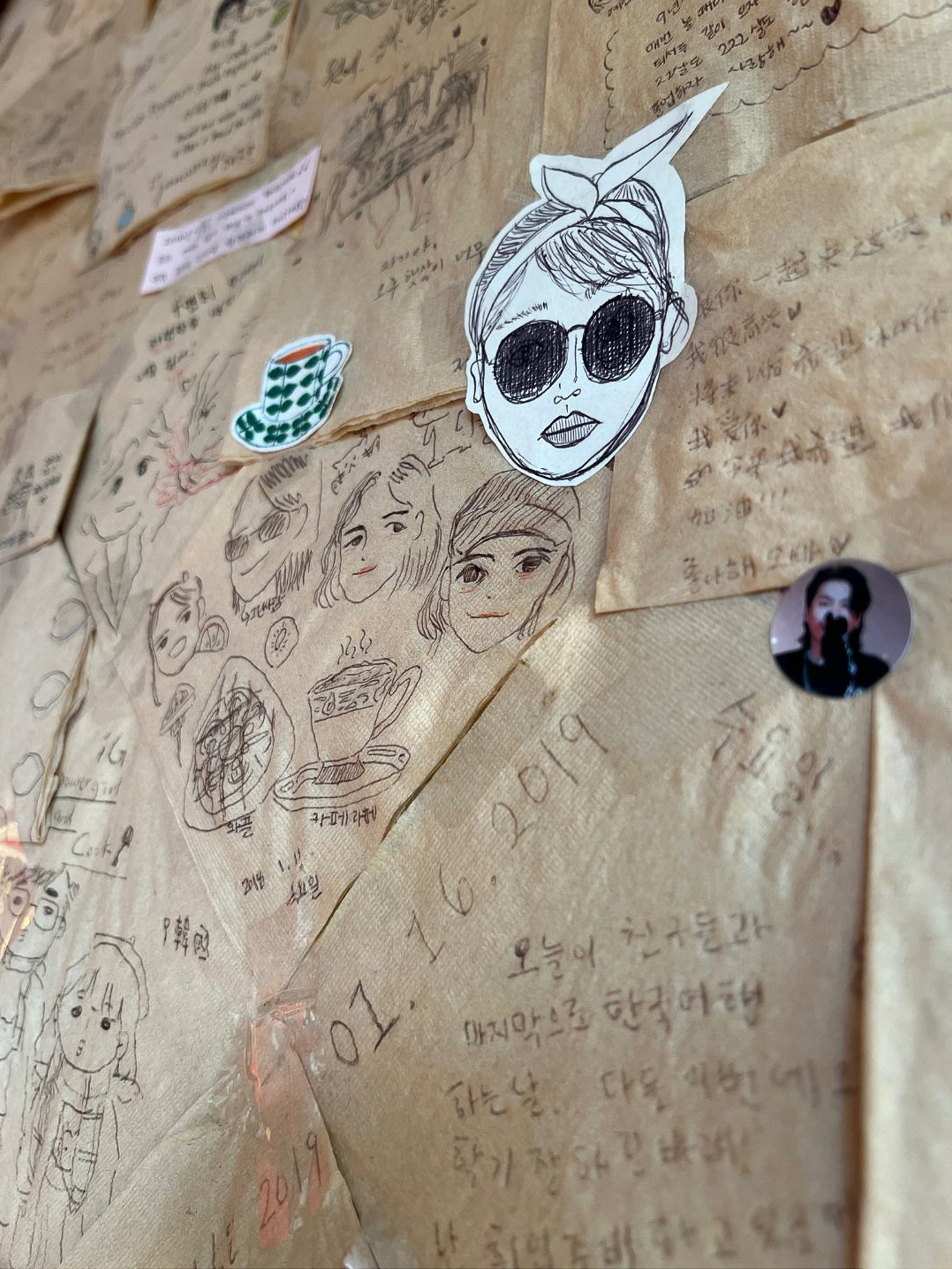
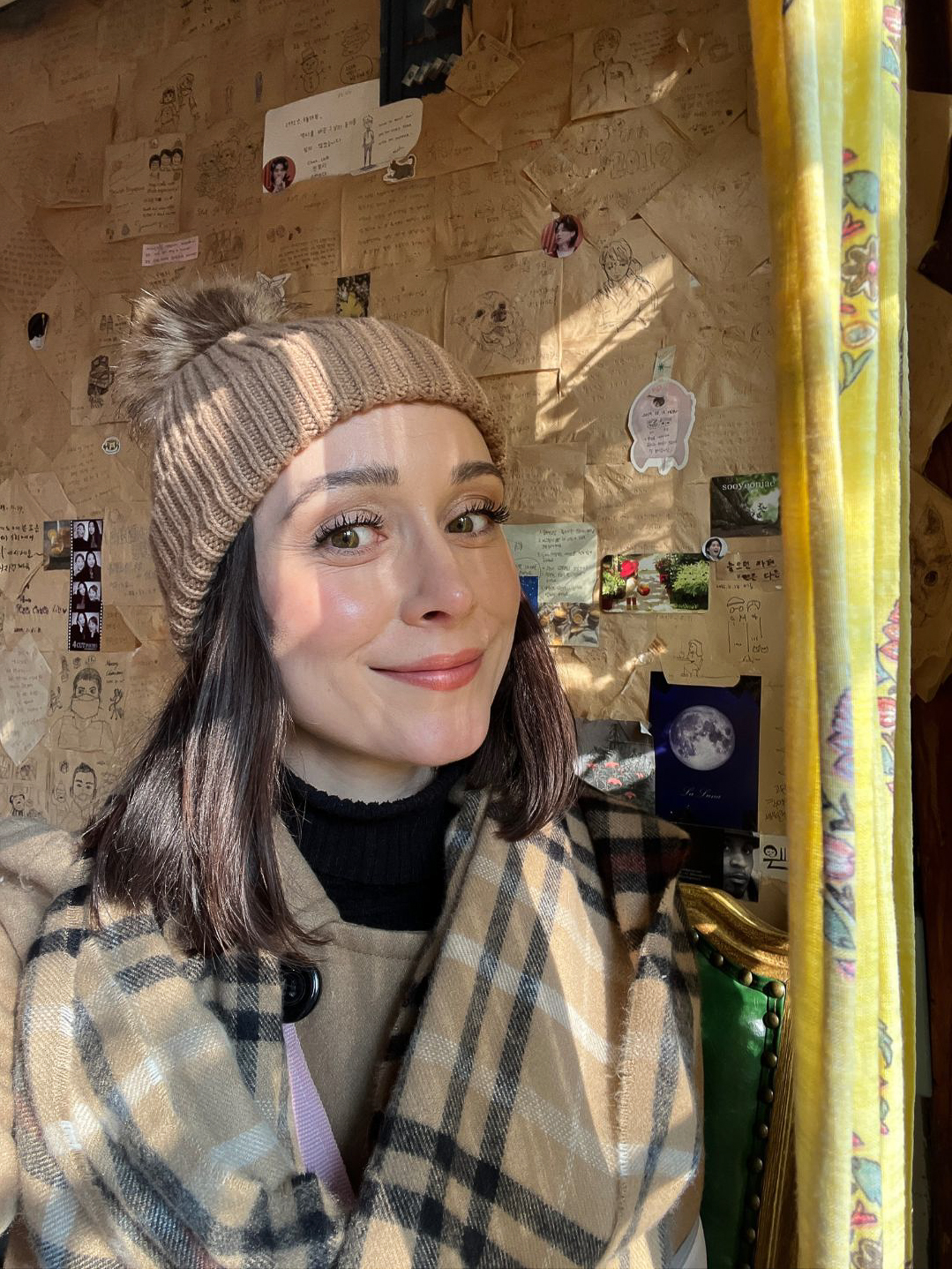
I already knew I had discovered quite the travel gem when I first spotted the tea house’s eclectic assortment of vintage chairs, cozy wreaths, and whimsical lamps from the street. Inside, however, was even better than I could have ever hoped! Enveloped by the warmth of the cafe, I discovered a wall plastered with notes, poems, jokes and doodles of customers past – a memorial to others’ magical travel moments.
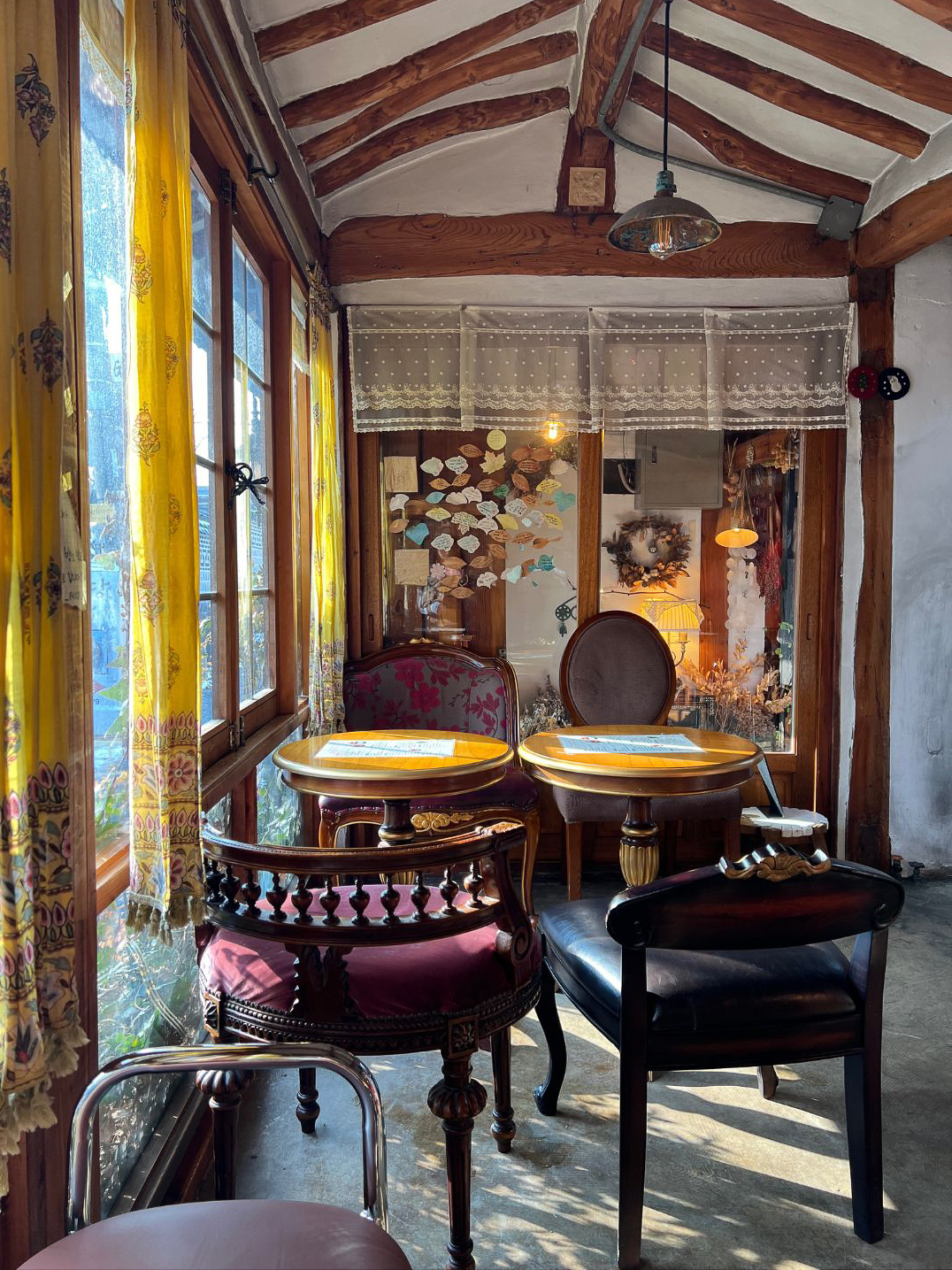
I quickly sunk into a comfy chair in the corner, a warm glass of lemon tea in my hand and finished the last of my Seoul sightseeing: looking out at the snow from the window and enjoying the anonymous messages and memories lining the wall around me.
Long Layover in Seoul Mini Guide
Airport Transportation
Taxis – Fast and private, but most expensive option
Arex Train – Middle-of-the-road cost, convenient for traveling to the city center
Bus – Least expensive option, but slow and crowded
Historic Sites
Restaurants + Cafés
Thanks Oat – Brunch
White Birch Story Teahouse – Coffee + Tea
853 – Korean BBQ
Shops
MOA Hanbok – Hanbok Rentals
Olive Young – Skincare
GRANHAND – Fragrance
Bukchon Art Shop – Crafts, Art, Souvenirs