A First-Timer’s Guide to Sequoia’s Best Trails
Sequoia National Park isn’t as famous as its neighbor Yosemite, but what it lacks in waterfalls and Instagram-ready valley views, I think it more than makes up for in ancient trees and the kind of quiet solitude that’s increasingly rare in California’s national parks! If you’re planning your first visit and feeling overwhelmed by where to start, I put together this guide to cover the essential trails and stops you absolutely need to experience.
Planning Your First Visit
Best Time to Go
The most popular time to visit Sequoia National Park is from late spring through fall (May – November), and for good reason! All roads are open, trails are accessible, and you have the most flexibility in planning your days. If you’re planning a multi-national park roadtrip (Yosemite, Kings Canyon, and more), this is, without a doubt, the time of year I would suggest going!
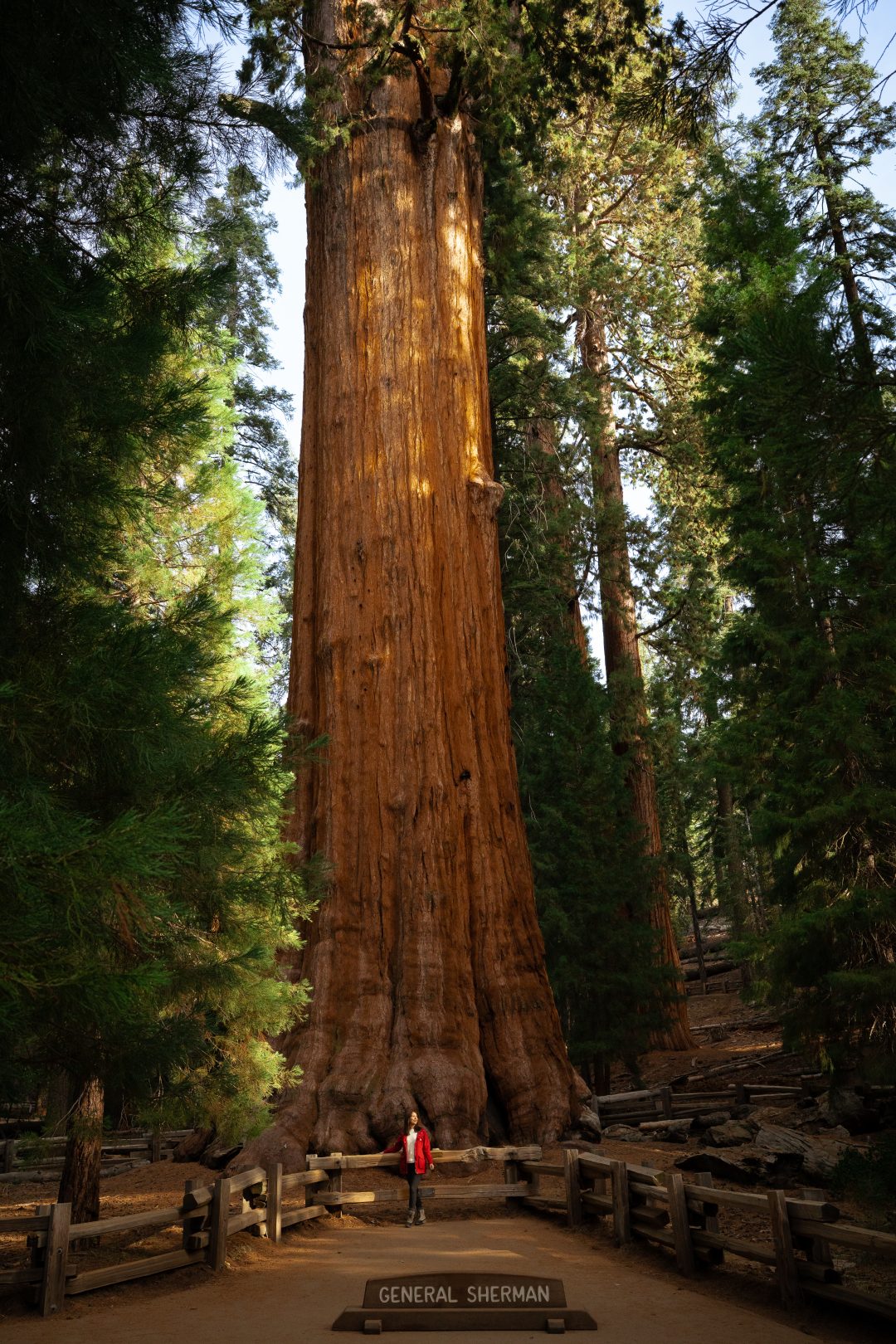
That said, winter visits can be absolutely magical if you’re willing to work around road closures! The park’s most popular area, the Giant Forest, remains accessible year-round (weather permitting), and there’s something so special about seeing these ancient trees dusted with snow or standing beneath them in crisp, cold air with barely another soul around! My own first visit to Sequoia happened in late December and I ended up having General Sherman (the largest tree in the world!) almost all to myself one morning! Just expect closures to higher elevations and parts of Kings Canyon this time of year, and always check current road conditions on the NPS website before you go.
As with all national parks, early morning starts are ideal regardless of season (you’ll beat crowds and catch better light)!
Ready to turn these spots into an actual trip?
You have a long weekend, a park the size of a small country, and exactly zero desire to waste a single hour of it figuring out logistics on the fly. Knowing which trails to prioritize is a start, but knowing how to move through Sequoia so every hour actually counts is a different skill entirely.
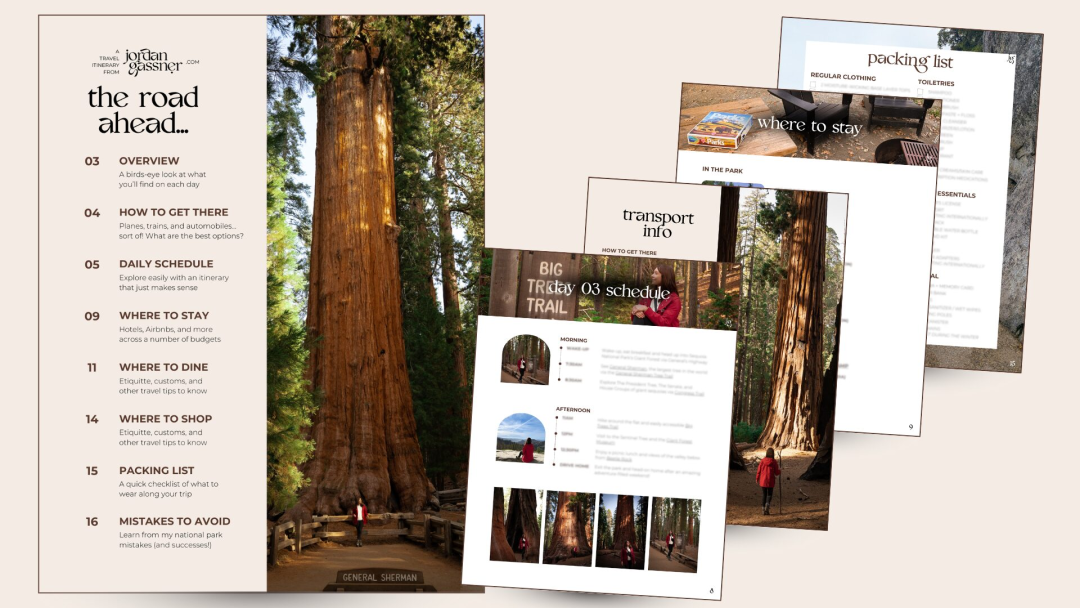
My Sequoia National Park Long Weekend Itinerary takes everything you need and builds it into a complete trip plan:
This 17 page itinerary/guide includes:
- 📋 Hour-by-hour schedules of 3 days (+ 1 bonus day) in Sequoia National Park
- 🥘 My handpicked recommendations for where to stay, dine, and shop
- 🚃 Transport info
- 🧳 A checklist-style packing list
- ♥️ Mistakes to avoid
Where to Stay & Eat
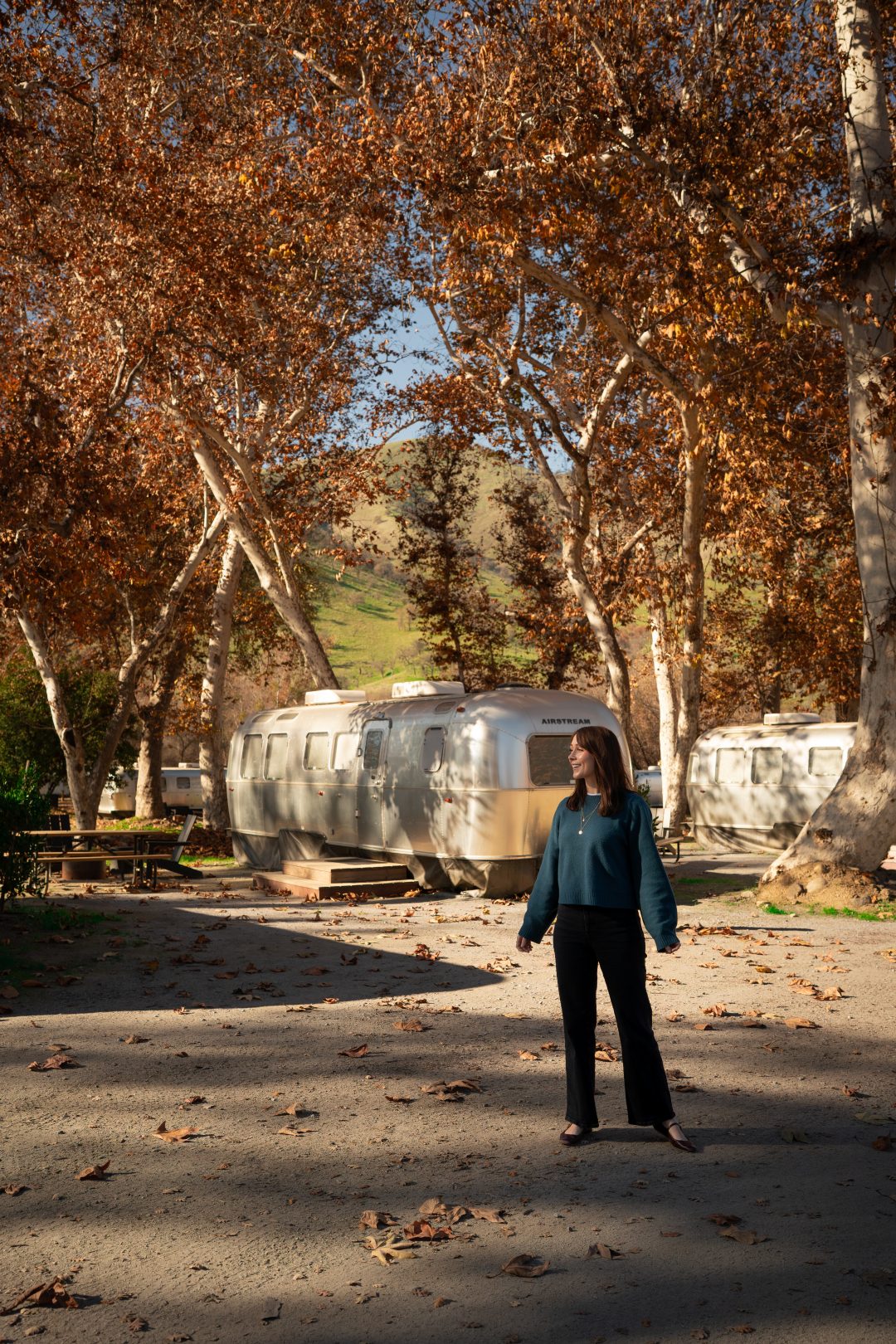


Three Rivers is the small town just outside Sequoia’s southern entrance, about 30 minutes from the park. We stayed at AutoCamp Sequoia in an Airstream and were pleasantly surprised by the thoughtful amenities and genuine hospitality. The property includes fire pits, bike rentals, and river access. Plus, they offer fun daily activities and programming for guests (they even hosted a holiday party with complimentary cookies and live music during my December visit!)
For dining, don’t miss Sierra Subs (I loved their Thai Treasure sandwich special) and River View Grill and Bar for post-hike comfort food. Stock up on trail snacks at the Village Market before heading into the park, as food options inside are limited and crowded.
Check out my guide to Three Rivers including where to shop, eat, and stay!
What to Bring

The road winds significantly from Three Rivers up and into Sequoia National Park (it takes about 1 hour from town to reach the Giant Forest Museum, and that’s without any stops!). Budget extra time for driving and consider motion sickness medication if you’re prone to car sickness.
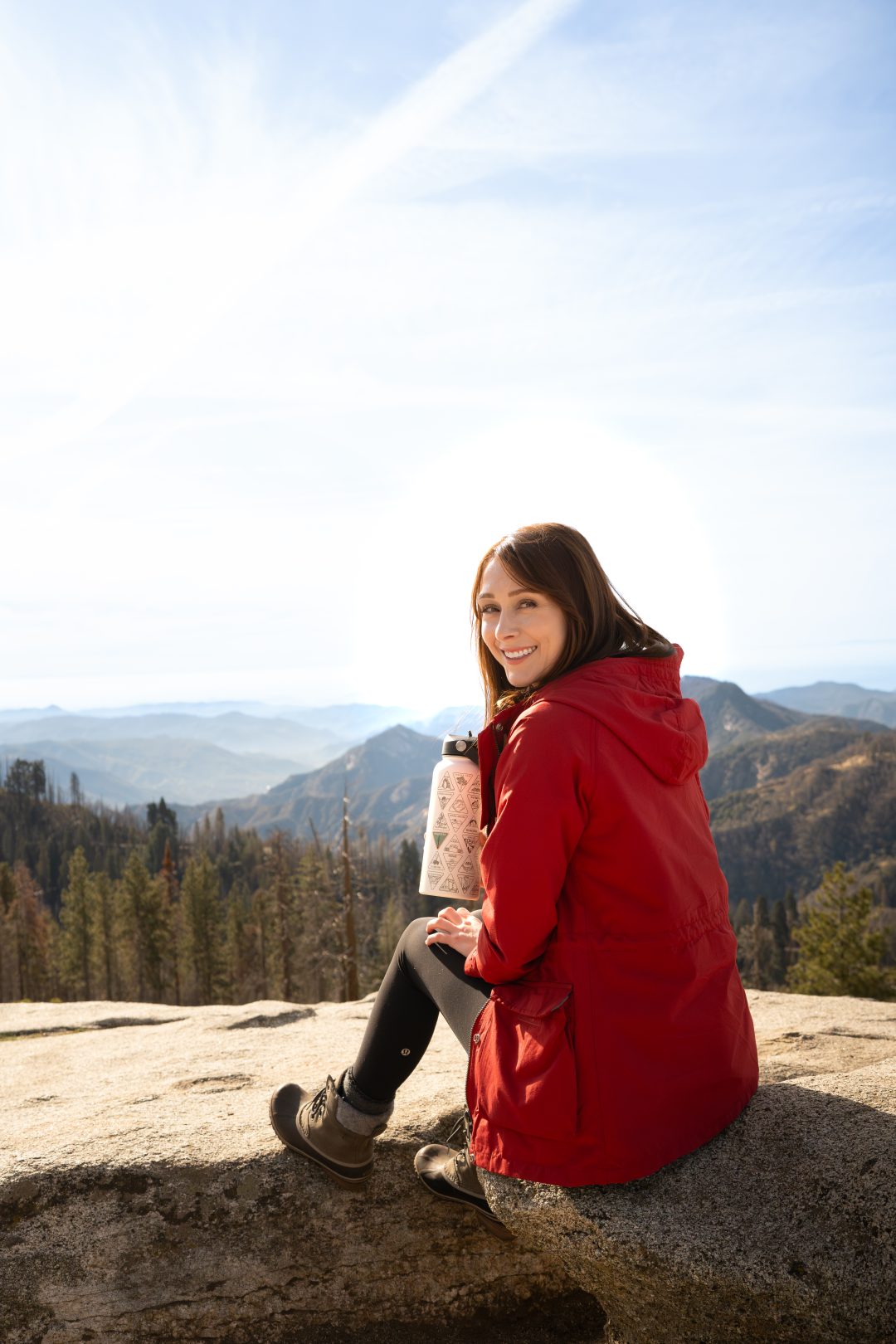
For clothing and gear, make sure to bring layers (it’s colder at elevation than in the town) and pay attention to seasonal conditions when deciding on which outdoor gear you should bring. The park experiences all seasons here and it does get quite hot in the summer and quite cold (and snowy!) in the winter. No matter the season, comfortable hiking shoes with good tread, SPF, snacks and water, and a reusable water bottle are a great idea.
Common Mistakes to Avoid
Want to learn from my missteps? I made a few rookie errors during my first trip to the park (from forgetting essential picnic items to taking trails in the wrong direction!). Read about: The Mistakes I Made on my Sequoia National Park Trip (So You Don’t Have To)!
The Essential Trails for First-Time Visitors
If you’re visiting Sequoia for the first time, these are the trails I recommend to give you the best introduction to the park’s giant sequoias:
Sherman Tree – Congress Trail

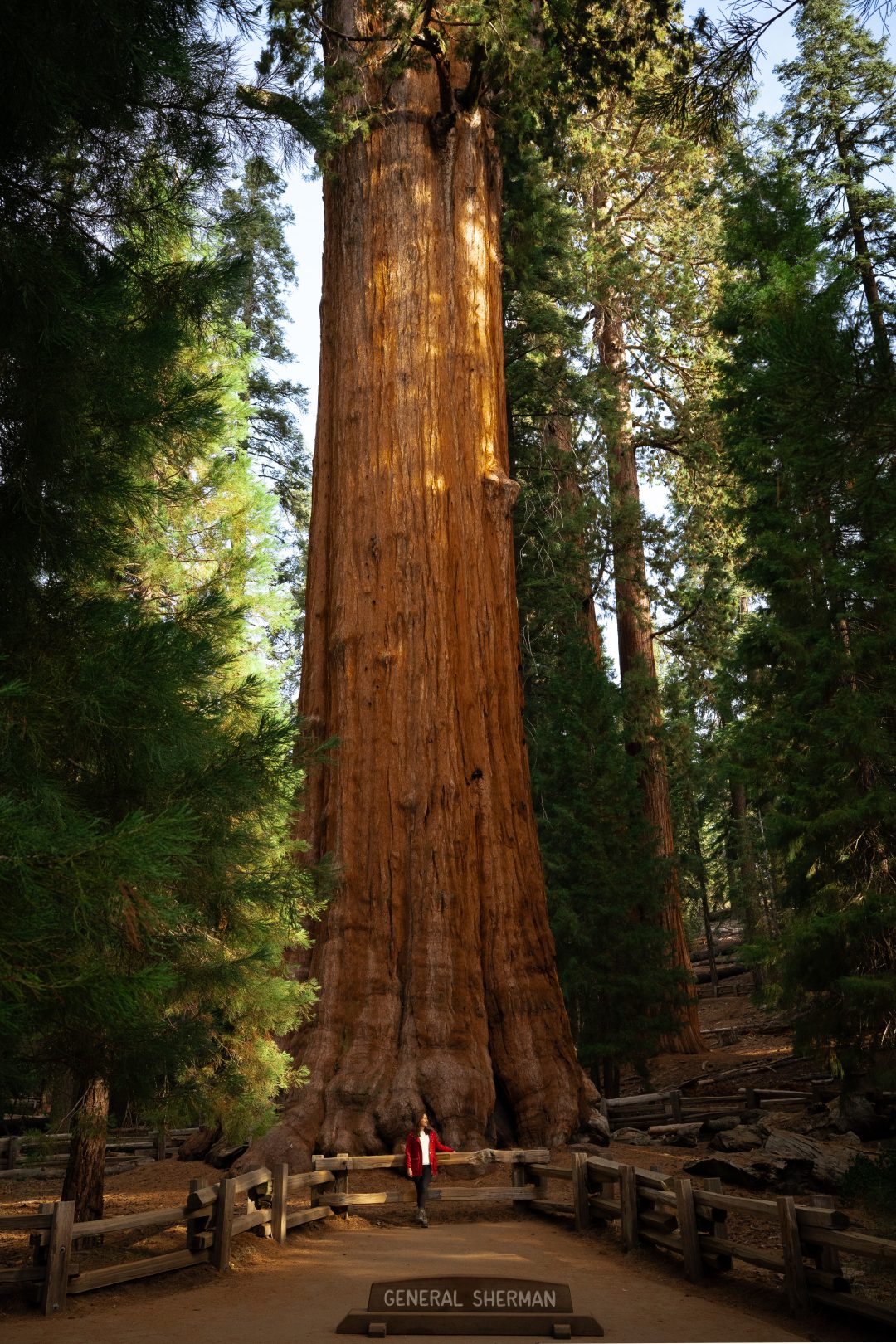
If you only have time for one hike in Sequoia, make it this one. General Sherman is the largest tree on Earth by volume. At over 275 feet tall, it’s estimated to be between 2,300 and 2,700 years old! Standing at its base isn’t just about seeing a big tree, it’s feeling the weight of millennia and feeling like you’ve stepped out of a national park and into a fantasy realm.
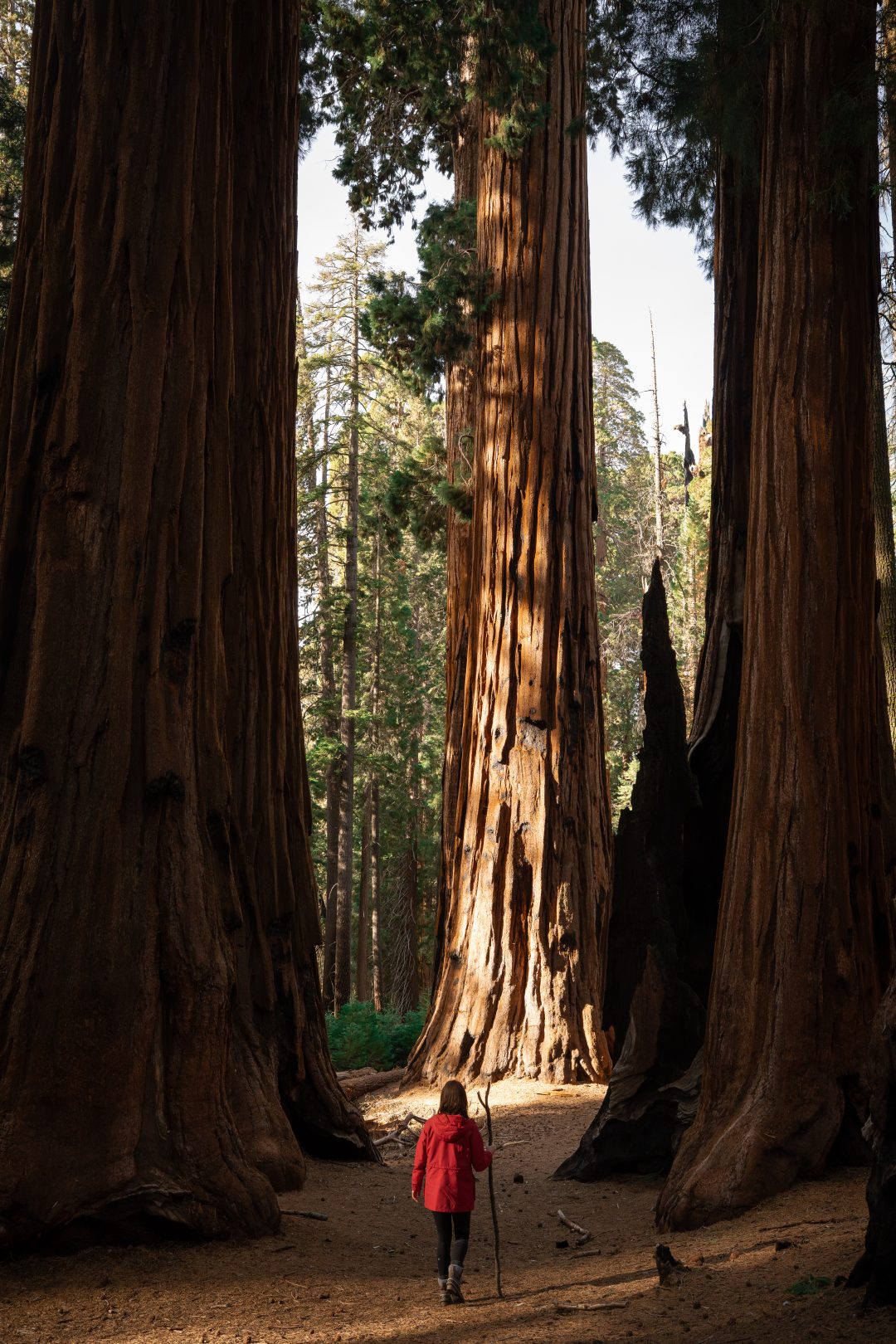
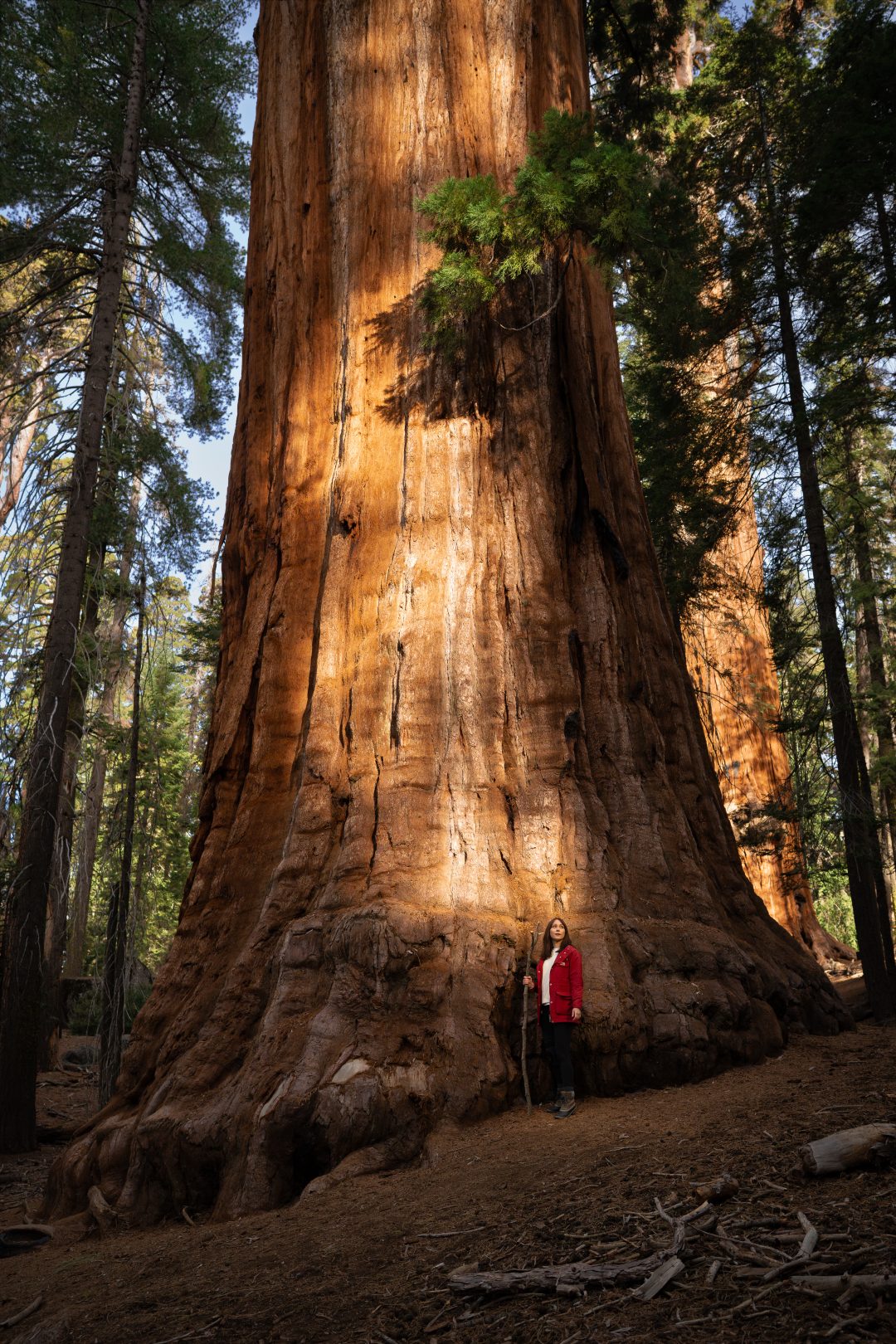
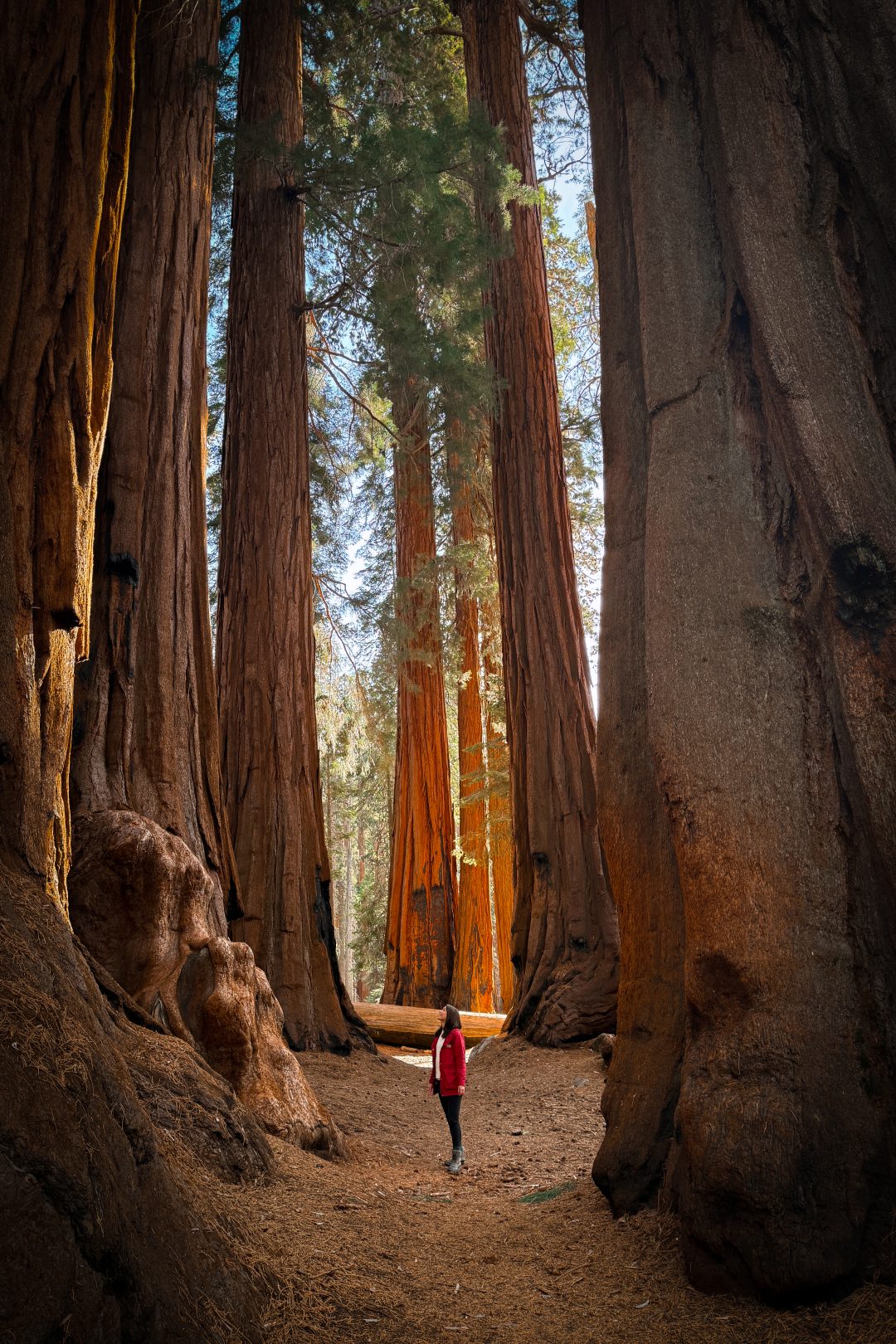
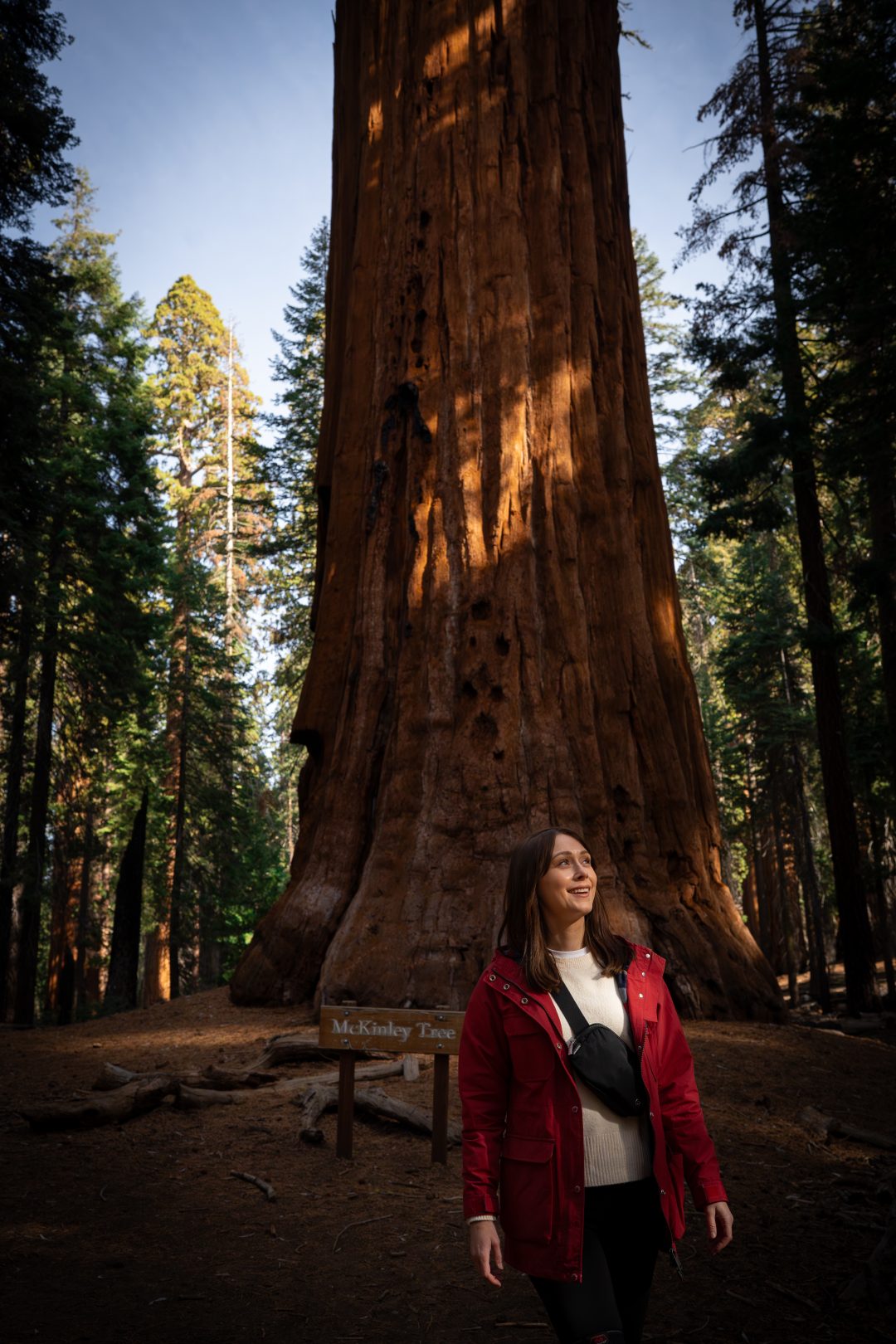
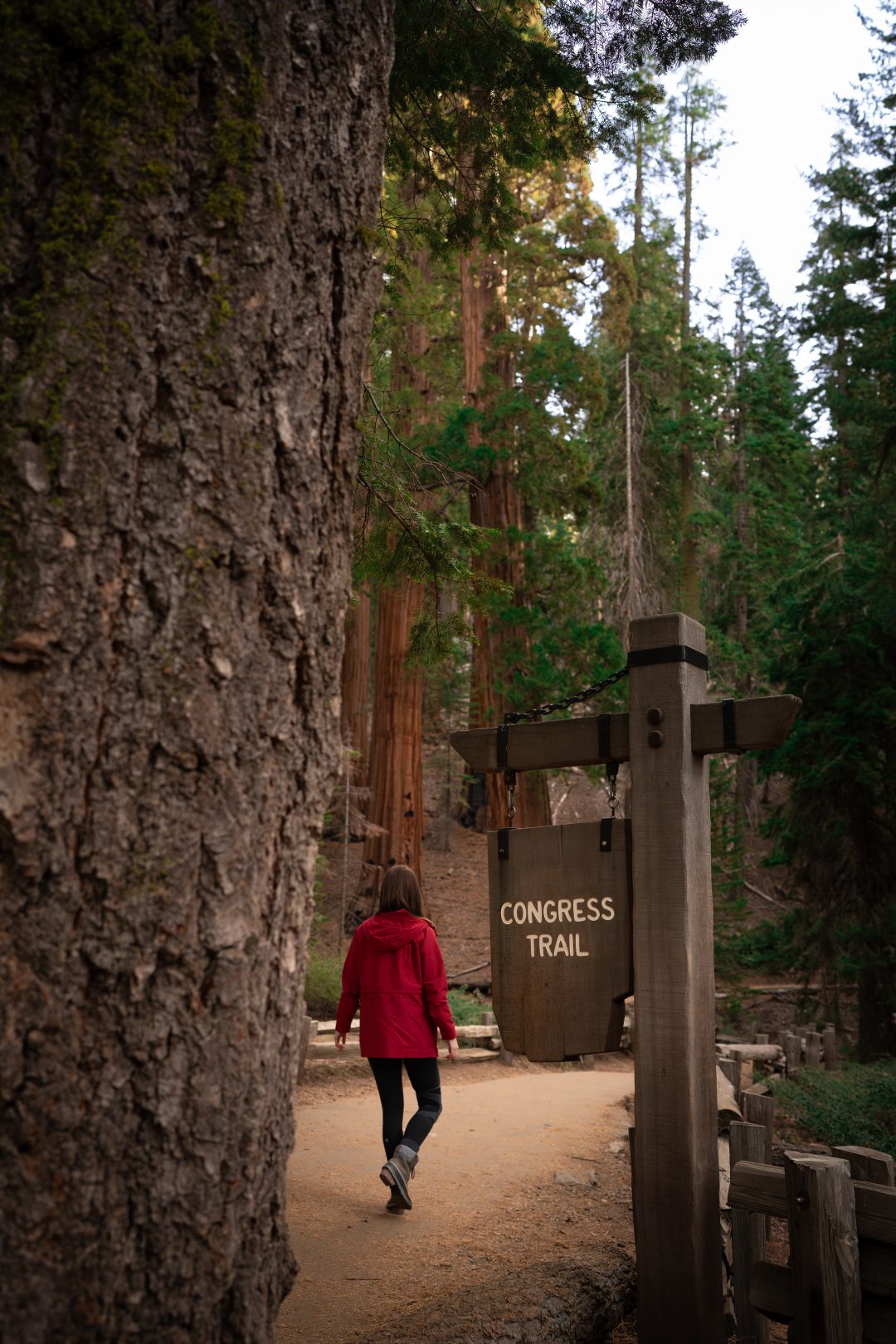
After taking in General Sherman, continue on to Congress Trail, a 2 mile loop that winds past the President Tree, the Senate Group, the House Group, and the McKinley Tree. The trail is relatively flat and features some of the most impressive giant sequoias in the park’s aptly named “Giant Forest”. There’s even a walk through log you’ll pass through on your way back!
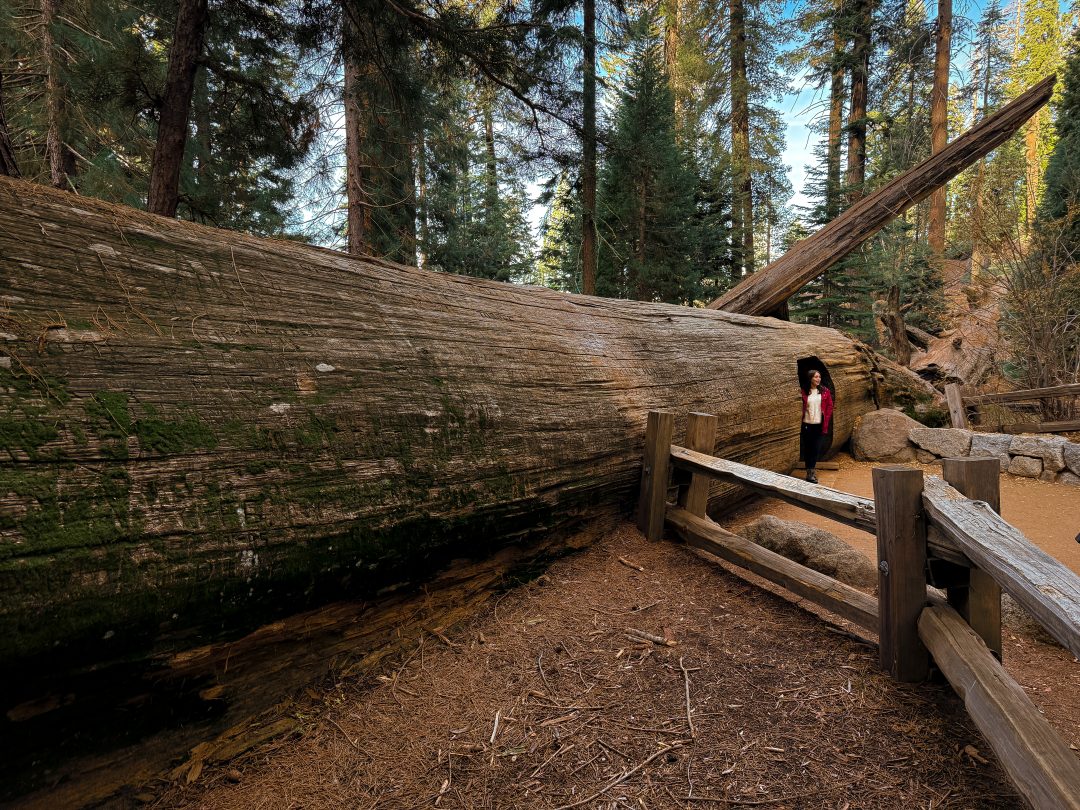
Best for: The world’s largest tree and a peaceful forest loop
Trail Length: 2 miles roundtrip (Congress Trail loop)
Seasonal Note: Accessible year-round, though winter conditions may close some parking areas
Secret Tip
Arrive early (ideally before 8 AM) to experience General Sherman with minimal crowds. The main parking lot often fills quickly during peak season, but pullouts along Generals Highway provide alternative parking when the lot is full. Early morning in December, there was only one other couple when I arrived at 7:30 AM. That kind of solitude is worth setting an alarm for.
Crescent Meadow – Tharps Log Loop
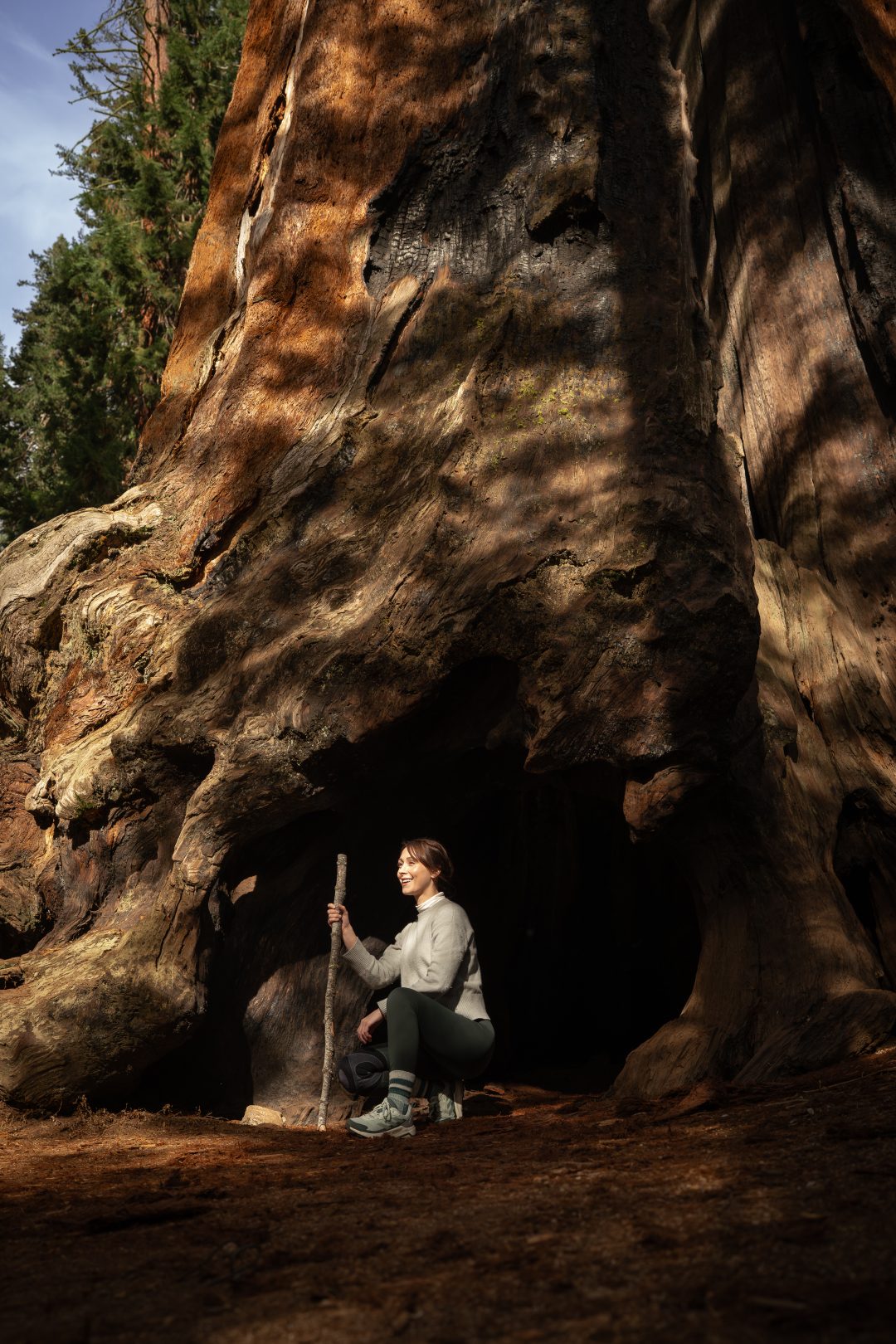
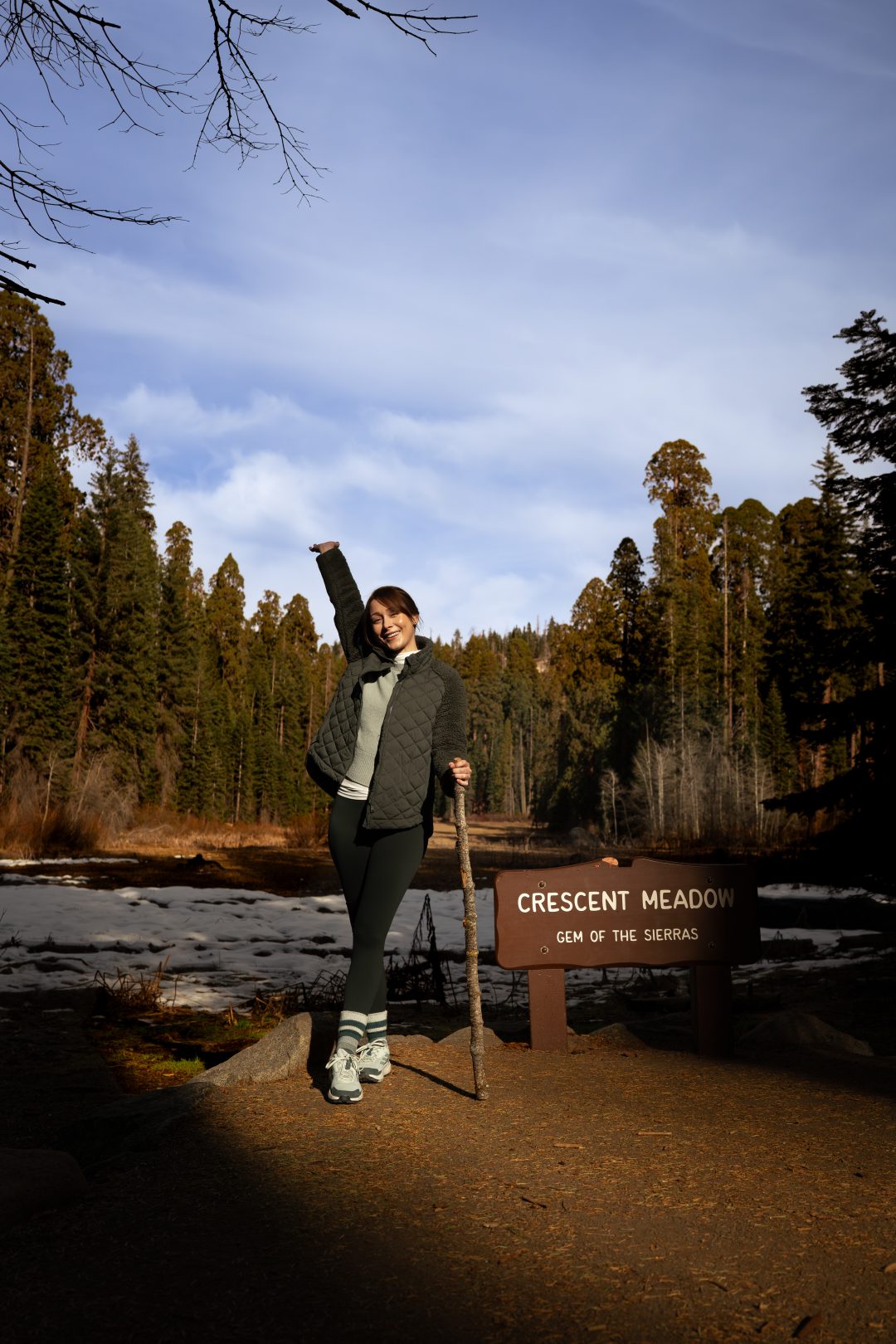
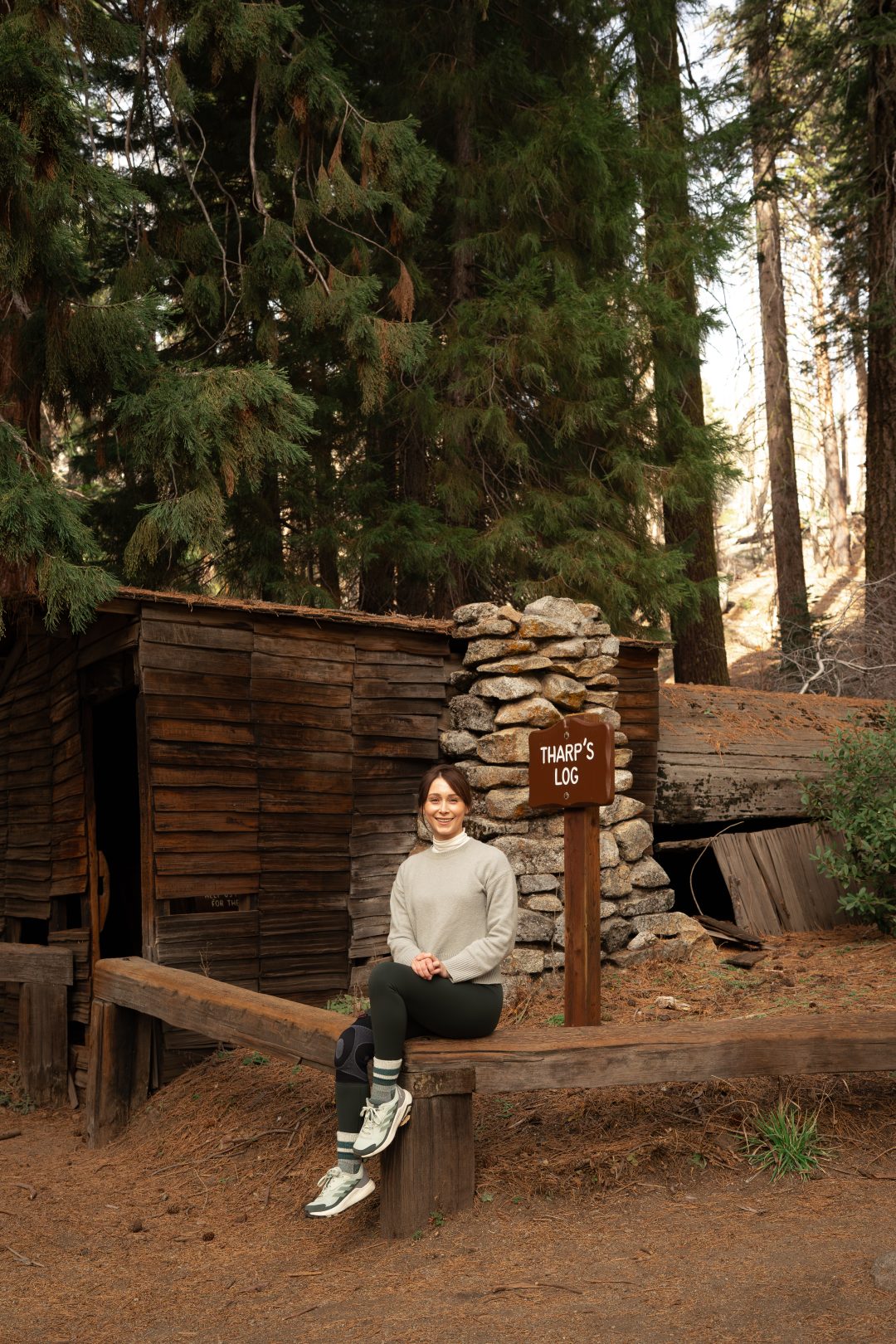
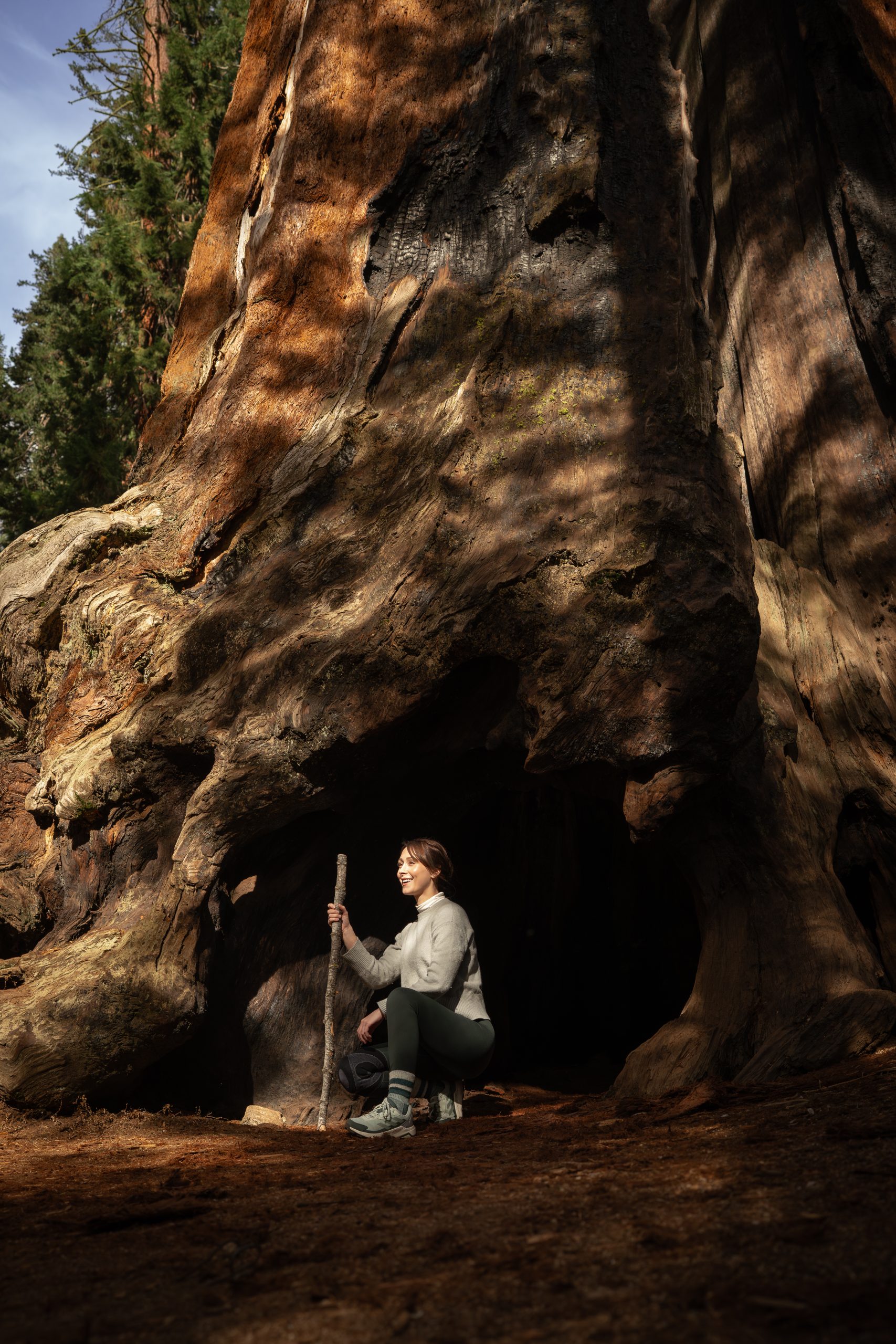
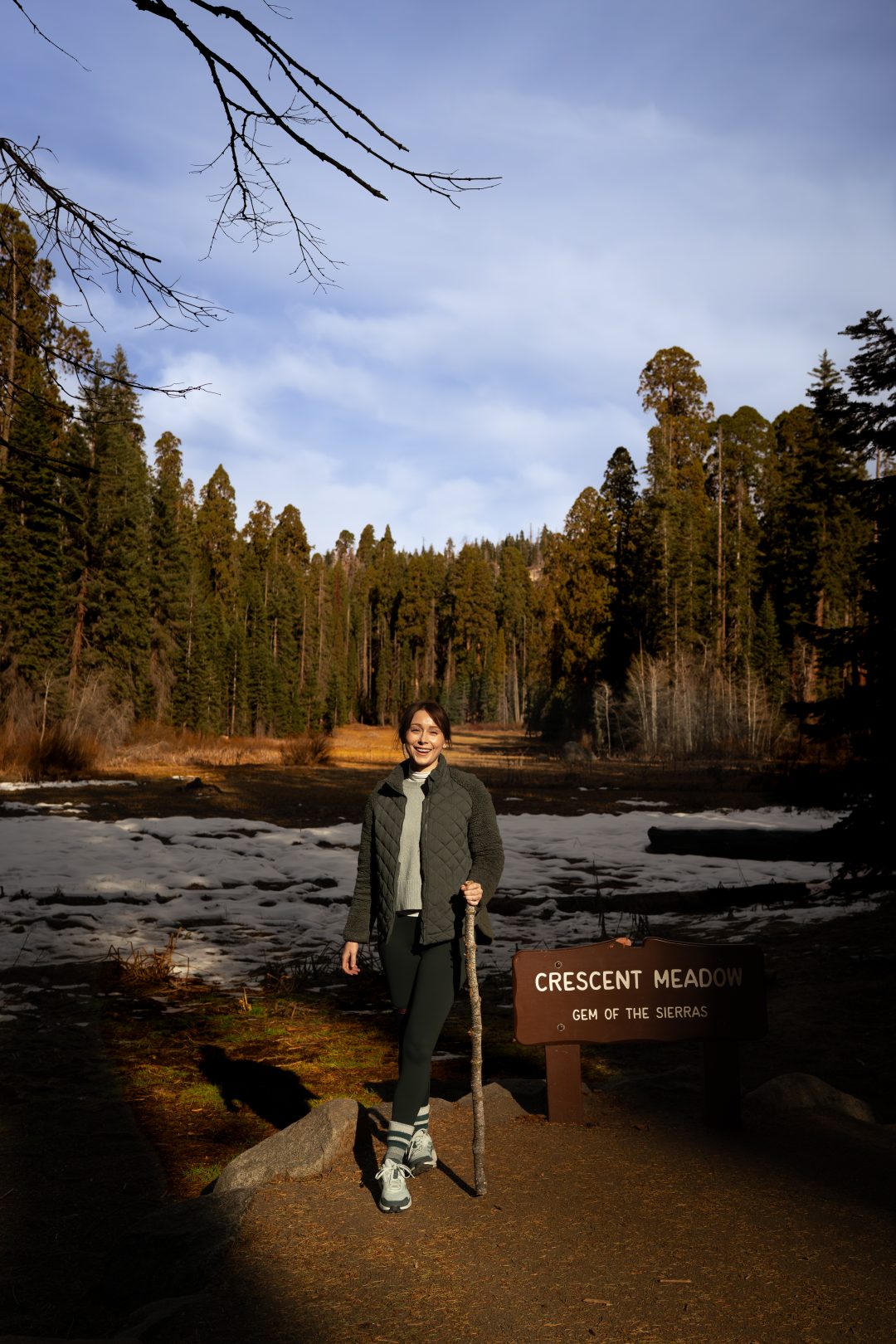
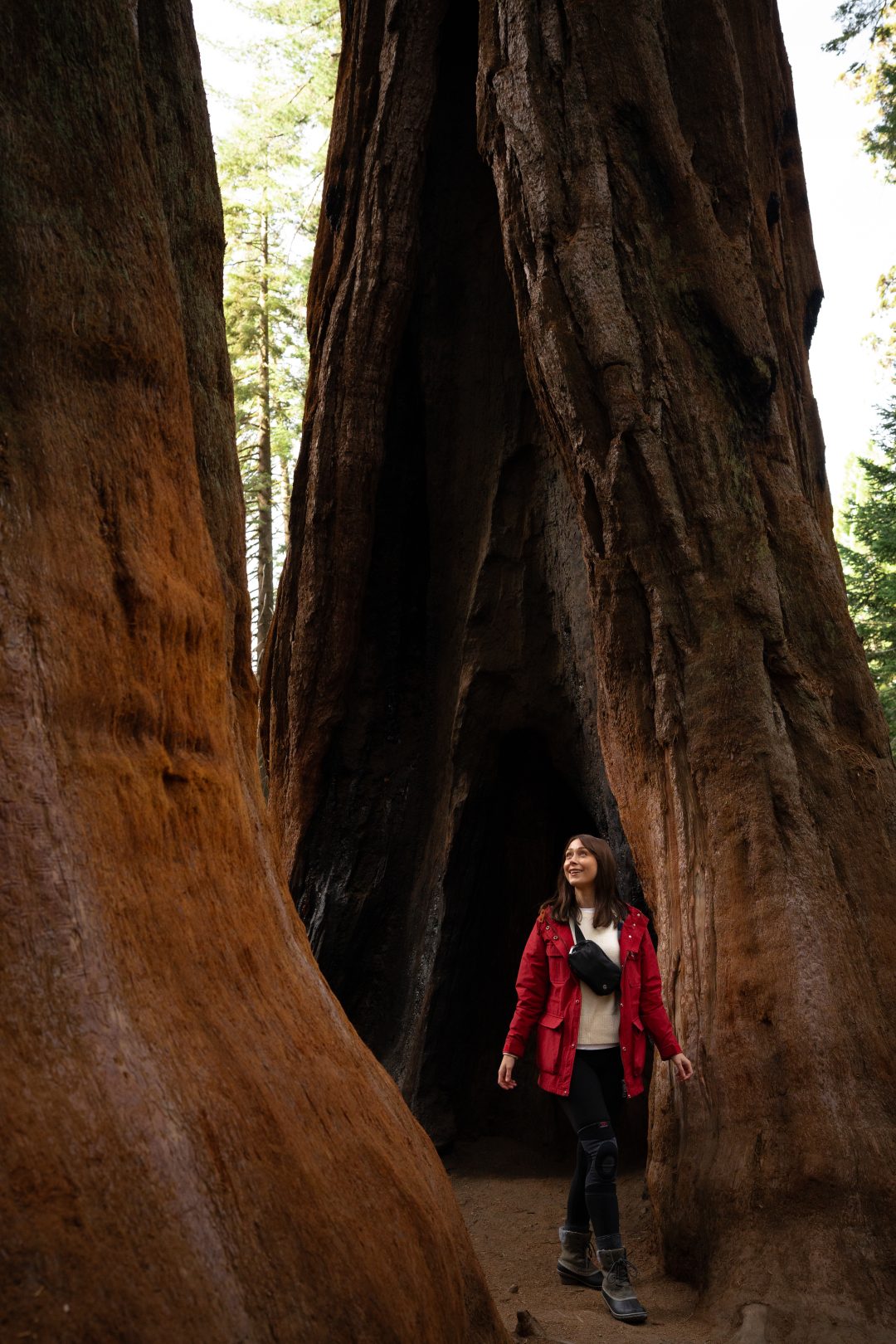
This 2.3 mile loop takes you through meadows, around Tharp’s Log (a fallen sequoia that rancher Hale Tharp used as a summer cabin in the 1860s), past the Chimney Tree (a fire-hollowed sequoia you can actually stand inside) and toward Squatter’s Cabin, a small historic structure tucked into the forest.
With only 252 feet of elevation gain throughout, the trail is gentle despite a few rolling sections between Tharp’s Log and Chimney Tree. This was the first ever trail I ever did in Sequoia and I’m so glad I did! The whole area kept reminding me of Middle Earth, especially around Chimney Tree, where I couldn’t resist quoting Frodo’s “Get off the road, quick!” while ducking under its hollowed interior.
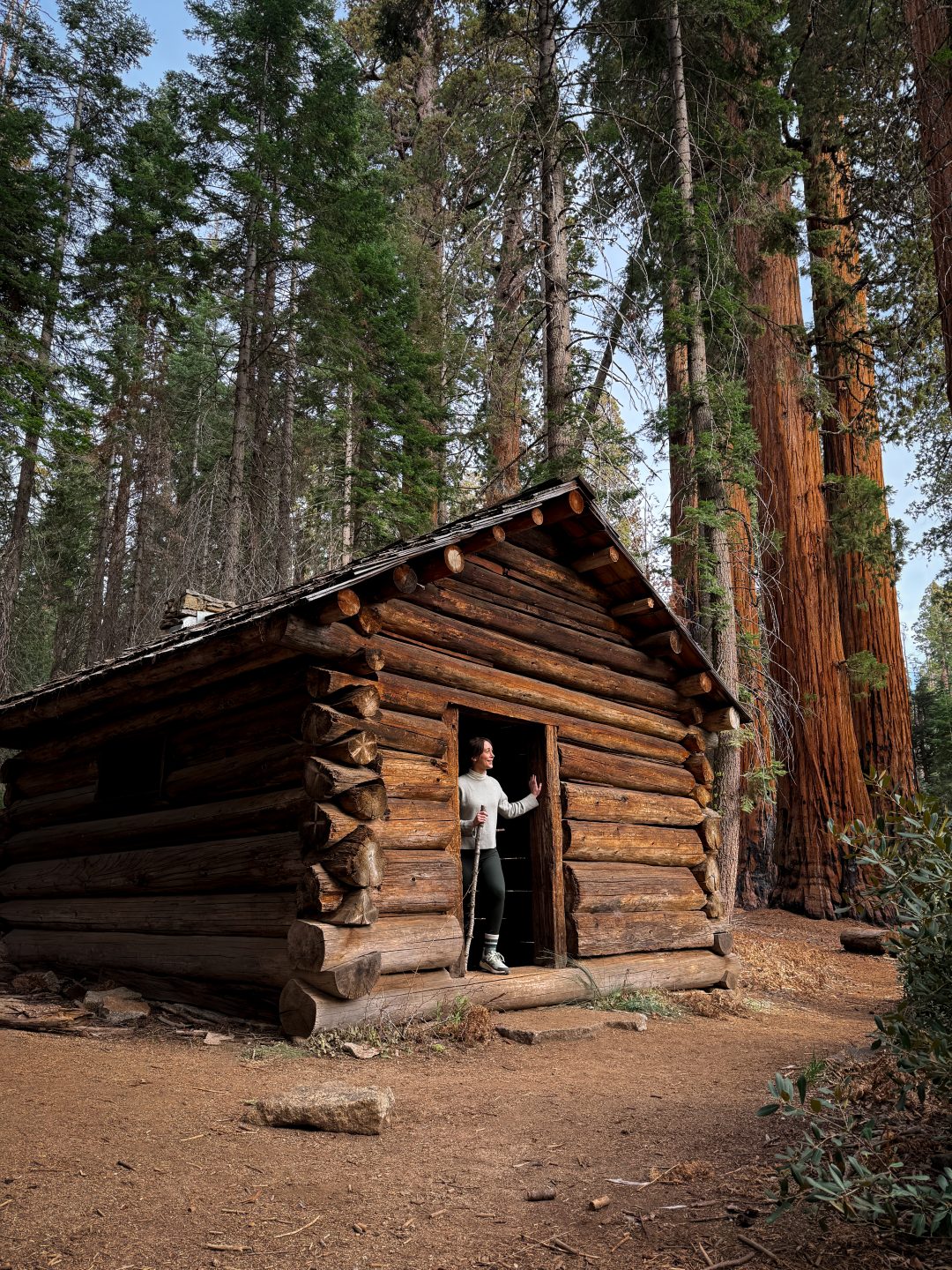
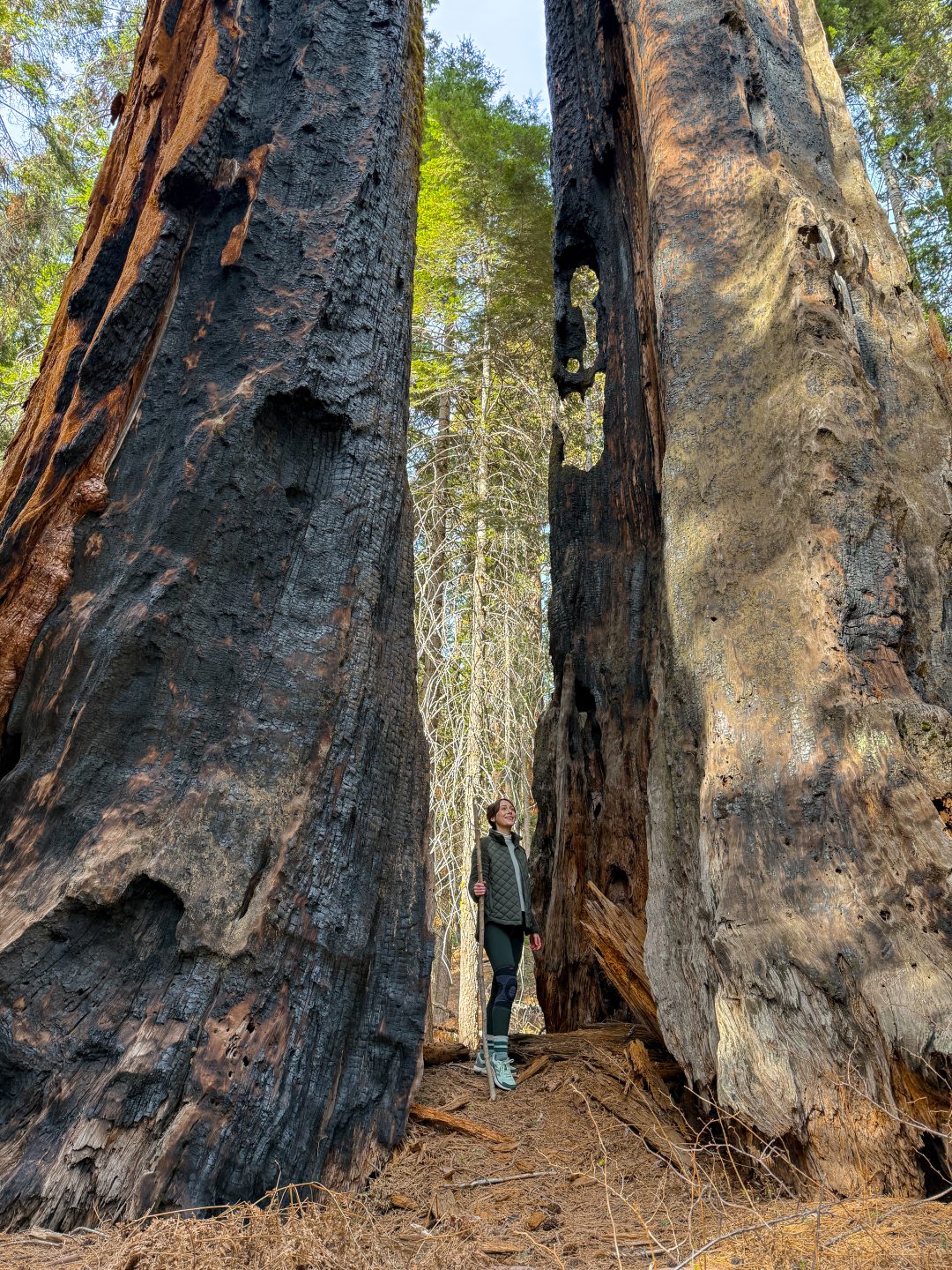
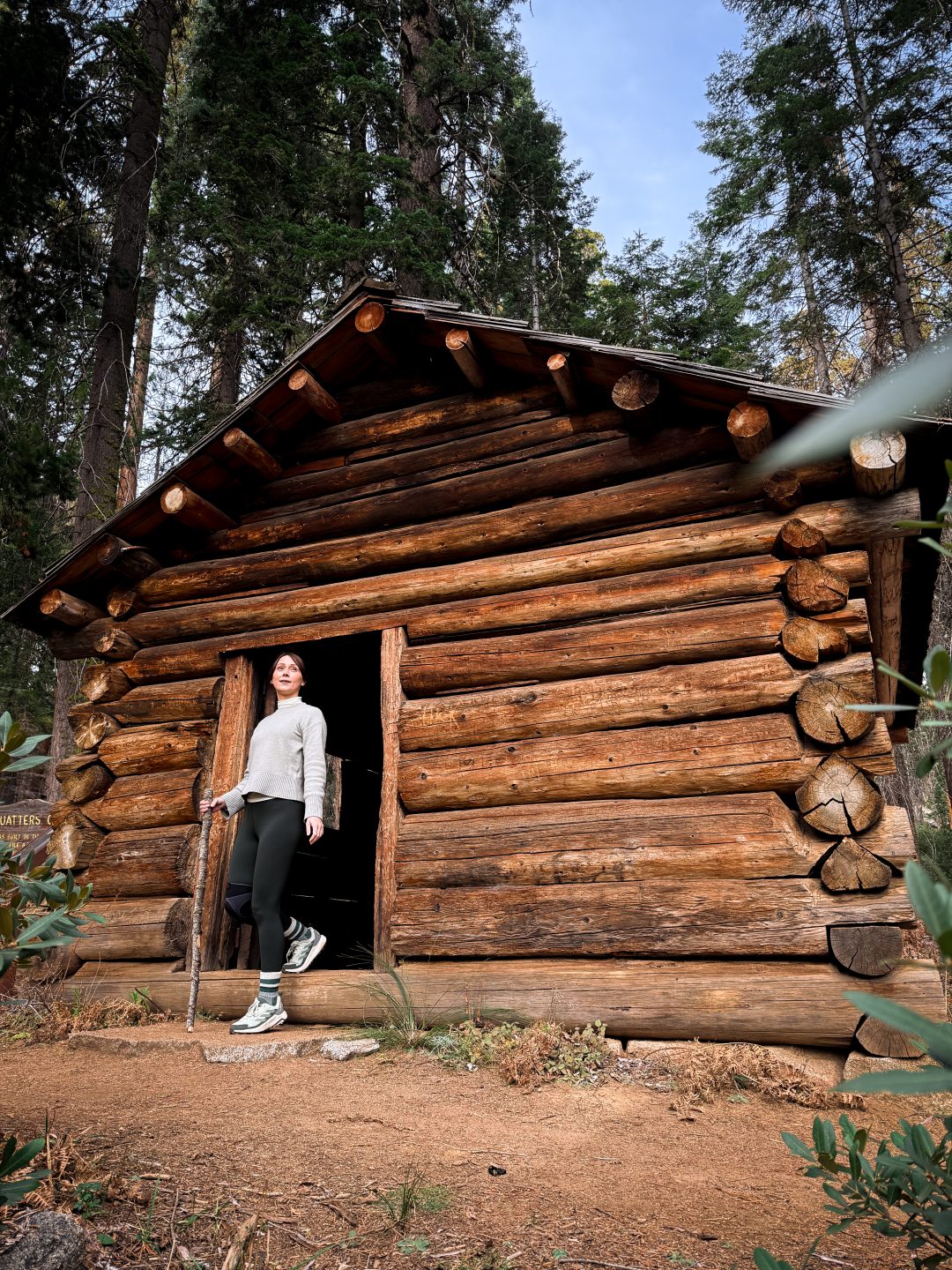
Best for: Meadow views and walk-through sequoia experiences
Trail Length: 2.3 miles roundtrip
Seasonal Note: Bears are common to see in meadows, especially in the spring and early summer. Always keep a safe distance and never approach wildlife. Learn what to do if you encounter a bear in the parks!
Secret Tip
Start the loop counterclockwise, heading toward Tharp’s Log first, then continuing to Chimney Tree. This routing ensures you don’t miss anything and avoids unnecessary backtracking (learn from my mistake: I went the wrong way first and ended up having to double back).
And if you’re looking for something a bit shorter, you have the option of cutting out Squatter’s Cabin and/or Tharp’s Log from your hike. The trail has multiple routes and offshoots, meaning it can be customized to your desired length and preferences (it can range from 1.3 miles – 2.3 miles as a loop, or can be combined with other trails nearby). Just make sure to download the park’s offline map ahead of time to keep you where you want to go.
Big Trees Trail
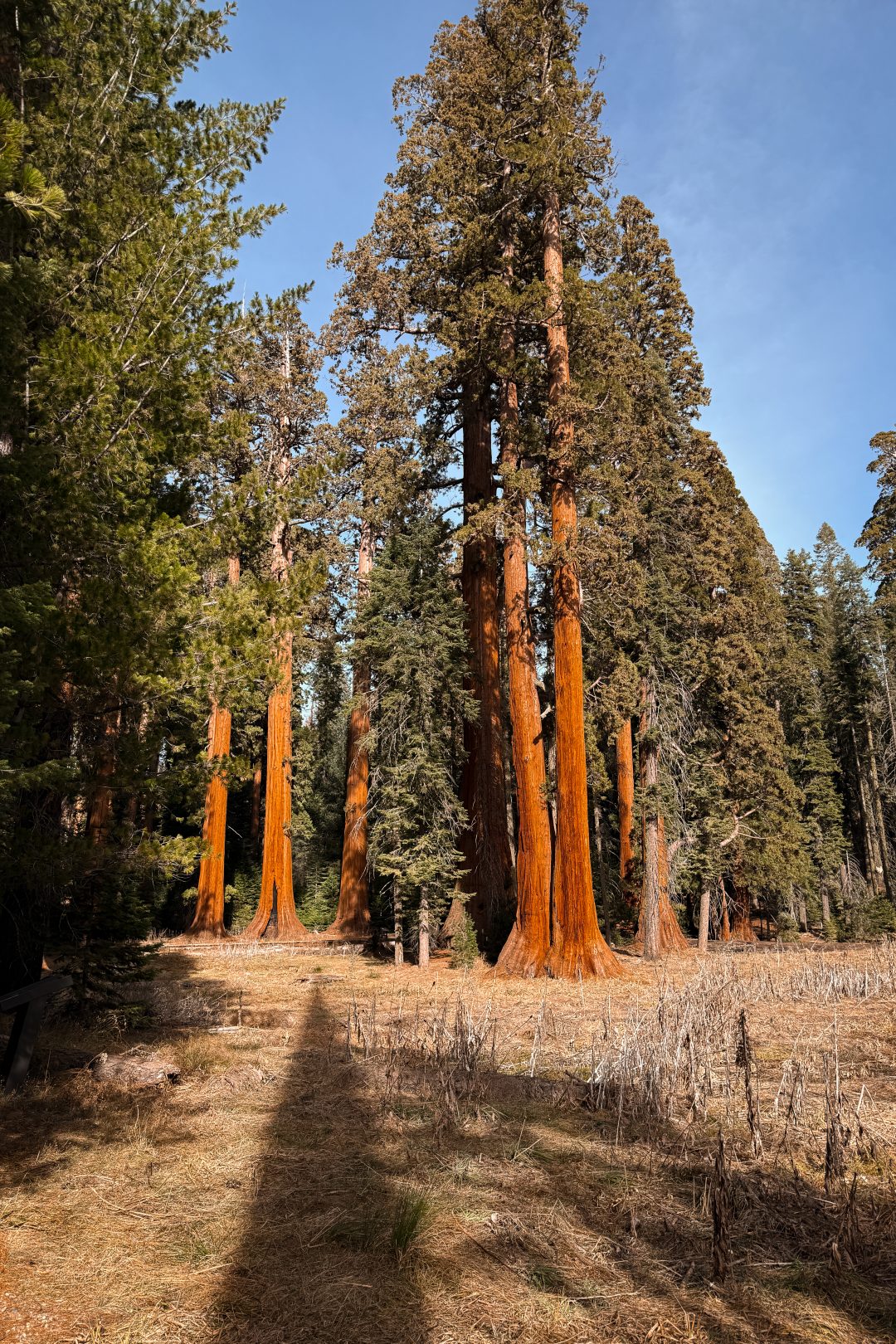
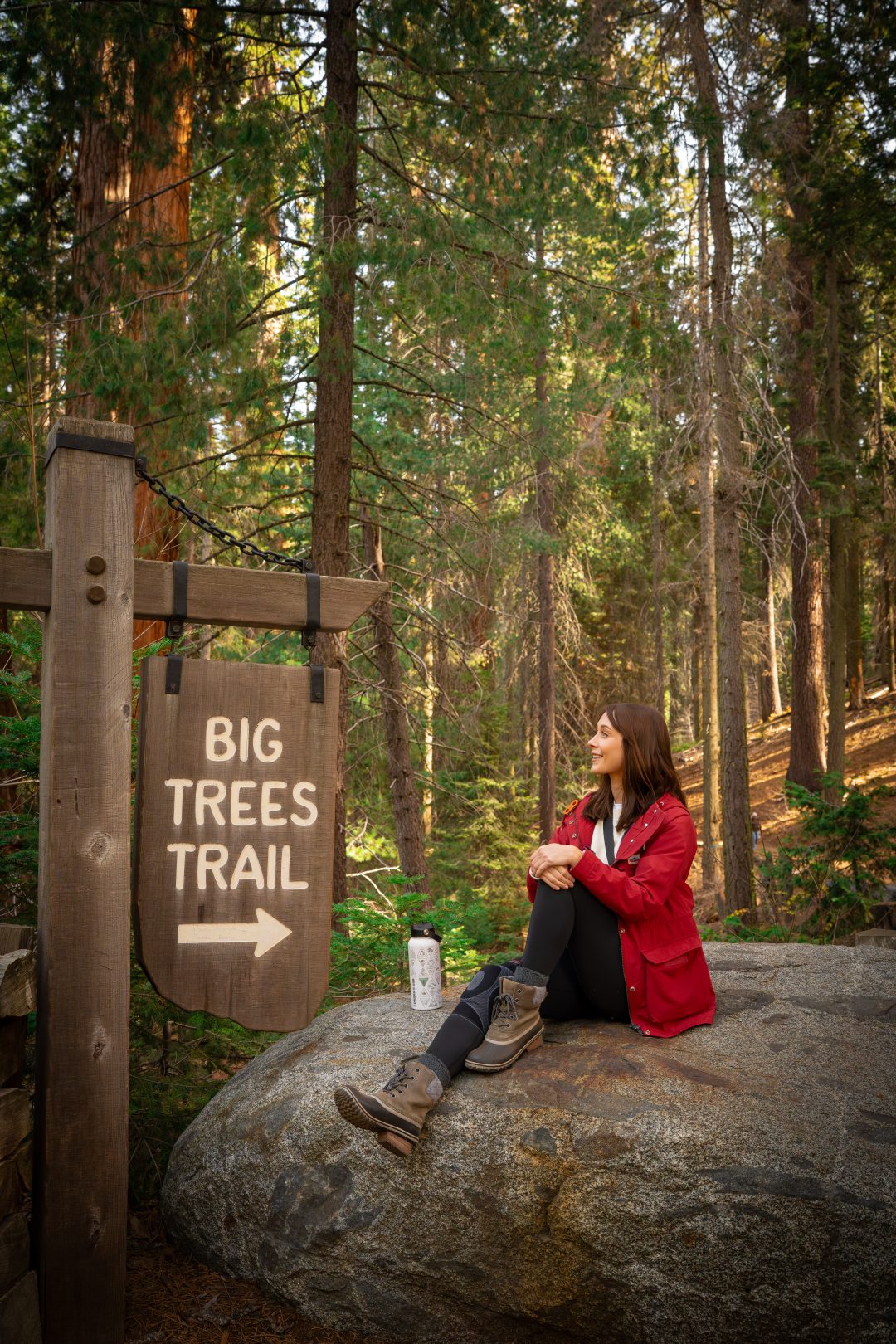
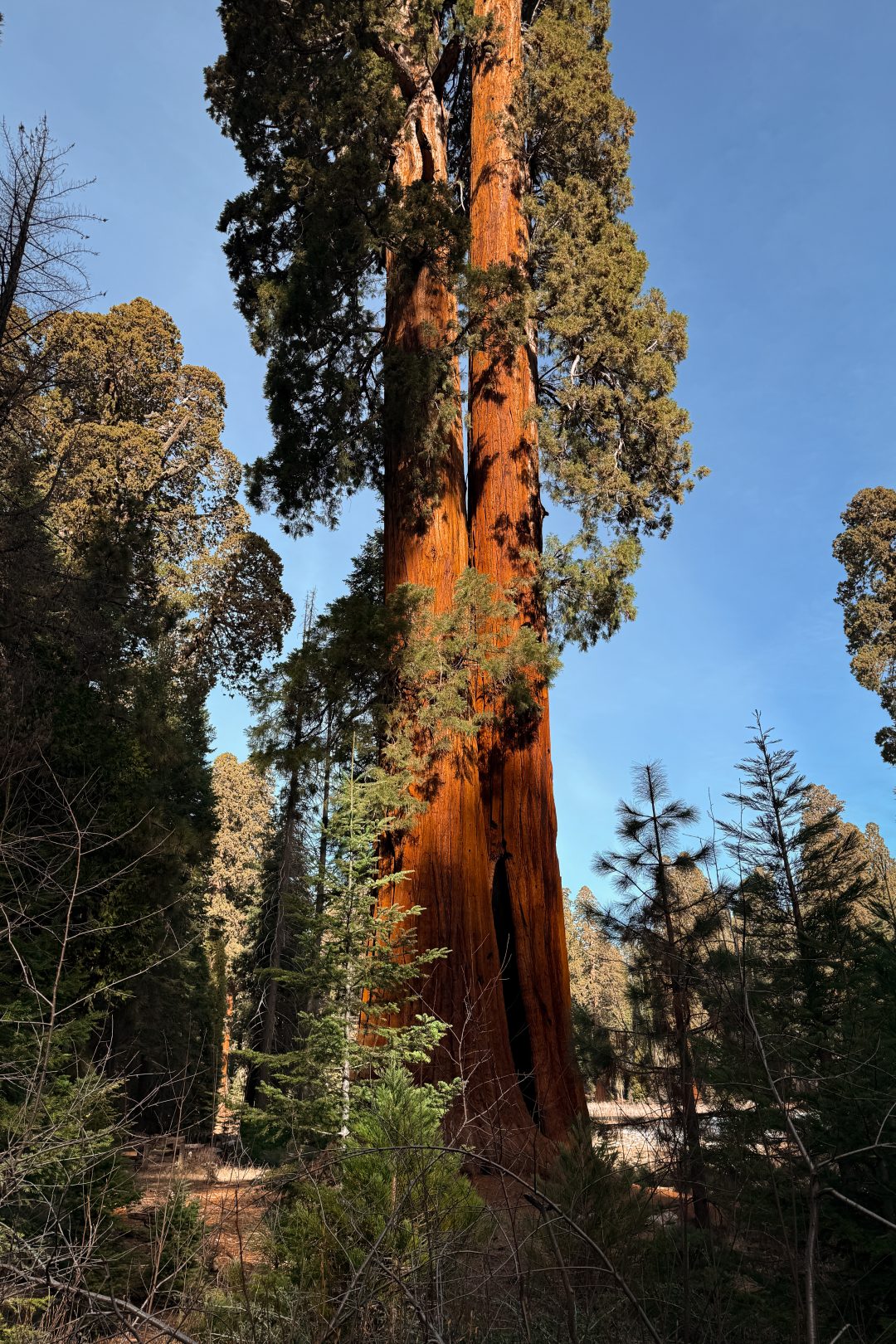
Don’t let the fact that this trail is paved and ADA-accessible fool you into thinking it’s not worth your time. This easy loop through a sequoia-dotted meadow near the Giant Forest Museum is lovely, meditative, and perfect if you’re traveling with the whole family or want giant trees without elevation gain.
The interpretive signs along the trail tell the story of what used to be here: a restaurant and other development that was removed in the 1990s so these trees could thrive without human interference.
Best for: Easy access to giant sequoias in a meadow setting
Trail Length: About 1 mile roundtrip
Seasonal Note: Open year-round when roads are accessible
Secret Tip
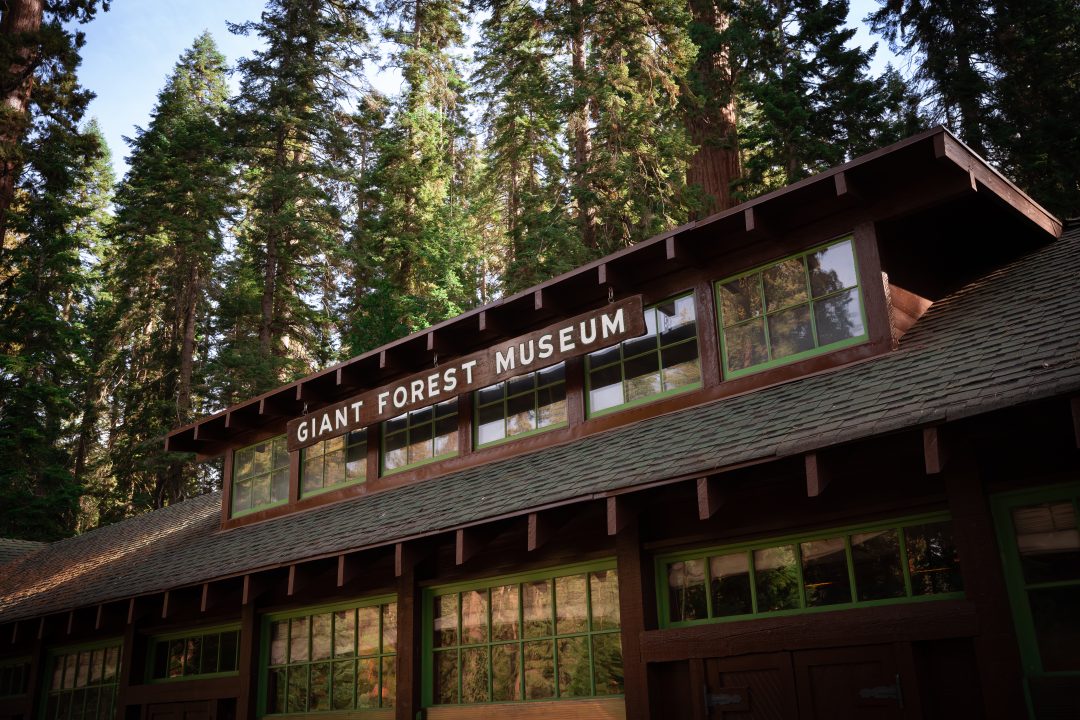
While you’re here, stop at the Giant Forest Museum. Not only is it a great stop to ask rangers year-round the best trails and tips for the park at the time your visiting, but you can go see The Sentinel Tree and walk the outdoor pathway that shows the horizontal length of a giant sequoia! It was hard for me to grasp how truly massive these trees are until I see their length measured out on the ground! Stand at one end while your travel companions stand at the other, and you’ll finally understand the gigantic scale!
A Note on Trail Etiquette
Please stay on designated trails and leave no trace when hiking through Sequoia. These ecosystems are fragile, and stepping off-trail to snap photos in the brush damages vegetation and soil that takes years to recover (plus, stepping off-trail can be extremely dangerous for you as well!). And while you may want to bring your dog along for the fun, this is one national park I’d recommend leaving them at home. Pets aren’t allowed on any of the trails here, and ignoring posted signage puts wildlife (bears, coyotes, deer), your pet(s), and the environment at risk.
Best Viewpoints and Quick Stops
These are all the must-see viewpoints and quick stops I recommend to supplement your first time visiting the park!
Moro Rock
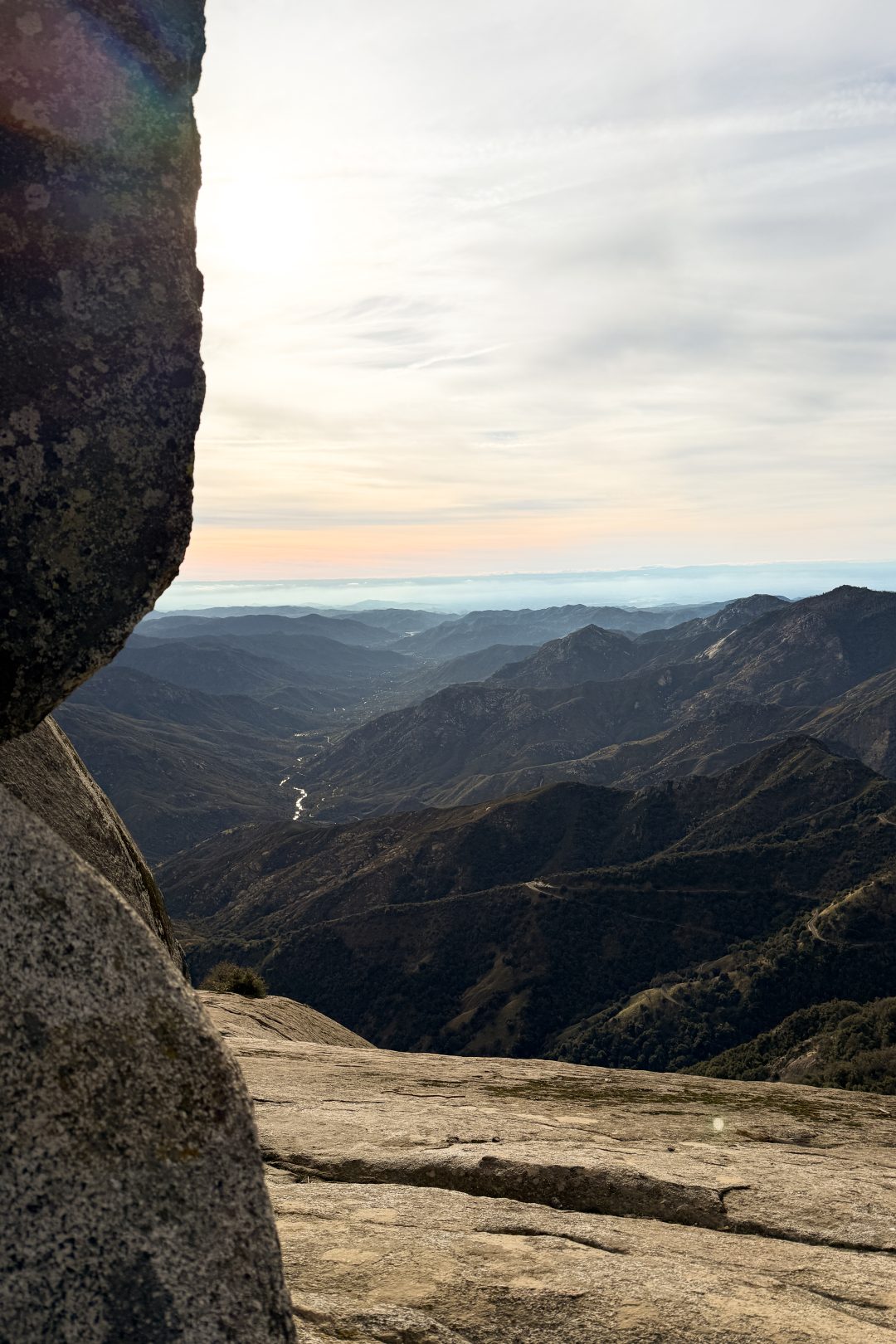
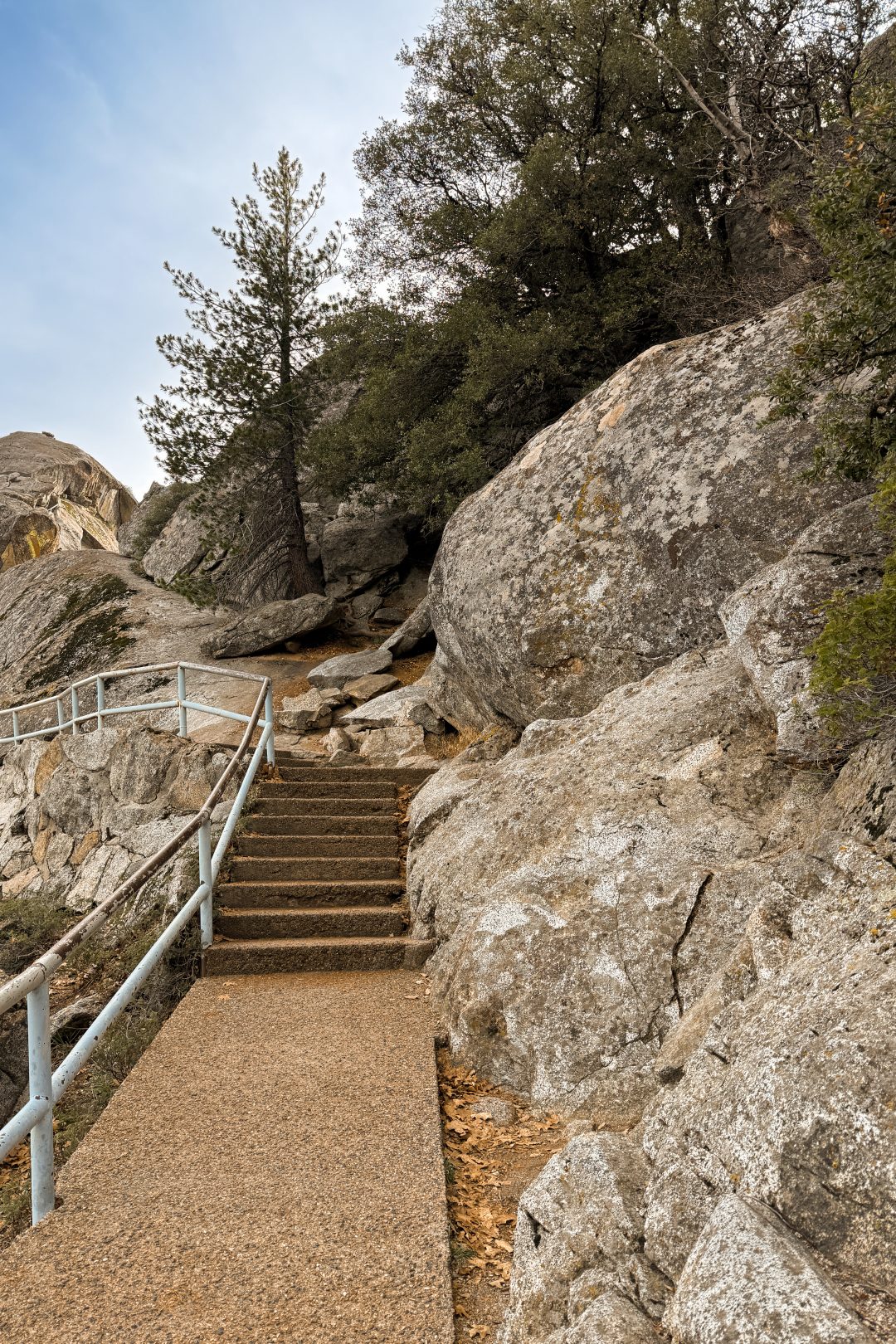
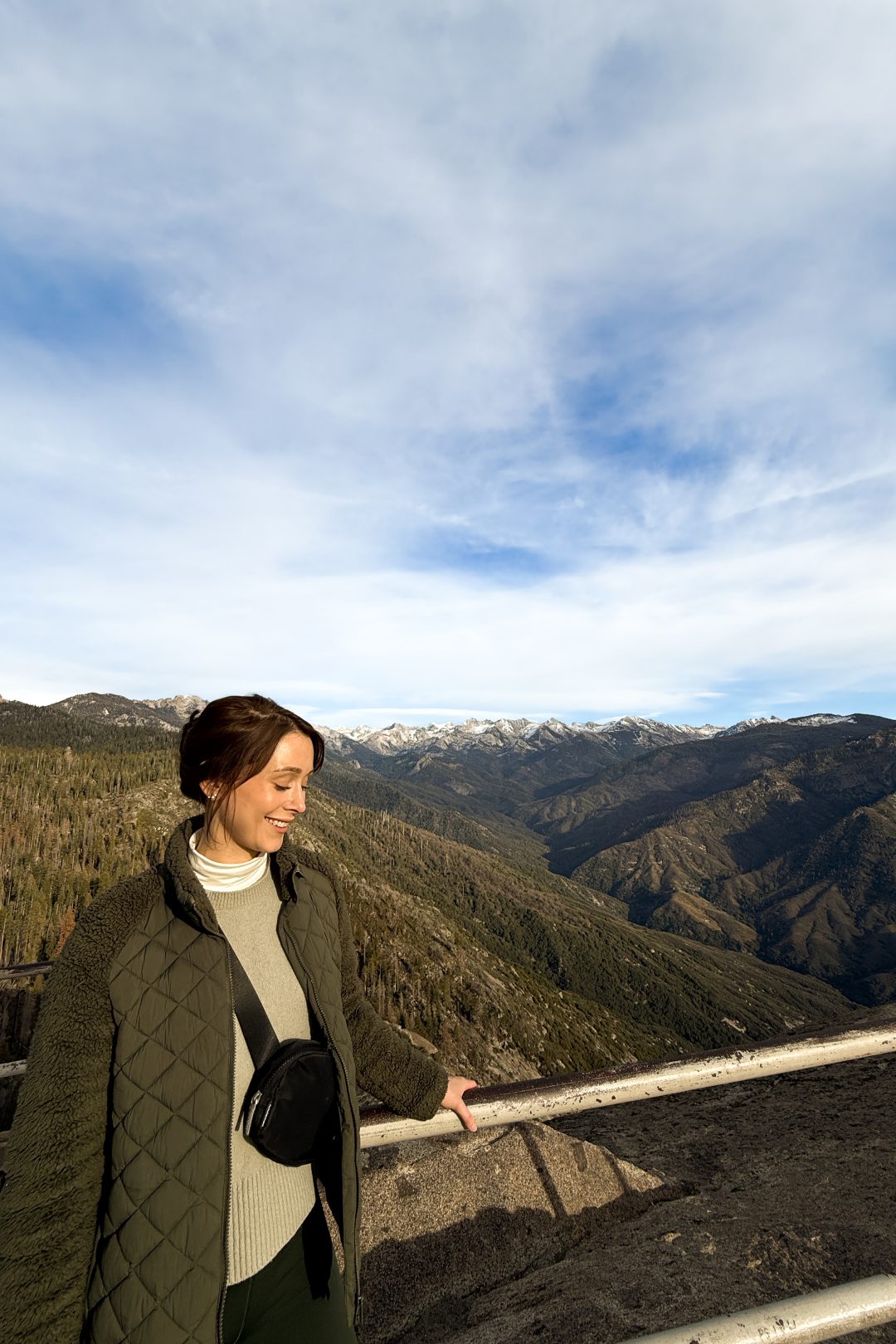
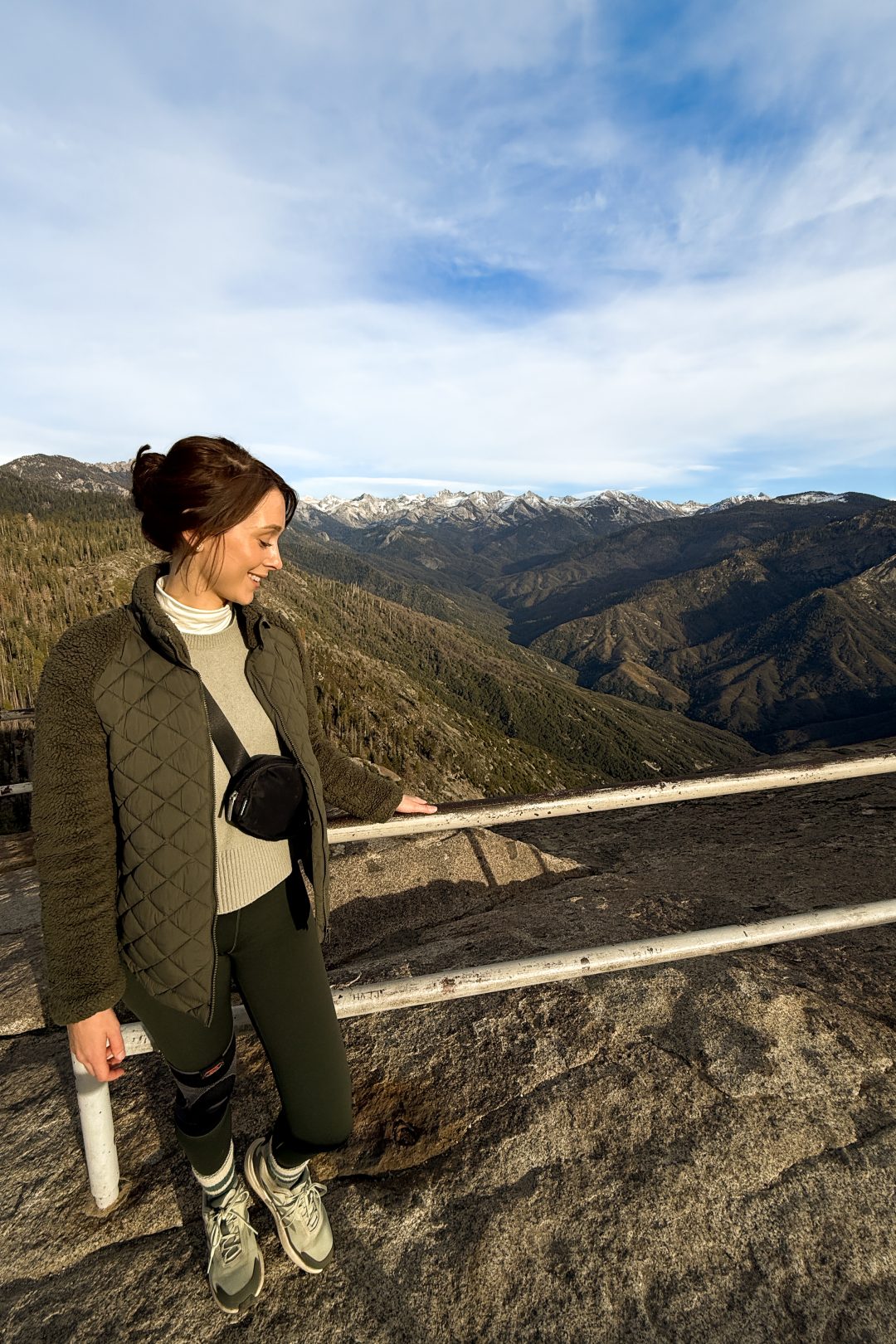
If you’re comfortable with heights, Moro Rock is a must. This granite dome features a stone staircase that winds up and around the rock, with railings on one side and steep drop-offs on the other. The stairs are narrow in places, and you’ll pass people going the opposite direction, but the 360 degree views of the Sierra Nevada and Great Western Divide from the top are worth it.
Secret Tip: wildlife spotting at the base can be excellent! We saw two deer and a woodpecker when we descended at sunset. Just please stay on trail and don’t approach the wildlife (it can be dangerous for both you and them)!
Best for: Panoramic mountain views from a granite summit
Trail Length: 0.5 miles roundtrip (a steep incline, but mostly stairs – 350+ to be exact!)
Seasonal Note: Best late spring through fall; avoid during rain, snow, or icy conditions
Beetle Rock
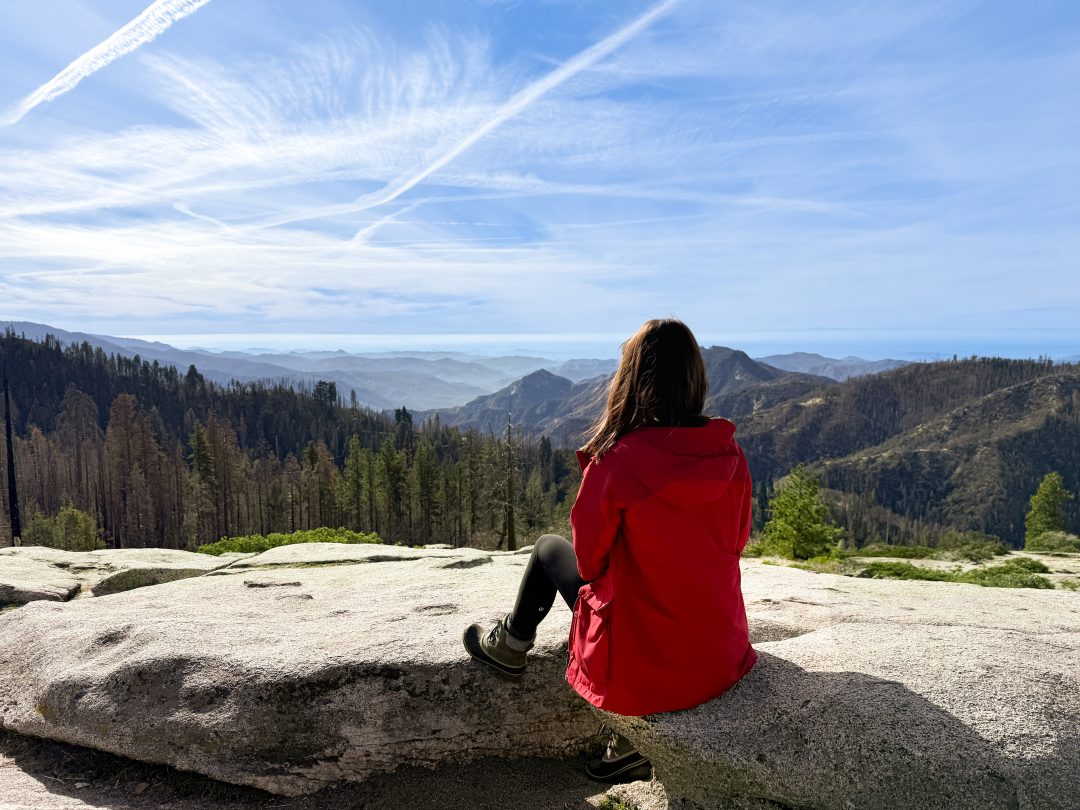
A short, easy slope from the parking lot near the Giant Forest Museum leads to this massive granite outcropping with sweeping valley views. The rock genuinely looks like the back of a huge beetle, and the views are rewarding for minimal effort.
Best for: Quick granite overlook with minimal hiking
Trail Length: Less than 0.5 miles roundtrip
Seasonal Note: Accessible whenever the Giant Forest area is open
Tunnel Log

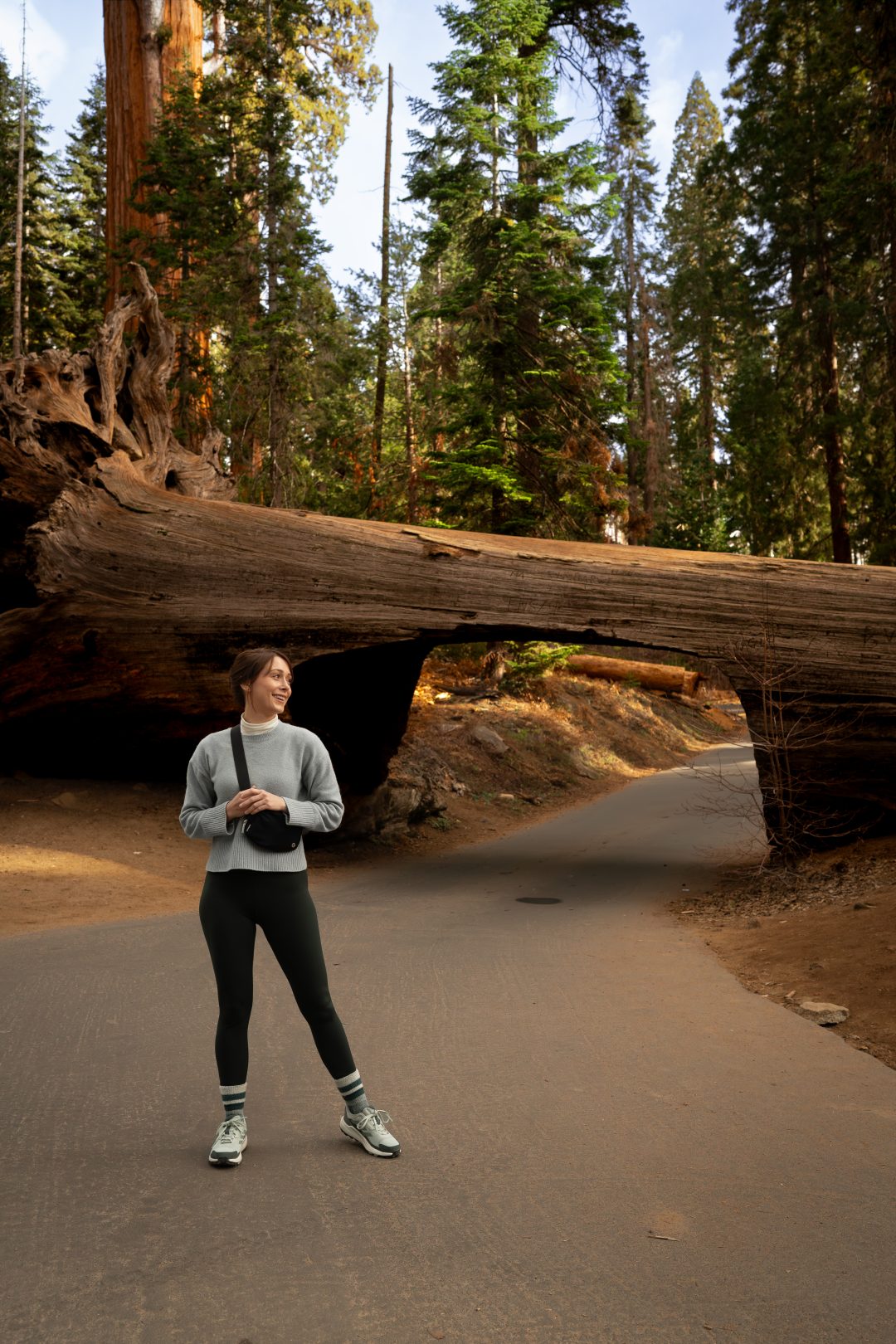
You drive through a fallen sequoia. It’s exactly as cool as it sounds. The log fell in 1937, and a tunnel was cut through it to allow cars to pass. It’s a classic Sequoia photo op and worth the stop.
Best for: A drive-through sequoia experience
Seasonal Note: Accessible when Crescent Meadow Road is open (typically late spring through fall)
Tunnel Rock
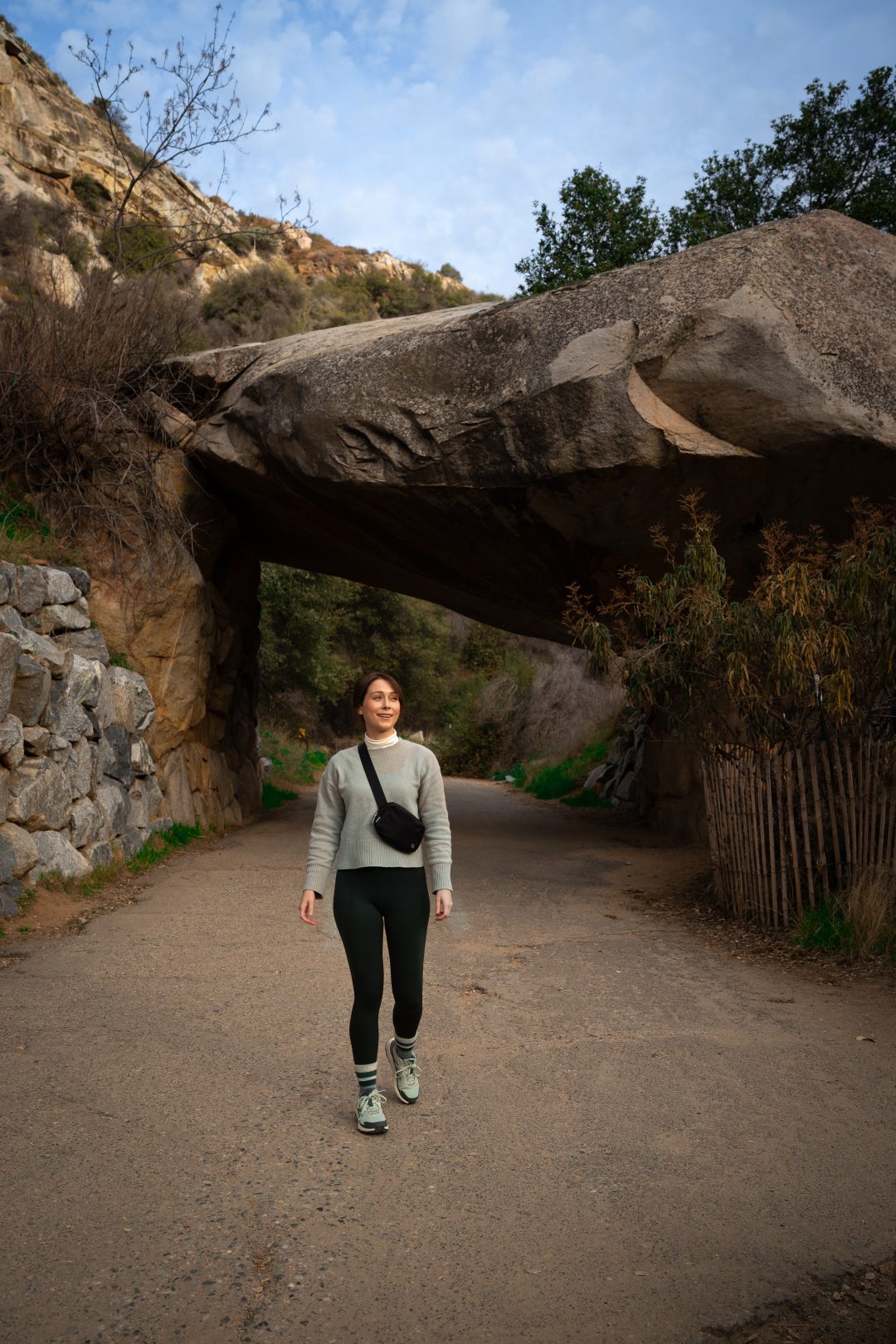
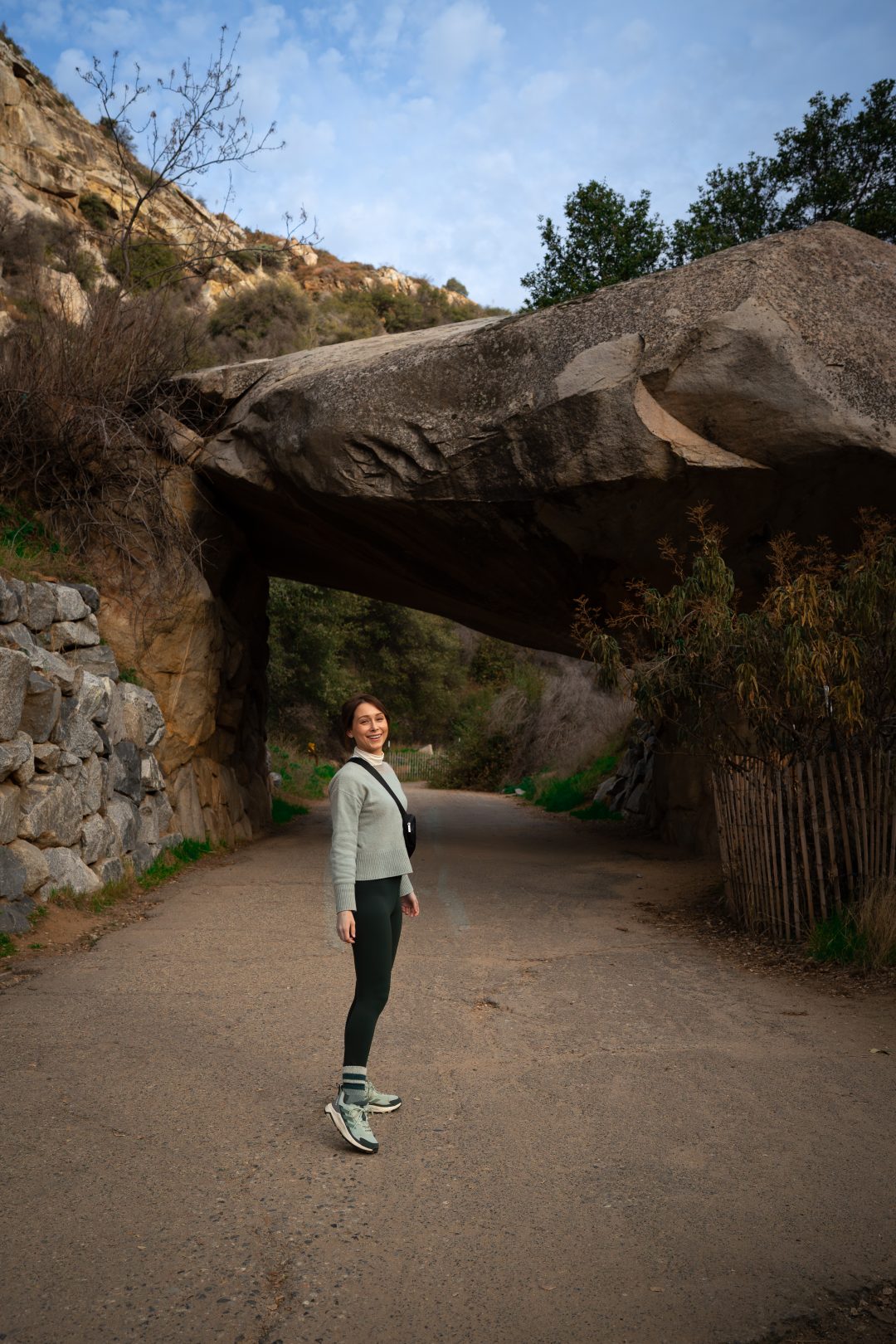
A massive granite boulder arches over the road on your way into the park. It’s less famous than Tunnel Log but equally worth pulling over for a quick photo.
Best for: A natural rock tunnel you drive under
Seasonal Note: Located on Generals Highway, open year-round (weather permitting)