The Best Grand Canyon Viewpoints
If you’ve ever stood at the edge of the Grand Canyon and felt completely speechless, you already know that no photo, no documentary, and certainly no written description can do it justice (sorry in advance to the readers of this post). The scale is just too big, the colors too layered, the canyon too alive with shadow and light to be captured in a single frame.
But what that I hadn’t fully appreciated until I visited the Grand Canyon is how much where you stand matters. The viewpoints along the South Rim can vary wildly in what they offer: the depth, what portion of the Colorado River you can spot, and even what wildlife might wander through! Here’s my breakdown of the best Grand Canyon viewpoints, organized by the two main scenic routes along the South Rim:
Mather Point
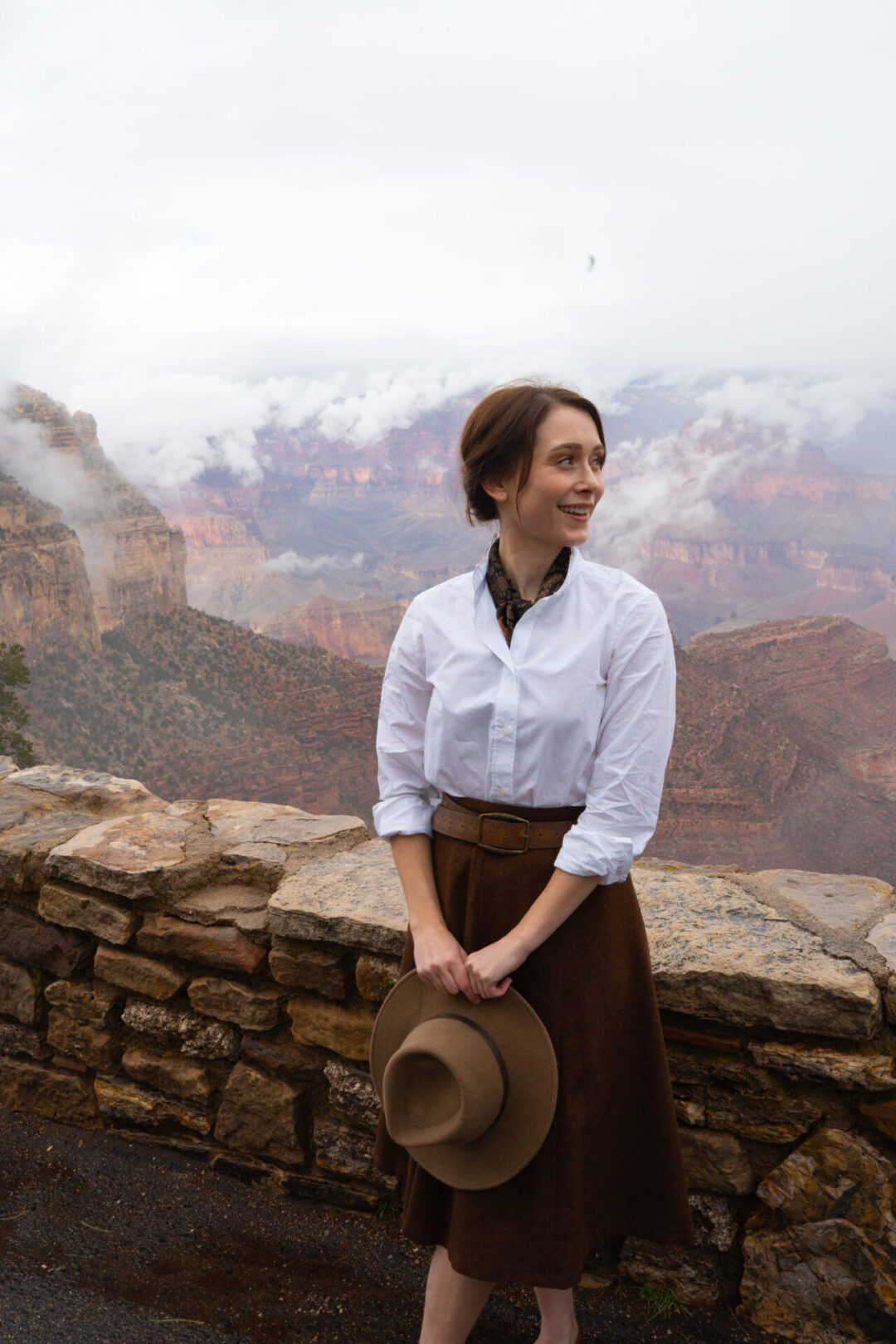
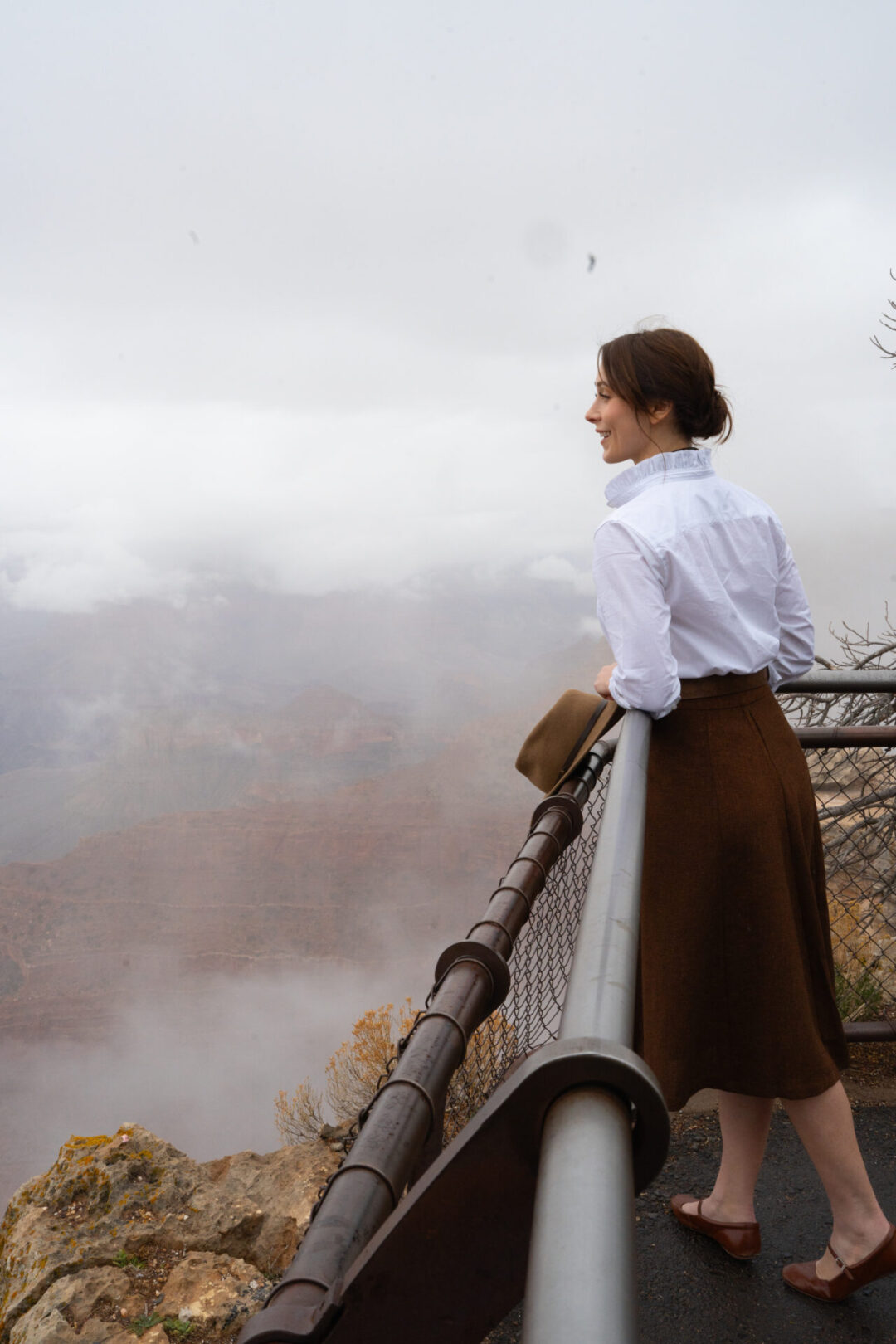
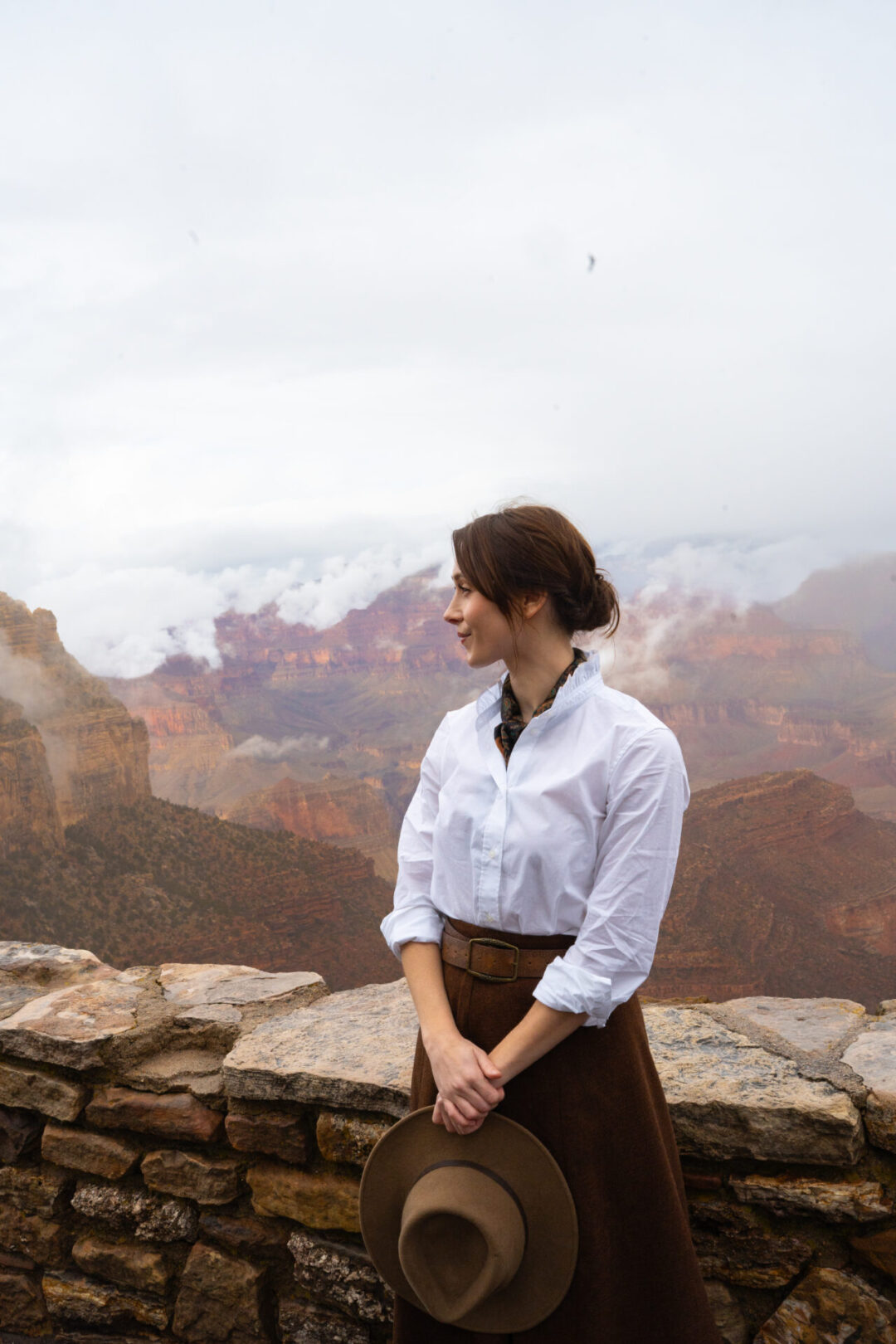
Located just a short walk from the Visitor Center, Mather Point is the most visited viewpoint in the Grand Canyon. Named after Stephen Tyng Mather, the first director of the National Park Service, this ADA accessible viewpoint features paved, flat, or gently sloped paths and sits at just over 7,000 feet, offering sweeping views deep into the canyon.
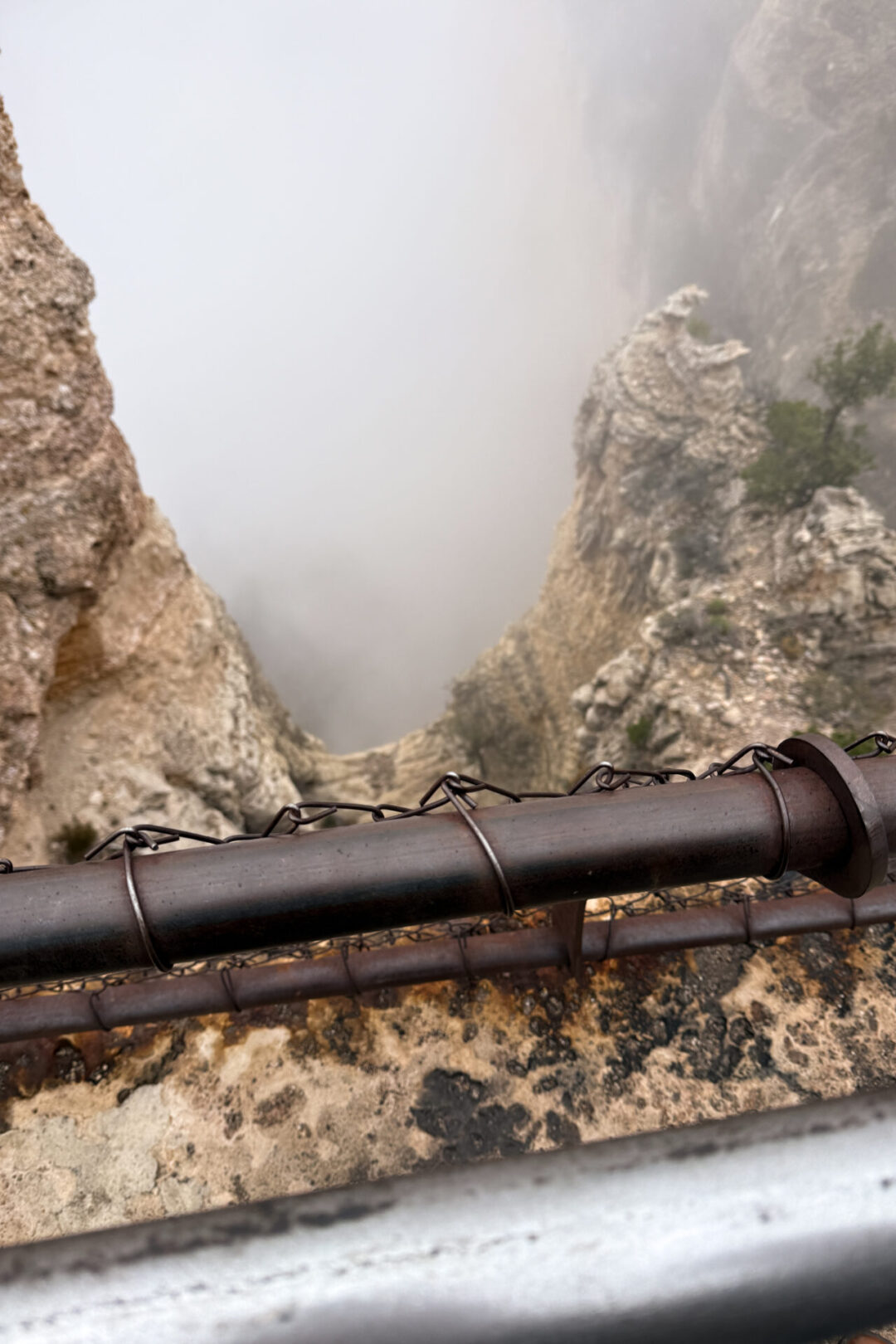
On the walk out, keep an eye out for a circular stone medallion carved into the concrete walkway honoring the many tribes who call the Grand Canyon home. Once you reach the point, there are actually two separate overlooks, each with safety rails built on rocks that project out into the canyon The view spans the Bright Angel Trail to the west and the South Kaibab Trail to the east, with Pipe Creek, O’Neill Butte, and the Tonto Trail in between.
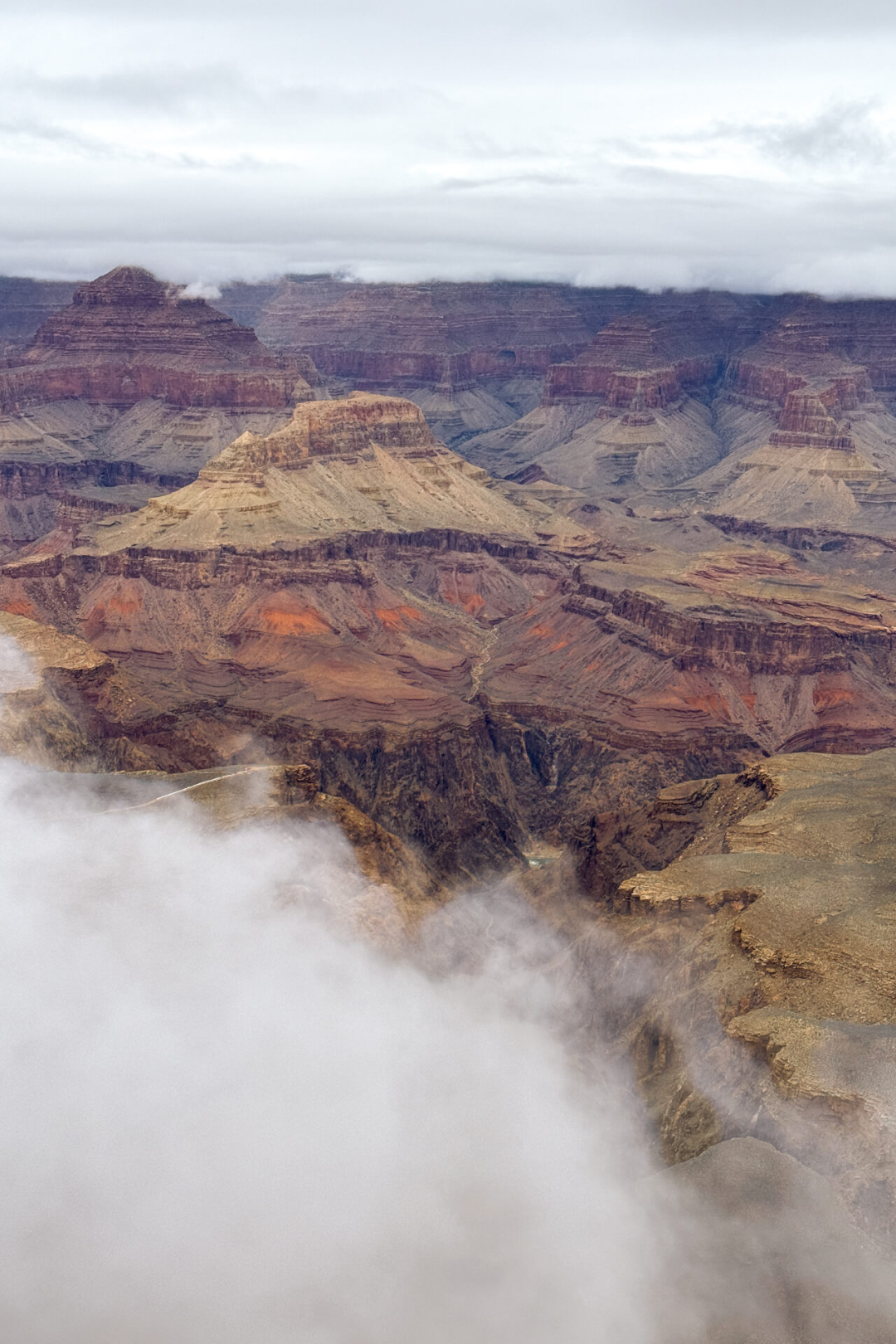
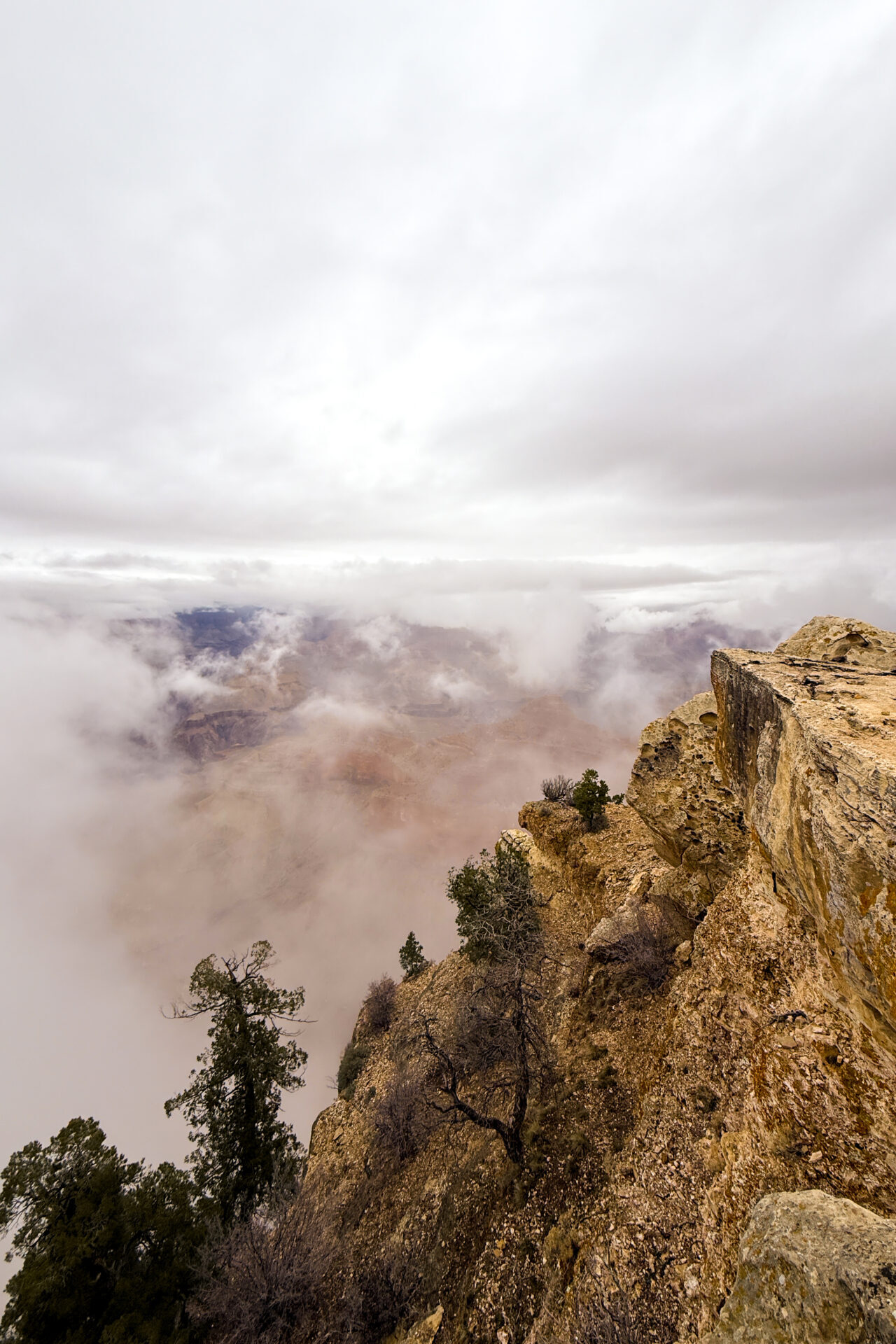
I visited on a rainy, cloudy morning and still got a few precious minutes of clear views. I could see birds riding the thermals above the gorge and a glimpse of the Colorado River far below! And a secret tip: because the Grand Canyon Visitor Center is right here, I’d strongly recommend stopping in to talk to a Park Ranger before you head out to other viewpoints. We got helpful, specific advice about which stops to prioritize each day of our trip, given the weather at the time, and those recommendations shaped the remainder of our itinerary!
What to Know for Visiting:
Shuttle Routes: Village (Blue) and Kaibab Rim (Orange)
- Current Shuttle Schedules can be found on the Grand Canyon National Park website.
Nearest Shuttle Stop: Grand Canyon Visitor Center
Closest Parking: Parking Lots 1, 2, 3, and 4-South Rim Visitor Center
Why It Stands Out: An easy-to-reach and paved (mostly-accessible) viewpoint with railings throughout, making it one of the more family-friendly routes inside the Grand Canyon*
What You’ll See: Colorado River, Bright Angel and South Kaibab Trails, sweeping canyon panorama
Best Time to Visit: Sunrise, or right when you get into the park! This viewpoint gets fairly busy given it’s easy access and location, so earlier is best if you want to avoid most of the crowds
*The rim of the Grand Canyon includes unfenced drop-offs at many viewpoints and people die from falls at the Grand Canyon each year so staying behind the safety rails where they exist and keeping a close eye on kids (even at those viewpoints with safety railings) is essential.
Hopi Point
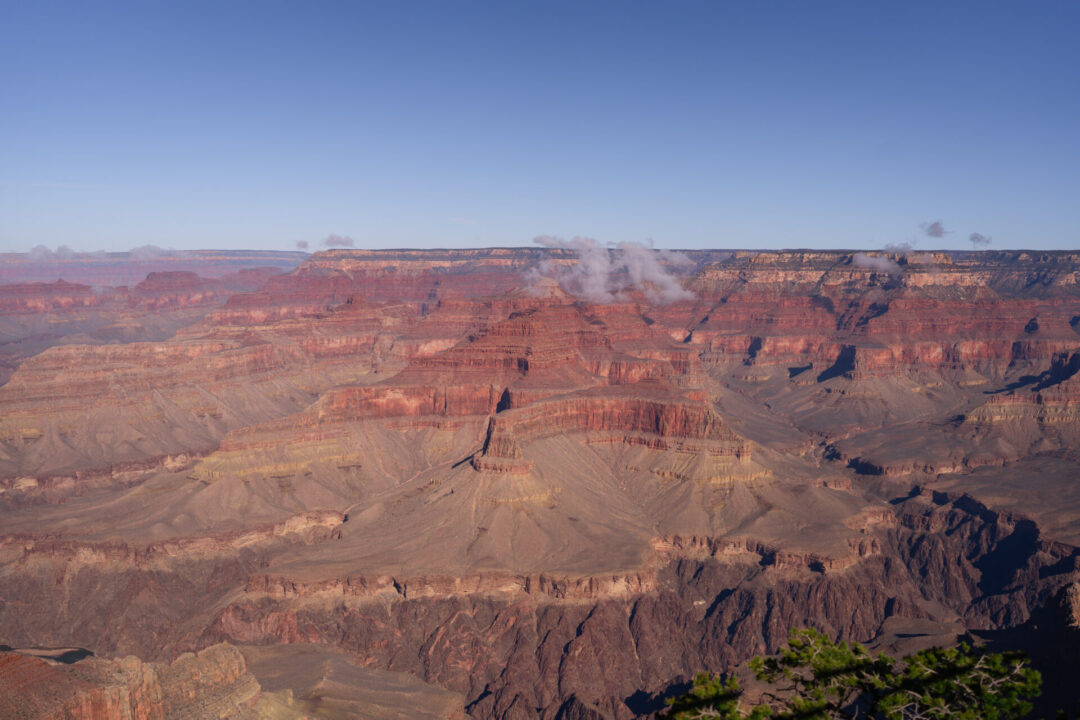
Widely considered one of the best sunset viewpoints in the park, Hopi Point sits further out in the canyon than any other overlook along the 7 mile Hermit Road. It’s extra reach translates to one of the widest panoramas along the entire South Rim, spanning about 270 degrees!
From here, I was able to see five separate bends of the Colorado River, numerous buttes including Dana Butte and Isis Temple, and some of the canyon’s deepest inner gorges. It’s a stunner that’s definitely worth your time to visit!
Since this overlook primarily faces west, sunset visits are the most popular time to go, but also the most spectacular! And the unobstructed eastward view makes sunrise worth an early alarm too, just with considerably fewer people.
What to Know for Visiting:
Shuttle Routes: Hermit Road (Red) – only runs from Spring to Fall each year
- Current Shuttle Schedules can be found on the Grand Canyon National Park website
Nearest Shuttle Stop: Hopi Point
- NOTE: The shuttle only stops here while heading west toward Hermit’s Rest. It does not make a stop here on the way back toward the Village, so if you’re planning to visit this view, make sure to first get off the shuttle on your way west and not wait until the return journey!
Closest Parking: Roadside parking along Hermit Road (winter only)**
Why It Stands Out: Wide 270 ° panoramas of the canyon (and one of the only stops along Hermit Road with bathroom facilities!)
What You’ll See (weather permitting): Five points along the Colorado River, sweeping east and west canyon views
Best Time to Visit: Sunset
**NOTE: Hopi Point is located along the 7 mile Hermit Road, which is generally CLOSED to private vehicles from Spring through Fall each year. The free Hermit Road (Red) Shuttle and commercial tours provide the only motorized access to this area during those months. Foot and bicycle traffic is allowed throughout the year.
POWELL Point
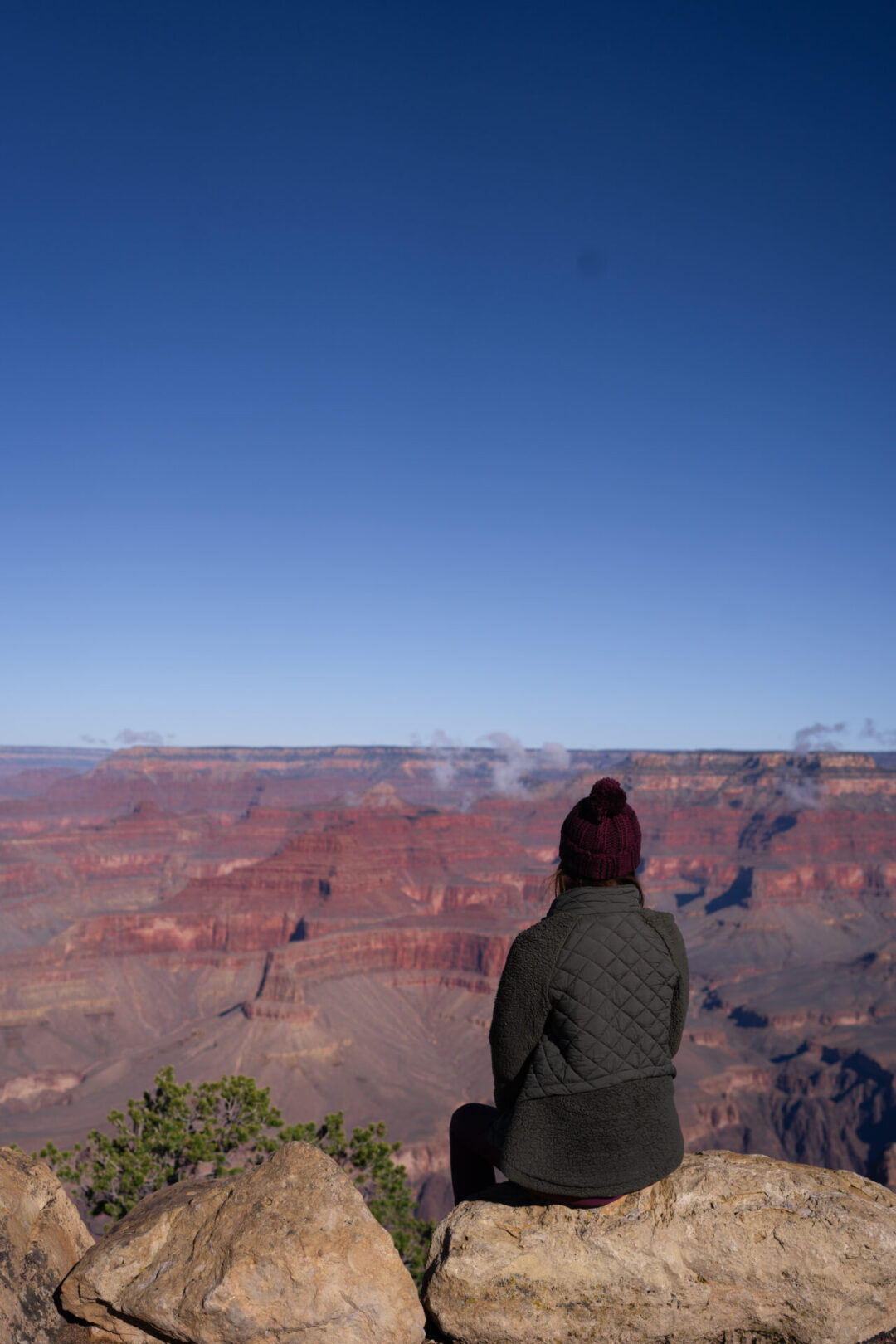
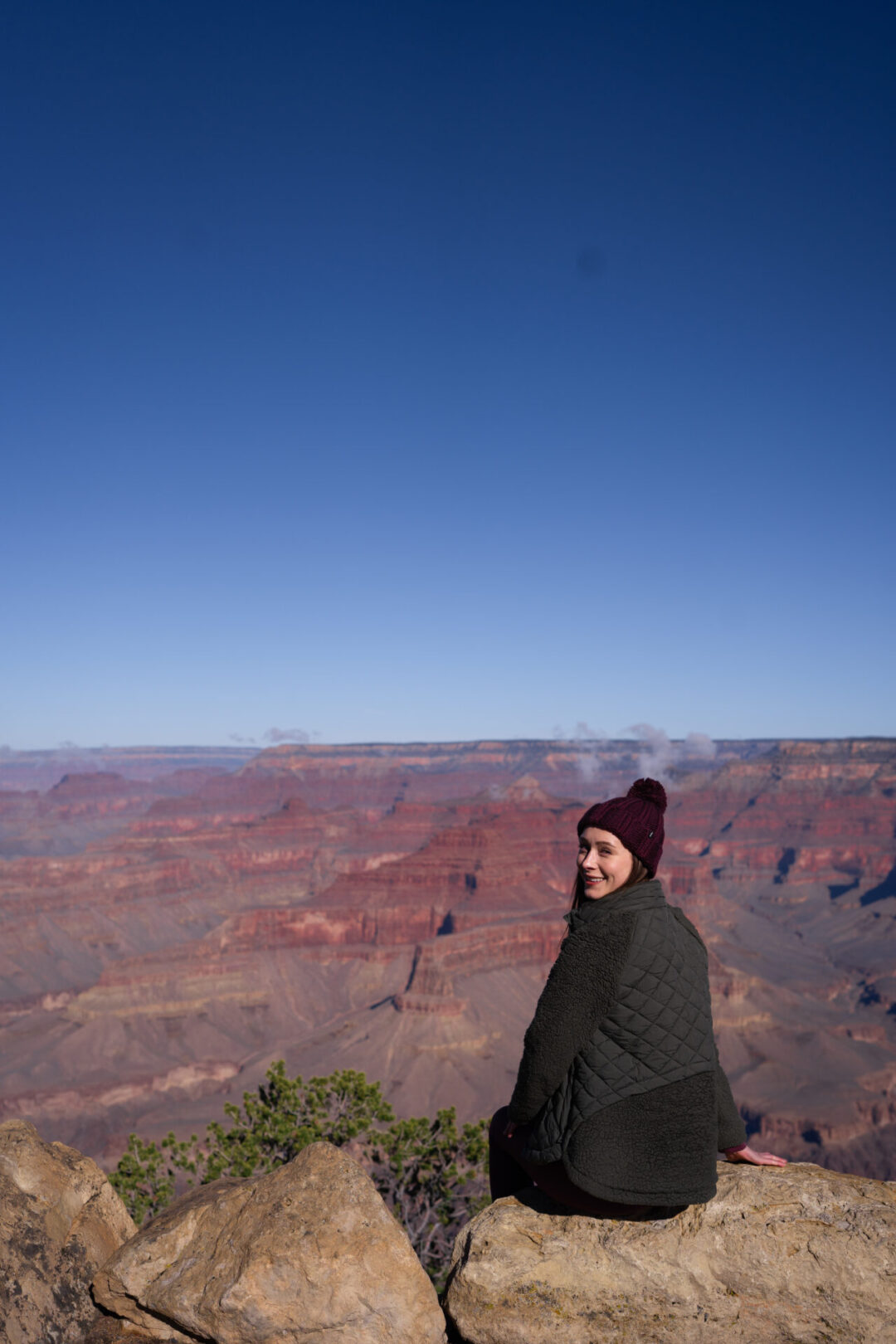
Powell Point sits at just over 7,000 feet along Hermit Road, and while it tends to get overshadowed by Hopi Point just a quarter mile to the west, it’s actually my favorite between the two. The views here span roughly 200 degrees, with long sightlines down Bright Angel Canyon and across to the North Rim’s temples.
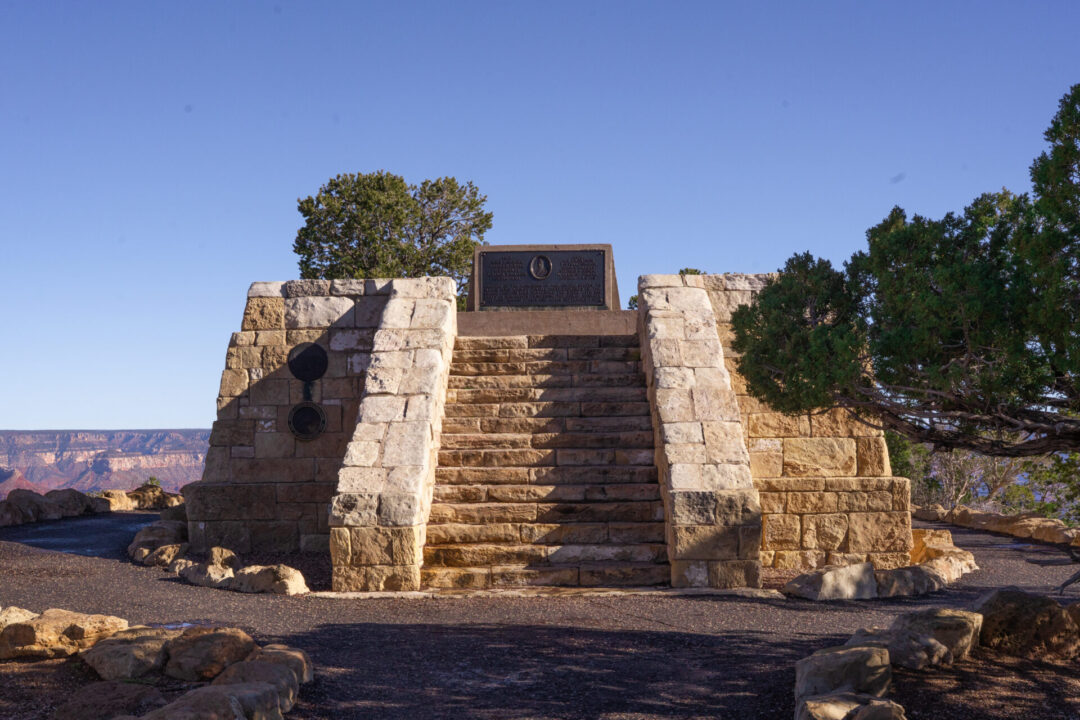
And while you can’t see the Colorado River from here, the viewpoint is unique and carries some real historical weight. A granite memorial honors John Wesley Powell, the one-armed Civil War veteran who led the first documented navigation of the Colorado River through the Grand Canyon in 1869.
For the views of the canyon itself, this point has a large, flat granite platform that hangs out onto the canyon. While I was way too nervous to venture out on the platform (I get vertigo and didn’t feel comfortable without some sort of barrier or rocky edge to hold onto), I did see one large family taking turns grabbing photos on its surface! And if you visit at sunset? This point is generally quieter than Hopi and worth considering if the crowds feel like too much!
What to Know for Visiting:
Shuttle Routes: Hermit Road (Red) – only runs from Spring to Fall each year
- Current Shuttle Schedules can be found on the Grand Canyon National Park website
Nearest Shuttle Stop: Powell Point
- NOTE: This shuttle stop is accessible from both directions (east and west), so you can visit before or after reaching Hermit’s Rest (the stop at the end of the line).
Closest Parking: Roadside parking along Hermit Road (winter only)**
Why It Stands Out: Has an impressive platform of rock extending out into the canyon (I saw people taking pictures on top, but it’s one of those try-at-your-own-risk sorts of places! (Please be very careful if you venture onto the rock).
What You’ll See (weather permitting): West canyon views, the Powell Memorial
Best Time to Visit: Sunset
Mohave Point
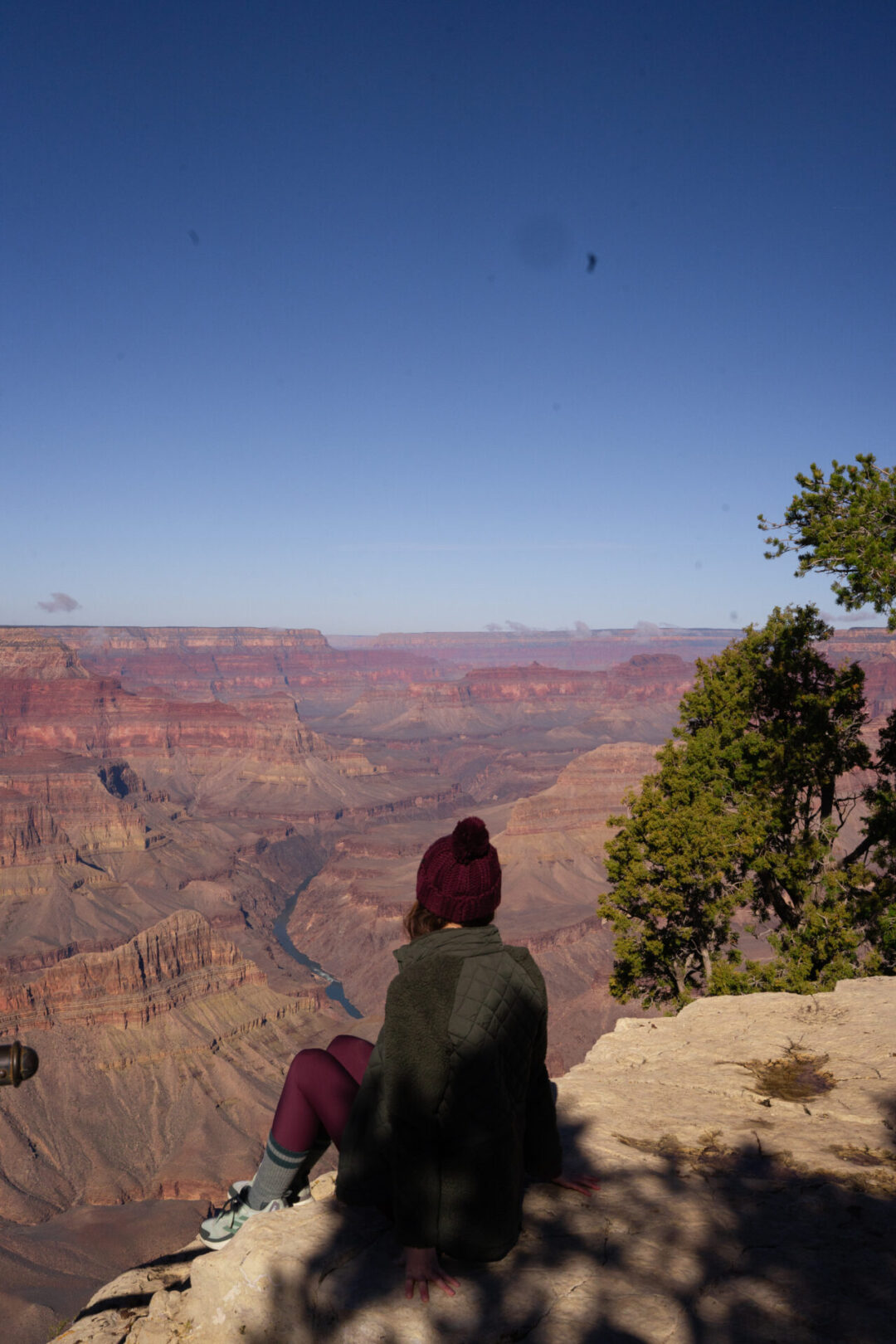
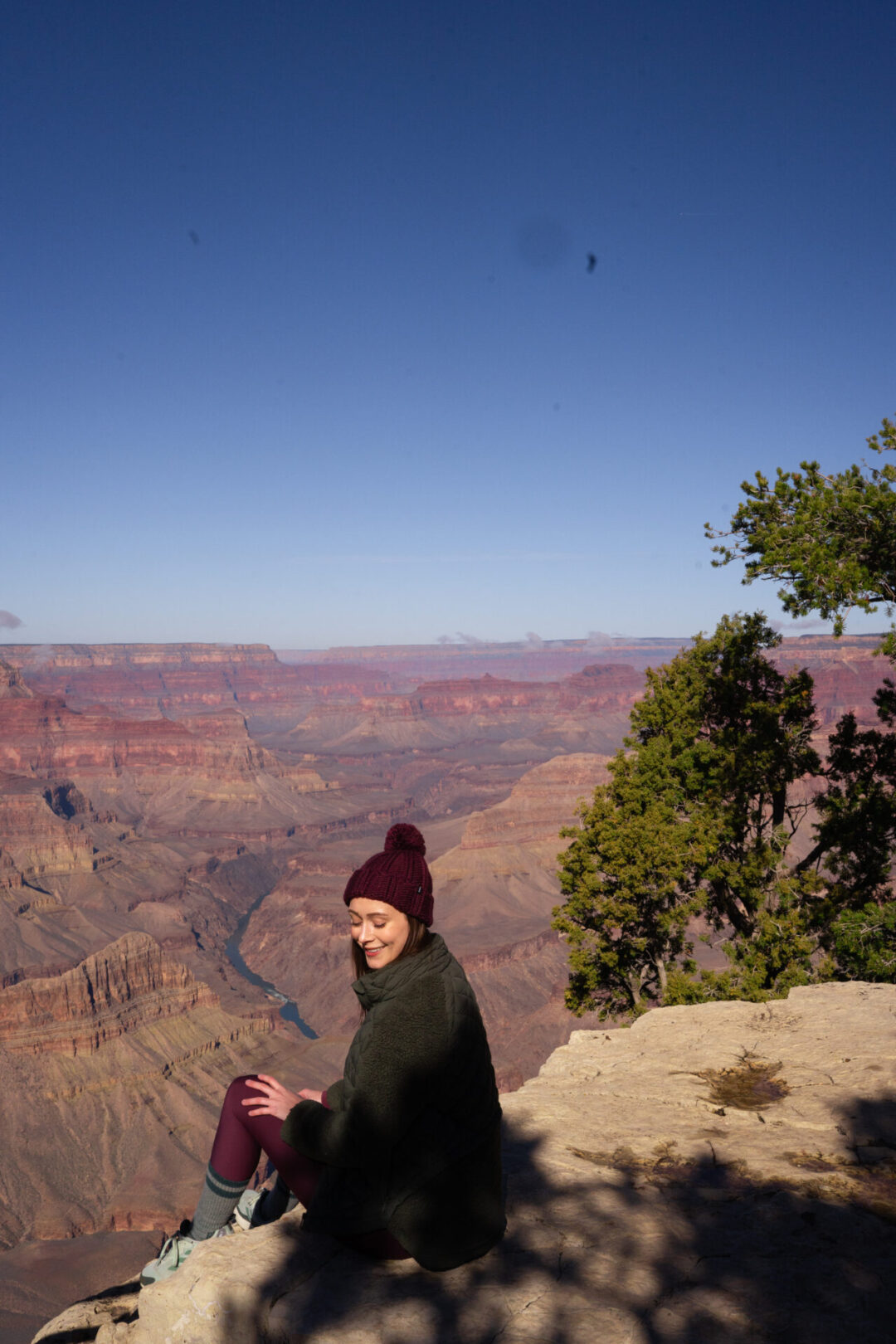
My coolest spot along Hermit Road, in my humble opinion. Mohave Point is another spot where the Colorado River is clearly visible, and you can even spot rapids below on a clear day. The west-facing views are among the best on the entire road, and it tends to draw fewer people than Hopi Point, which makes your visit feel more peaceful.
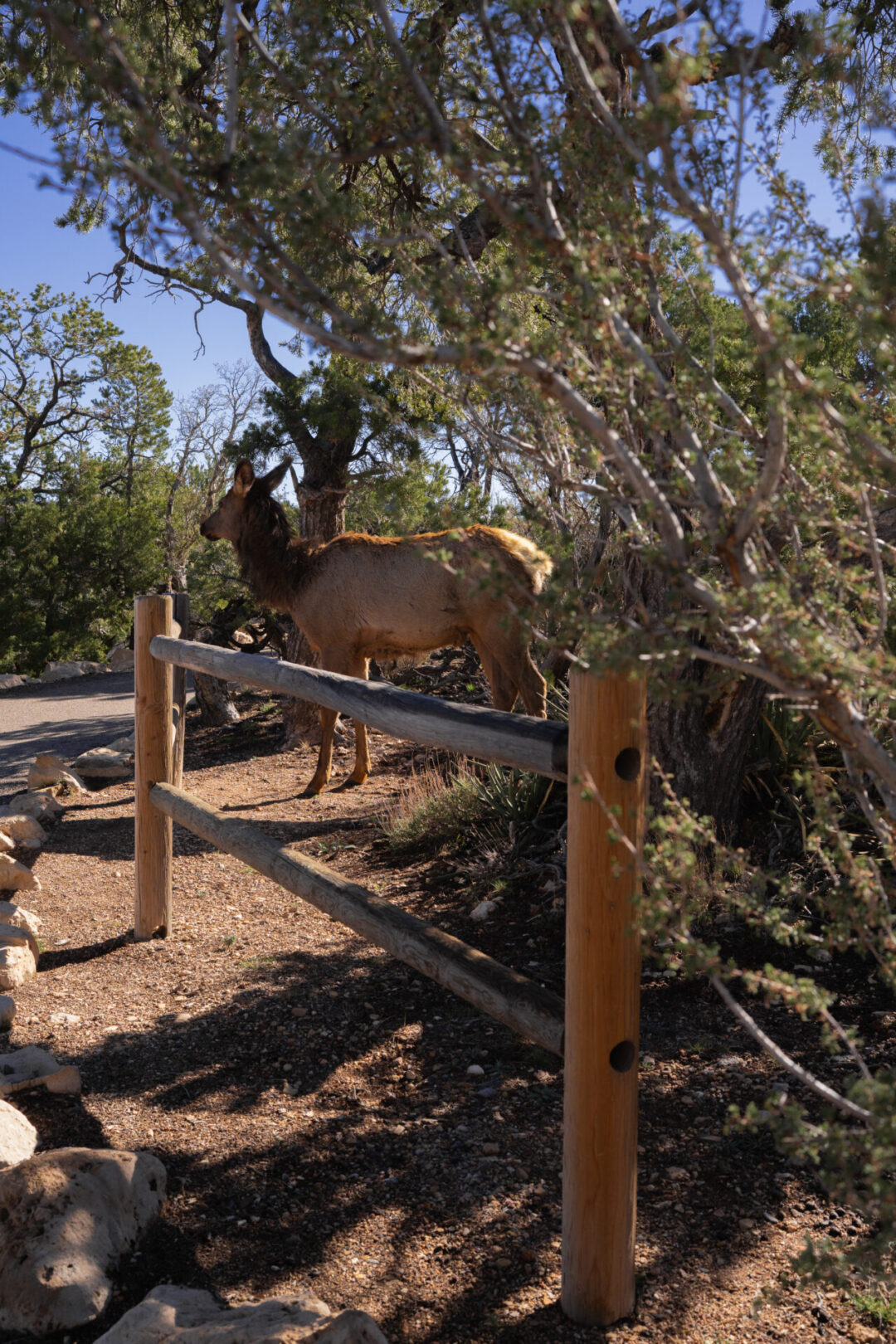
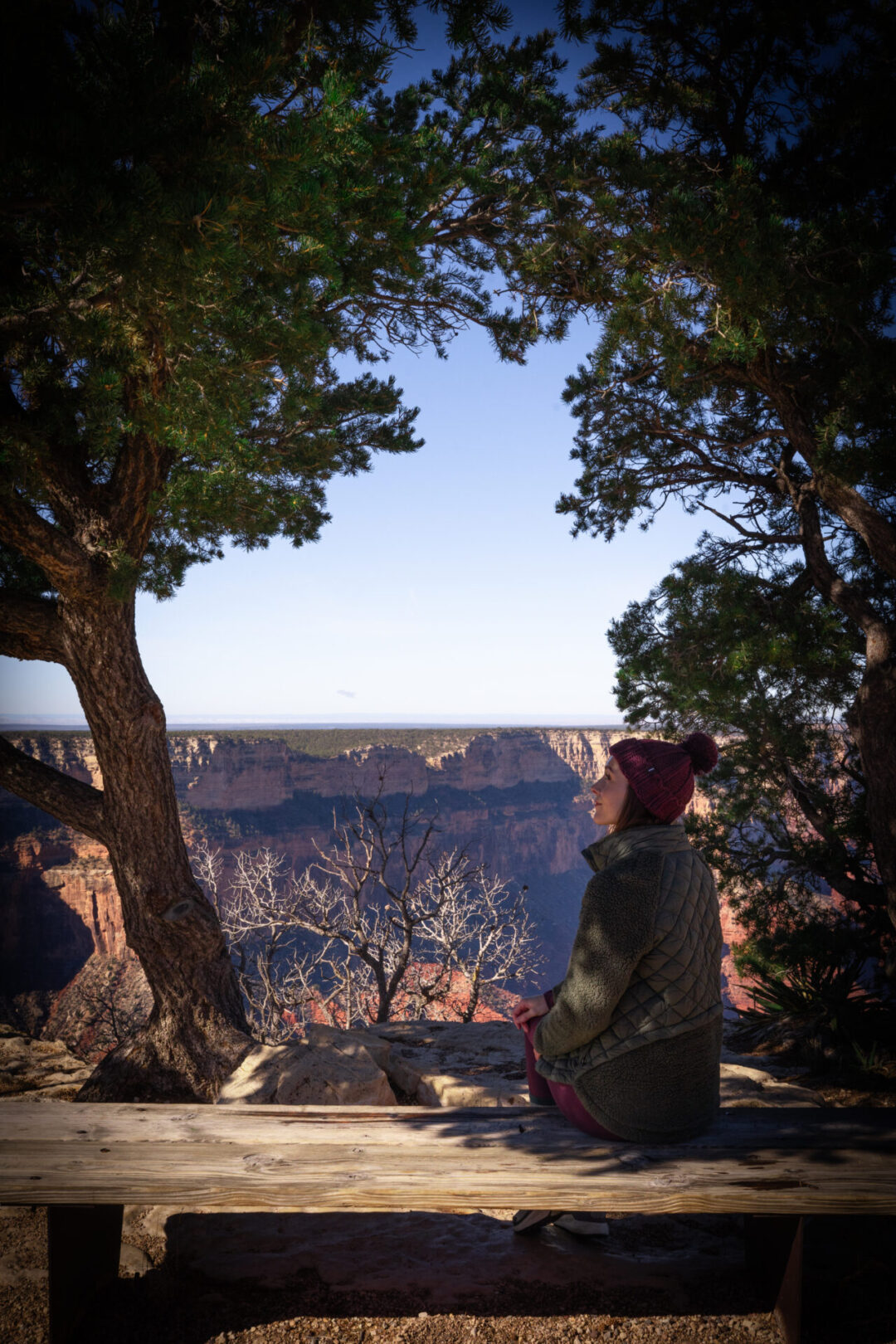
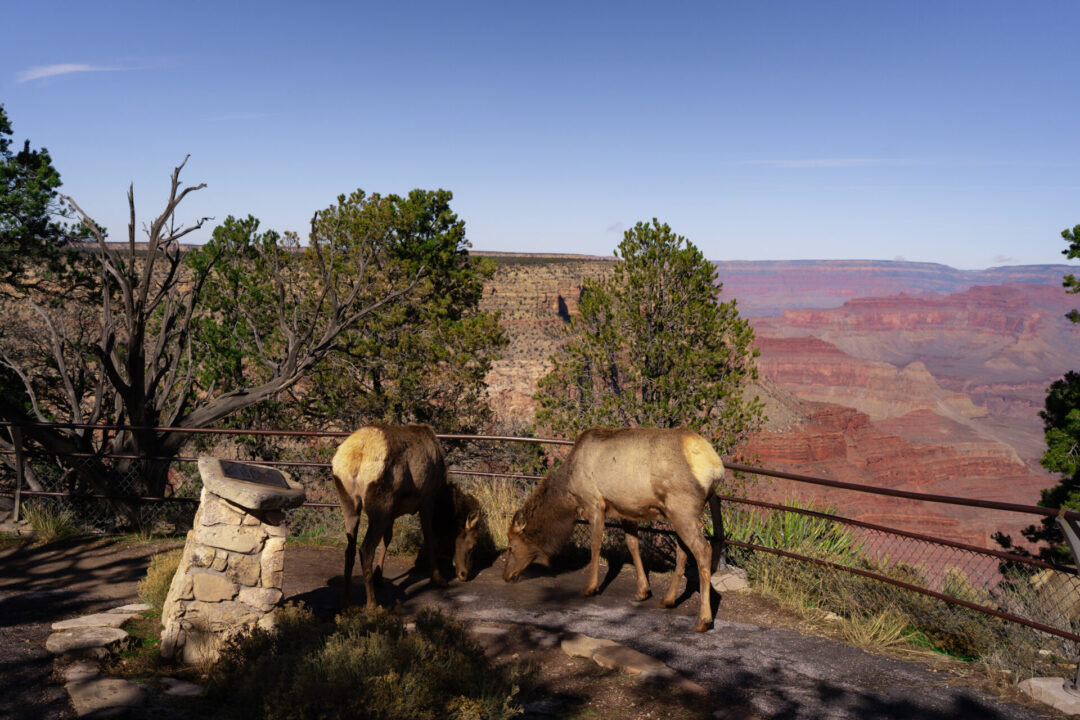
I can also confidently say that this is also one of the viewpoints where you’ll most likely see elk! It turns out elk were introduced to the Grand Canyon from Yellowstone between 1913 and 1928, and now roam freely around the South Rim’s village, campgrounds, and roadsides. During my visit, I saw dozens of them at Mohave Point, right on the trail, in fact! For once, I had done zero wildlife research before the trip since we were visiting in winter and weren’t excepting to see many animals, so this was a shock. There’s a lot of foliage and trees at this viewpoint, which I believe is what attracts them out this way.
If you do see elk at Mohave Point (or anywhere else in the park, for that matter!), try to keep your distance. It can feel like a slightly more precarious task than usual given you’re also standing near the edge of a cliff, but the elk tend to be far more focused on the vegetation than on you or me.
What to Know for Visiting:
Shuttle Routes: Hermit Road (Red) – only runs from Spring to Fall each year
- Current Shuttle Schedules can be found on the Grand Canyon National Park website
Nearest Shuttle Stop: Mohave Point
- NOTE: This shuttle stop is accessible from both directions (east and west), so you can visit before or after reaching Hermit’s Rest (the stop at the end of the line).
Closest Parking: Roadside parking along Hermit Road (winter only)**
Why It Stands Out: High likelihood of seeing elk if you visit in the morning!
What You’ll See (weather permitting): West canyon views, Colorado River rapids (Salt Creek, Granite, and Hermit rapids), and elk!
Best Time to Visit: Morning
Hermit’s Rest
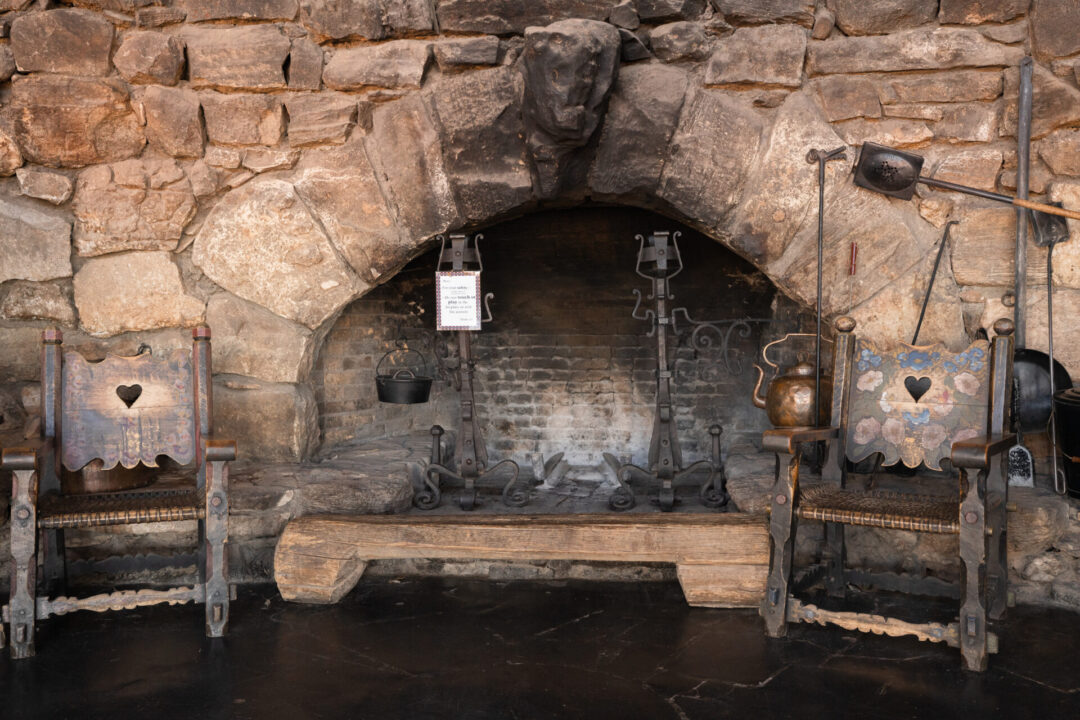
The final stop at the western end of Hermit Road is worth lingering at for more than just the view. The historic Hermit’s Rest building, designed by architect Mary Colter in 1914, is a landmark in its own right. Colter built it to look like a reclusive mountain man had cobbled it together from the natural stones and timber of the area over many years. A park ranger told me that she reportedly rubbed soot into the rocks and sourced antique decorations to make the whole thing feel authentically worn on opening day! And when visitors originally called it dilapidated, her response was said to be: “You can’t imagine what it cost to make it look this old.”
Inside, a massive stone fireplace anchors the room. There’s a gift shop and snack bar on site. Just outside, there’s a few of those old-school built-in binocular stands pointing out toward the canyon, very retro and worth-using if you have a few quarters on you. The canyon view from Hermit’s Rest is more tree-framed than others along the road, with pinyon pines creating a natural border around the panorama. I actually loved this about it, but it really is more about the building itself here than the canyon if you’ve already stopped at other viewpoints along Hermit’s Road.
What to Know for Visiting:
Shuttle Routes: Hermit Road (Red) – only runs from Spring to Fall each year
- Current Shuttle Schedules can be found on the Grand Canyon National Park website
Nearest Shuttle Stop: Hermit’s Rest
- NOTE: This is the final stop along the Hermit Road (Red) Route
Closest Parking: Small Park lot along the road at Hermit’s Rest (winter only)**
Why It Stands Out: The only viewpoint along Hermit’s Road with a gift shop, snack bar, restrooms, and built-in canyon binoculars! Plus, this is another spot you’ll likely spot some elk!
What You’ll See (weather permitting): A tree-framed panorama of the canyon, a National Historic Landmark, and a “Hermit’s Rest” archway/photo-op.
Best Time to Visit: Early morning! The small parking lot (in winter) and shuttles (from spring – fall) fill up quickly
The Lookout Studio
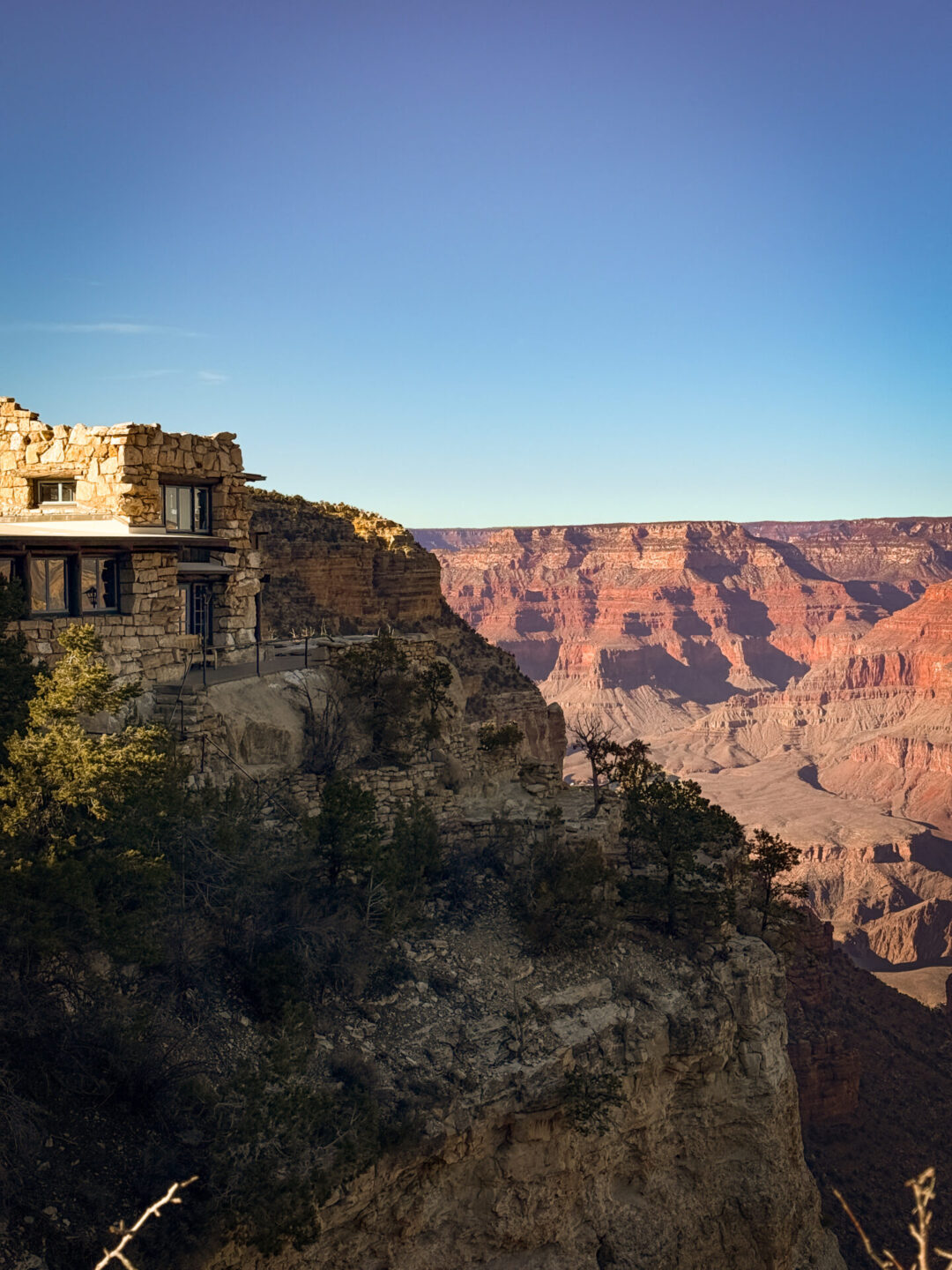
Just a short walk west of El Tovar in Grand Canyon Village, the Lookout Studio is easy to pass by without a second glance, but that’d be a huge mistake! Another one of Mary Colter’s designs dating back to 1914, the stone building appears to grow directly out of the canyon rim, its irregular parapets and rough Kaibab limestone walls deliberately mimicking the surrounding rock formations. Today it functions as both a gift shop and a viewpoint, with outdoor terraces right at the canyon’s edge.
NOTE: The building was closed for renovation during our visit (mid-February 2026), but my partner and I still walked by along the Rim Trail and caught the view from there. It’s worth checking the current status before your visit, and even if it’s still undergoing work, the Rim Trail view right alongside it makes a great alternative.
What to Know for Visiting:
Shuttle Routes: Village (Blue)
- Current Shuttle Schedules can be found on the Grand Canyon National Park website
Nearest Shuttle Stops: Hermit’s Rest Transfer and Bright Angel Lodge
- NOTE: From the shuttle stops, Lookout Studio is about a 5 minute walk away, along Rim Trail
Closest Parking: There are small lots near Bright Angle Lodge and El Tovar, as well as parking along the road near Parking Lots C and D in Grand Canyon Village
Why It Stands Out: One of four Mary Colter-designed buildings at the Grand Canyon designated as a National Historic Landmark, and built to look like it grew directly out of the canyon rim itself! Perfect place to relax after a hearty lunch in the Village.
What You’ll See (weather permitting): Canyon rim views from the Rim Trail as well as outdoor terraces and interior when open!
Best Time to Visit: Early afternoon
- Secret Tip: Think about grabbing lunch at the El Tovar Dining Room around 11AM. The Grand Canyon Railway arrives around noon and the dining room fills up fast. If you finish up right as that crowd rolls in, you can slip out and have the Lookout Studio area largely to yourself.
Yaki Point
Yaki Point is one of the more underrated viewpoints on the South Rim, and a great option if you want explore without the crazy crowds or parking. Sitting at 7,262 feet on a promontory that shoots out into the canyon, it offers a 270 degree vantage with wide westward views that take in the end of the Bright Angel Trail and the switchbacks of the South Kaibab Trail along Cedar Ridge. Looking east, you can see Zoroaster Temple and Wotan’s Throne, as well as Cremation Creek and the buttes surrounding the Clear Creek drainage on the North Rim. On a clear day, the Desert View Watchtower is visible 22 miles in the distance.
What keeps the crowds manageable here is that private vehicles are prohibited at Yaki Point year-round, so everyone arrives by the free Kaibab Rim (Orange) Route shuttle. That small barrier is enough to make it noticeably quieter than other sites (I’m looking at you, Mather Point) while offering dynamic and unique views, since it sits on a separate promontory and looks out over different canyon features entirely.
What to Know for Visiting:
Shuttle Routes: Kaibab Rim (Orange)
- Current Shuttle Schedules can be found on the Grand Canyon National Park website
Nearest Shuttle Stops: Yaki Point
Closest Parking: Yaki Point is the only scenic viewpoint on Desert View Drive that is not accessible with a private vehicle. Park at the Grand Canyon Visitor Center lots and take the Kaibab Rim (Orange) shuttle from there
Why It Stands Out: One of the only viewpoints on the South Rim closed to private vehicles year-round, which keeps crowds noticeably lighter than nearby overlooks despite offering equally stunning views! Also has vault toilets, picnic tables, interpretive panels onsite.
What You’ll See (weather permitting): South Kaibab Trail, Zoroaster Temple, Wotan’s Throne, Cremation Creek, Desert View Watchtower in the distance
Best Time to Visit: Early afternoon
Desert View Watchtower
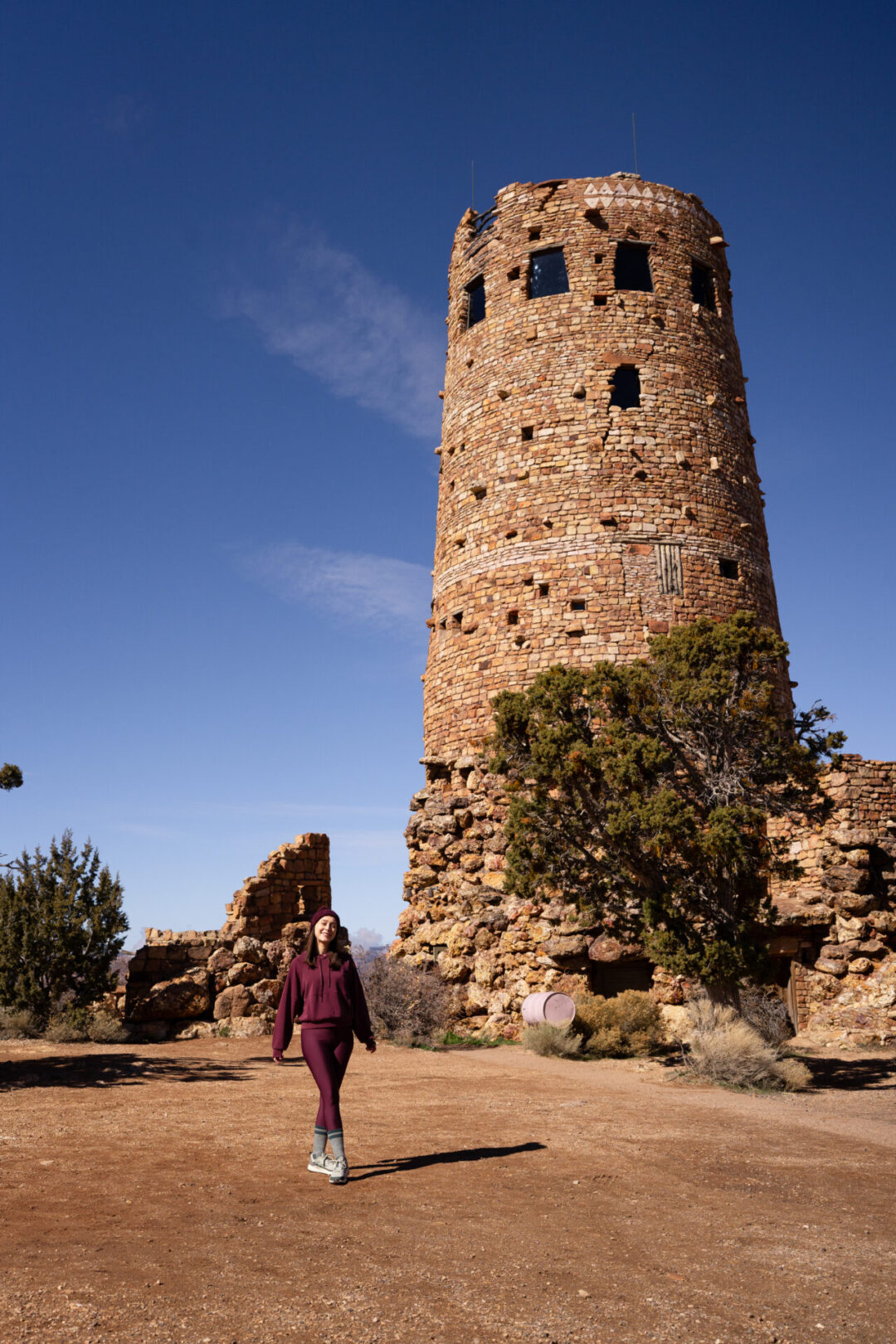
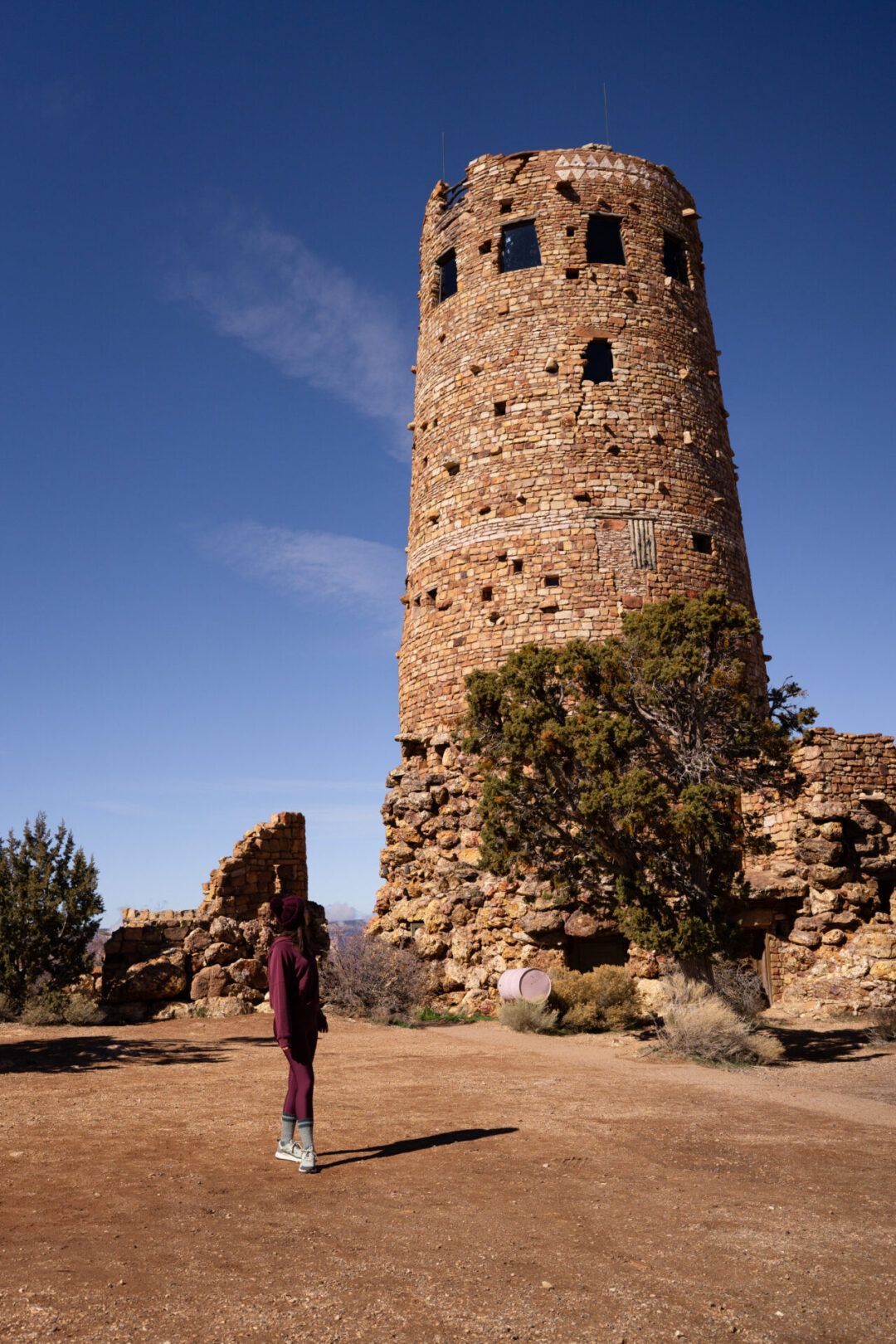
Definitely one of the the most memorable stops in the entire park! Designed by Mary Colter in 1932 and standing 70 feet tall at the easternmost point of the South Rim, the Watchtower is the highest point on the rim and offers 360 degree views of the Grand Canyon, the Painted Desert to the east, and the San Francisco Peaks to the south.
Heading inside, the first floor, or the View Room, is modeled after a traditional Native American kiva, and hosts cultural demonstrations by indigenous artists during spring, summer and fall. Timed entry tickets can also be picked-up on the first floor and are required to go to the upper levels. You can only get these tickets in person at the site on the day of your visit.
During our off season winter visit, the wait between ticket pickup and entry was about 30 minutes. In peak season, plan for longer. The moment you arrive, get your ticket first and then explore the surrounding grounds while you wait. Desert View Point, the aviation memorial, and shops here will keep you plenty busy in the meantime.
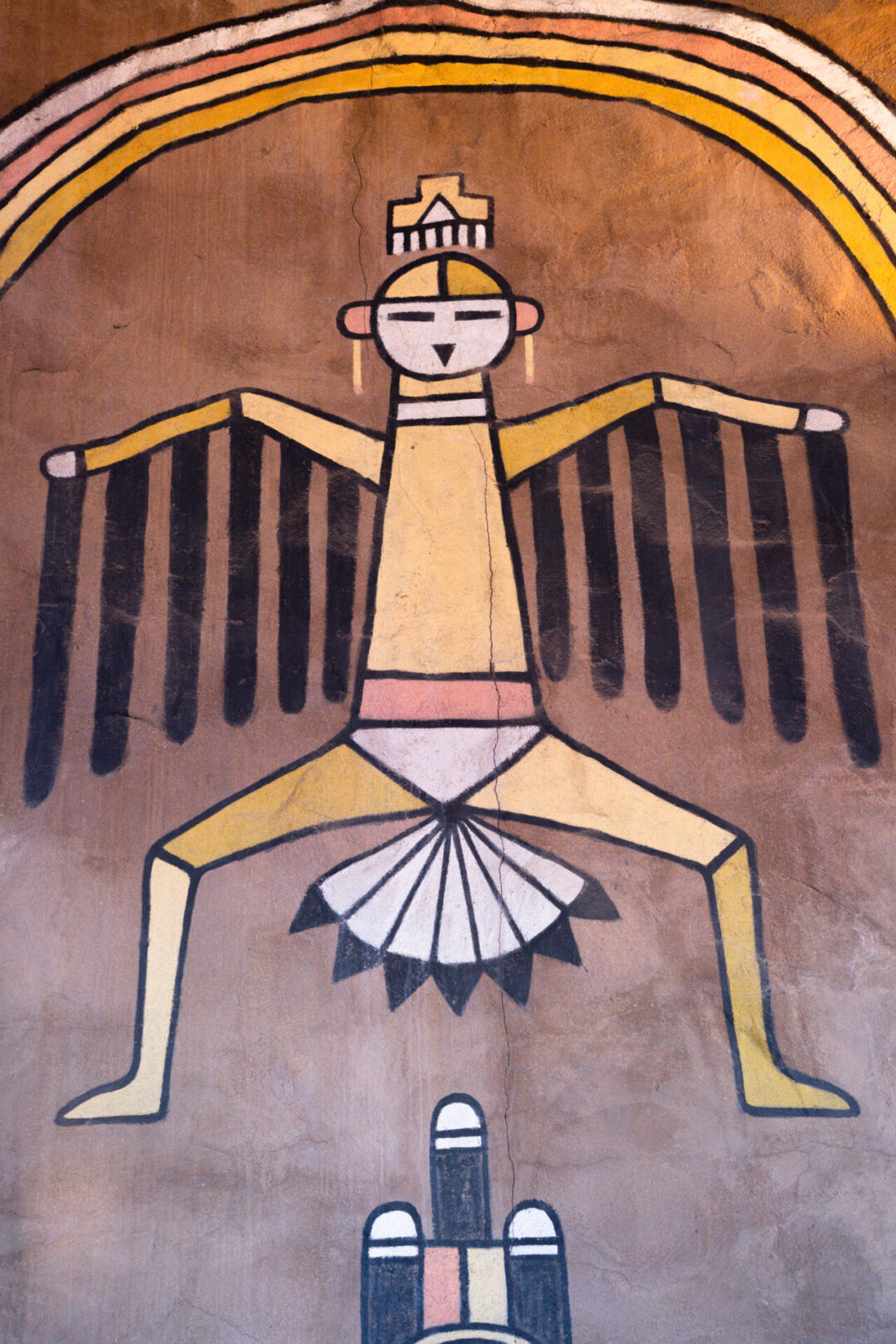
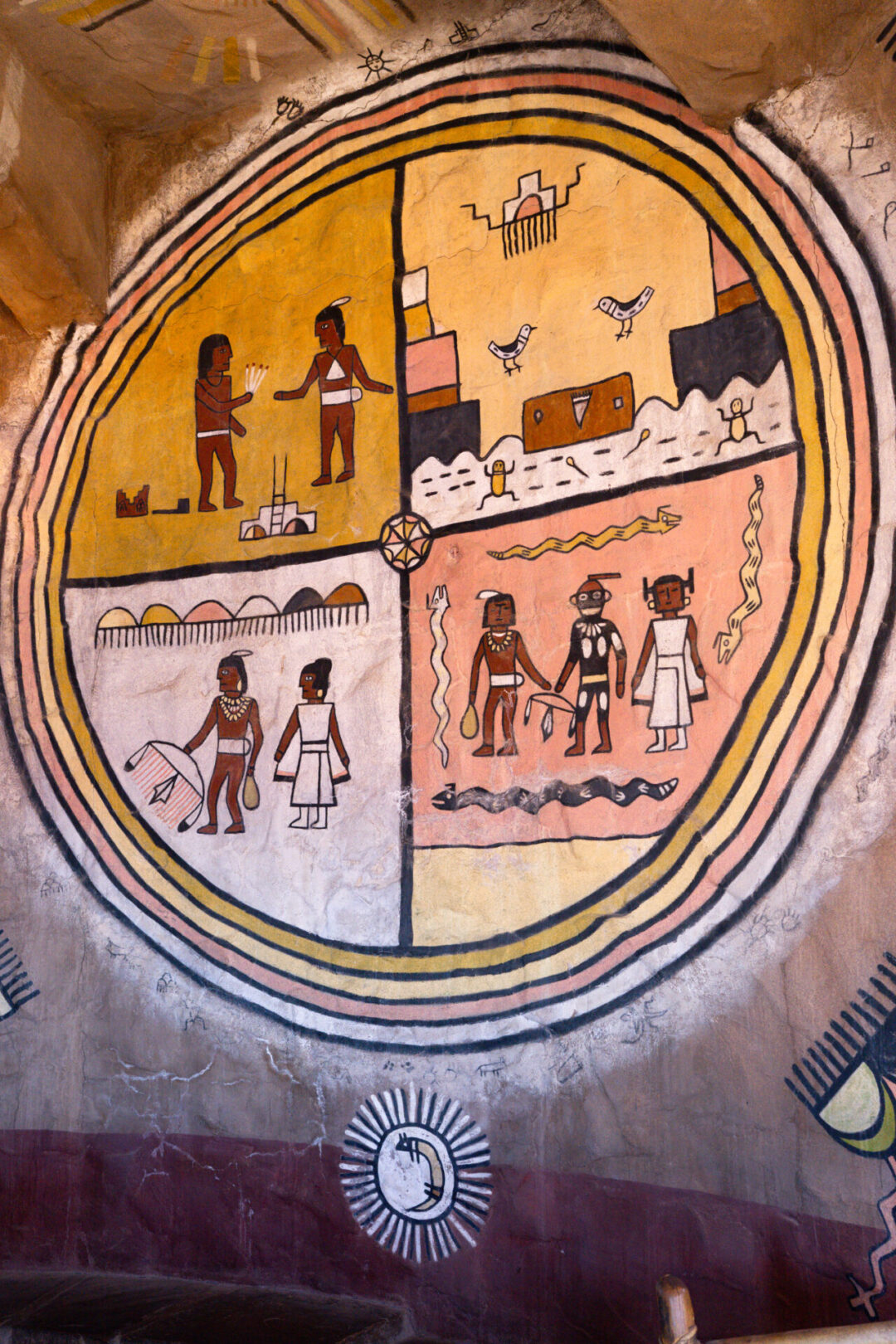
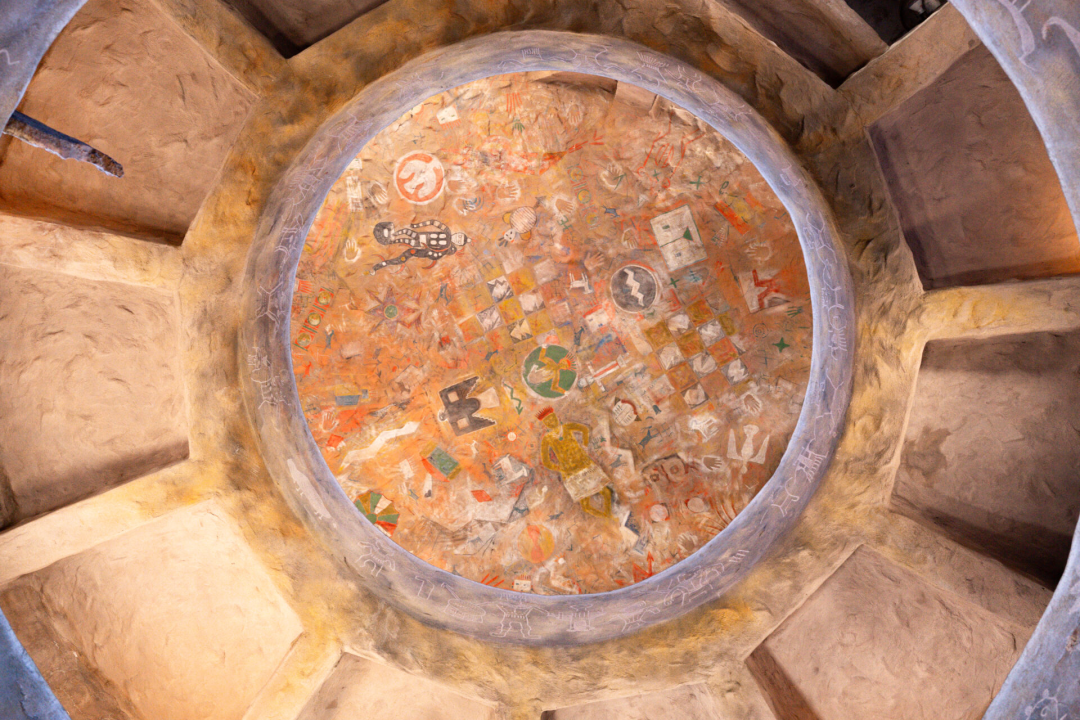
Once your ticketed entry time slot arrives, you’ll be free to explore the upper levels of the tower, the walls are lined with vibrant murals by Hopi artist, Fred Kabotie. On the way up, there’s an open-air deck through a door to the left that gives you a fantastic look at Desert View Point and the 1956 aviation memorial below. And at the very top of the watchtower are vintage telescopes peering out of the tower’s windows and giving you an unparalleled view of the canyon. Just know you’ll have around 20 minutes from the start of your timed entry slot to needing to head back downstairs, so budget your time accordingly and don’t be late!
What to Know for Visiting:
Shuttle Routes: N/A (there are no shuttle routes past Yaki Point along Desert View Drive)
Closest Parking: Desert View Parking Lot
Why It Stands Out: The highest viewpoint along the Grand Canyon South Rim! This sight also has a trading post, ice cream and coffee, restrooms, gift shop, 1956 aviation memorial, Desert View Point
What You’ll See (weather permitting): 360 degree canyon views, Painted Desert, San Francisco Peaks, Colorado River, Hopi murals inside the tower
Timed Entry: Free, first-come, first-served tickets available in person only. 25 people admitted at a time with a 20-minute limit and the last tickets handed out at 4:40 PM***
Best Time to Visit: Early afternoon
***At time of writing.
Lipan Point
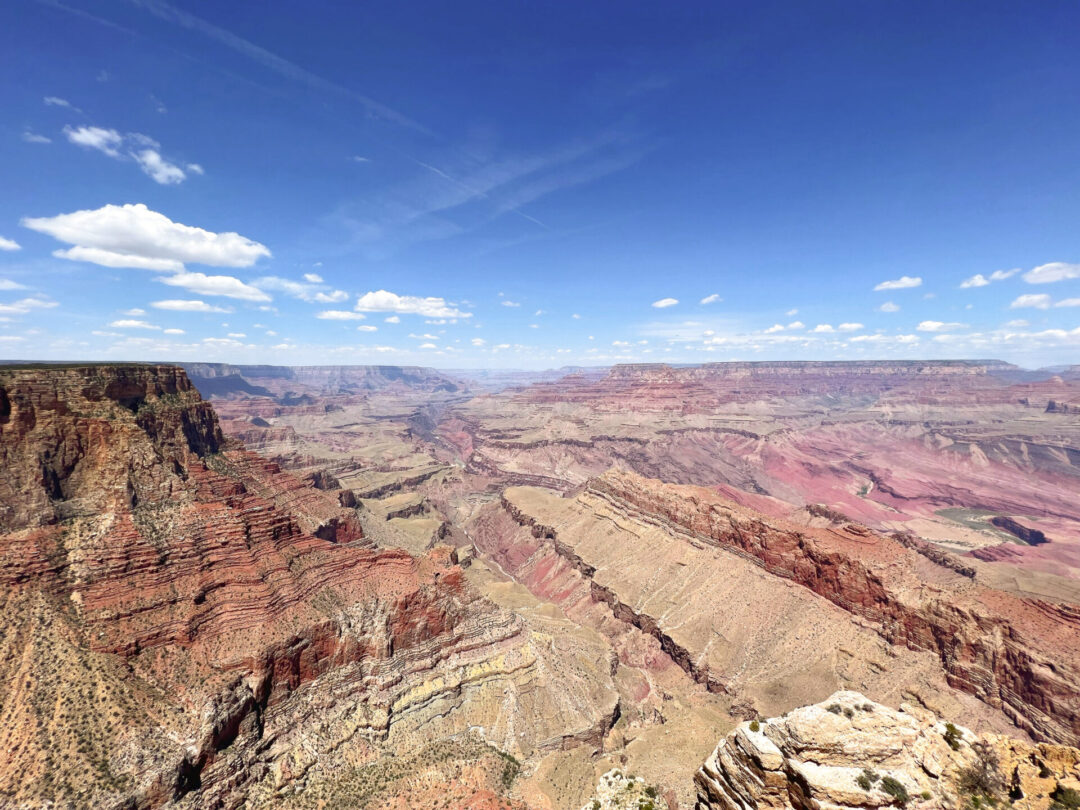
If there is one viewpoint on Desert View Drive that deserves more attention than it typically gets, it’s Lipan Point. The NPS describes it as offering some of the widest and most expansive canyon views on the entire South Rim, along with the longest visible stretch of the Colorado River from any viewpoint in the park. On a clear day, you can see the Vermillion Cliffs 45 miles to the northeast and trace the river as it curves into the inner gorge of the canyon.
It’s also one of the few places along the South Rim where the tilted layers of the Grand Canyon Supergroup are visible — rock strata between 729 million and 1.2 billion years old. Far below, the Unkar Delta is visible, a broad river terrace that was home to ancestral Puebloan farmers from around AD 850 to AD 1200 and is today an active archaeological site.
We stopped at Lipan Point on the drive back from the Watchtower, a little viewpoint-weary by that point, but it still stopped us in our tracks!
What to Know for Visiting:
Shuttle Routes: N/A (there are no shuttle routes past Yaki Point along Desert View Road)
Closest Parking: Roadside parking along Desert View Drive
Why It Stands Out: The spot with the longest Colorado River view on the South Rim as well as one of the few places you can see tilted layers of rock strata (years of history!)
What You’ll See (weather permitting): Colorado River, Grand Canyon Supergroup rock strata, Unkar Delta, Hance Rapid, and even Vermillion Cliffs on a clear day
Best Time to Visit: Sunrise or sunset
Moran Point
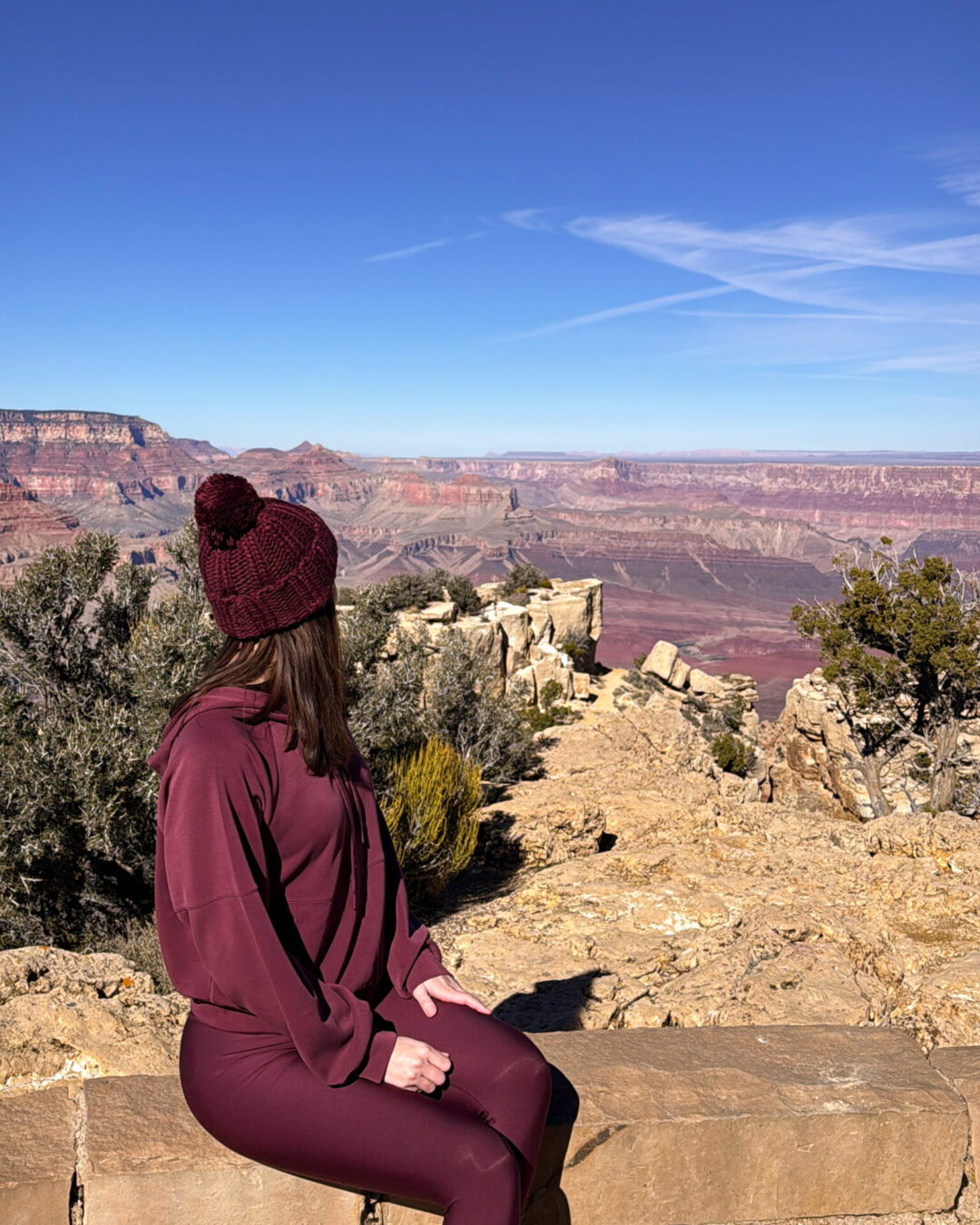
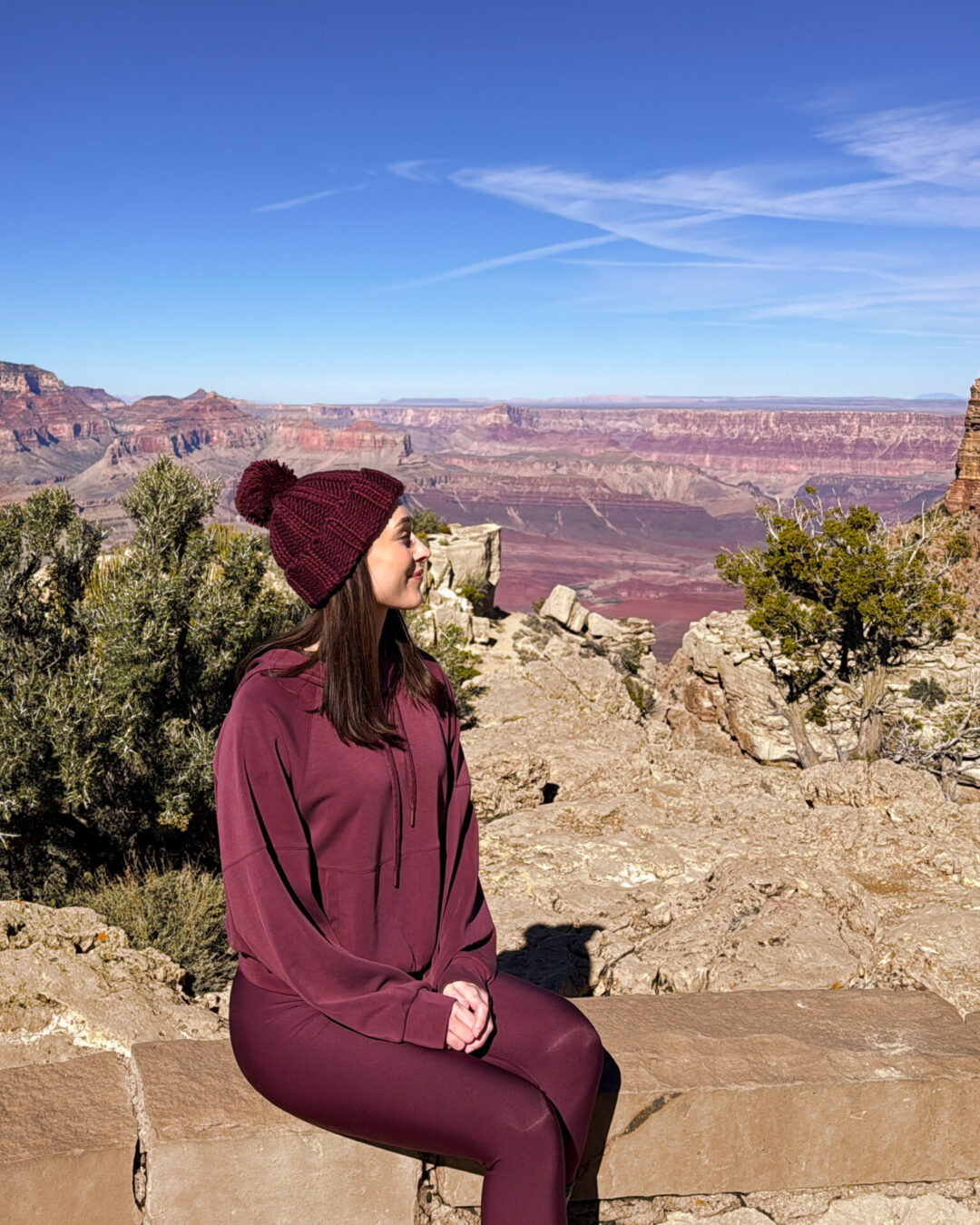
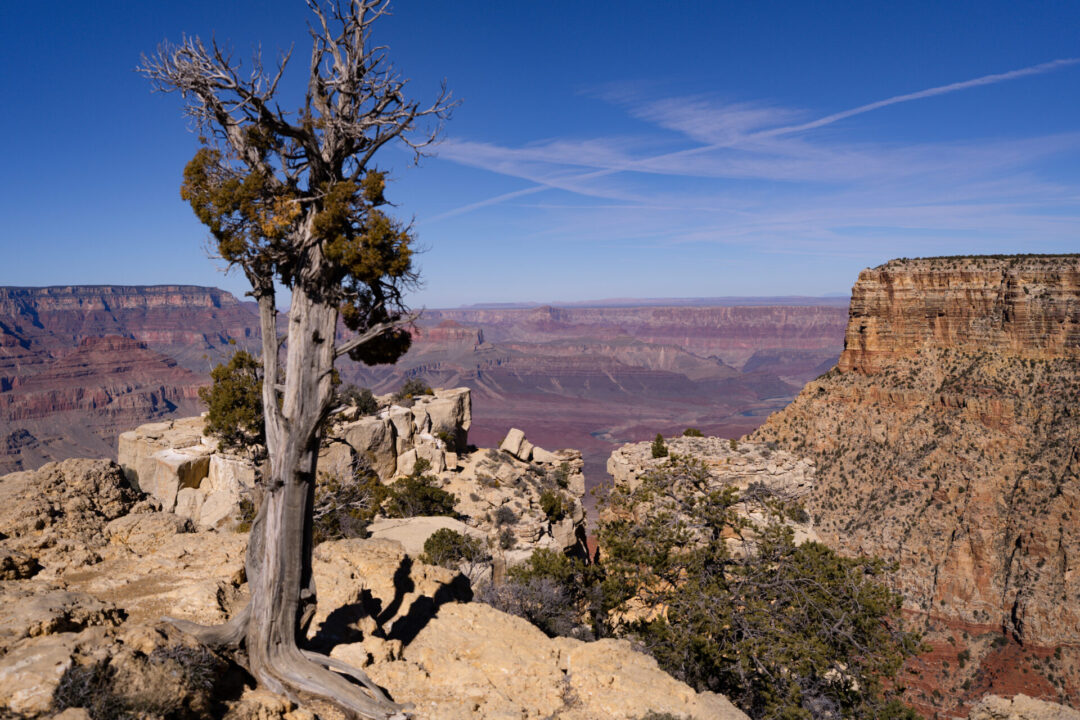
Named for painter Thomas Moran, whose sweeping landscapes of the American West helped build public support for preserving places like the Grand Canyon in the 19th century, Moran Point is a quieter, more tucked away stop along Desert View Drive. The views here are lovely and, I think, a little different from other overlooks on the drive, with three major rock formations visible: the sedimentary rocks at the canyon’s depth, the Grand Canyon Supergroup, and the Vishnu Basement Rocks, the oldest in the canyon.
We stopped here on the same drive as Lipan Point, late in the afternoon, and found it to be a peaceful final stop to watch the light change over the canyon before heading back toward the village.
What to Know for Visiting:
Shuttle Routes: N/A (there are no shuttle routes past Yaki Point along Desert View Road)
Closest Parking: Roadside parking along Desert View Drive
Why It Stands Out: One of only a few viewpoints on the entire South Rim where all three main rock groups of the Grand Canyon are visible at the same time, making it a standout stop for anyone interested in the canyon’s geology
What You’ll See (weather permitting): Sedimentary rock layers, Grand Canyon Supergroup, Vishnu Basement Rocks, canyon panorama
Best Time to Visit: Anytime of day, it tends to be a quieter stop!