Your Complete Guide all the Star Wars Death Valley Filming Locations
“A long time ago, in a galaxy far, far away…” actually, it was just a few short months ago, and only a 4 hour drive from Los Angeles. But still! Death Valley has been on my radar for years, and when I finally made the trip, I went full nerd with my Star Wars research.
For the uninitiated, Death Valley National Park straddles the California-Nevada border and holds the title of the hottest, driest, and lowest national park in the United States. On top of that, the park’s 3.3 million acres (yes, it’s really that HUGE) are layered with mineral-colored hills, vast sand dunes, and salt flats that stretch as far as the eye can see.
Which is exactly why George Lucas drove out here in the 1970s and got the cameras rolling.
The park handed Lucas a set that no studio could have built and Death Valley ended up serving as a primary filming location for Star Wars: A New Hope (1977) and Return of the Jedi (1983), standing in as the desert planet Tatooine, and other famous locations from the fictional galaxy. Many of the canyons, sand dunes, and eroded hills used during filming are still fully accessible to visitors today.
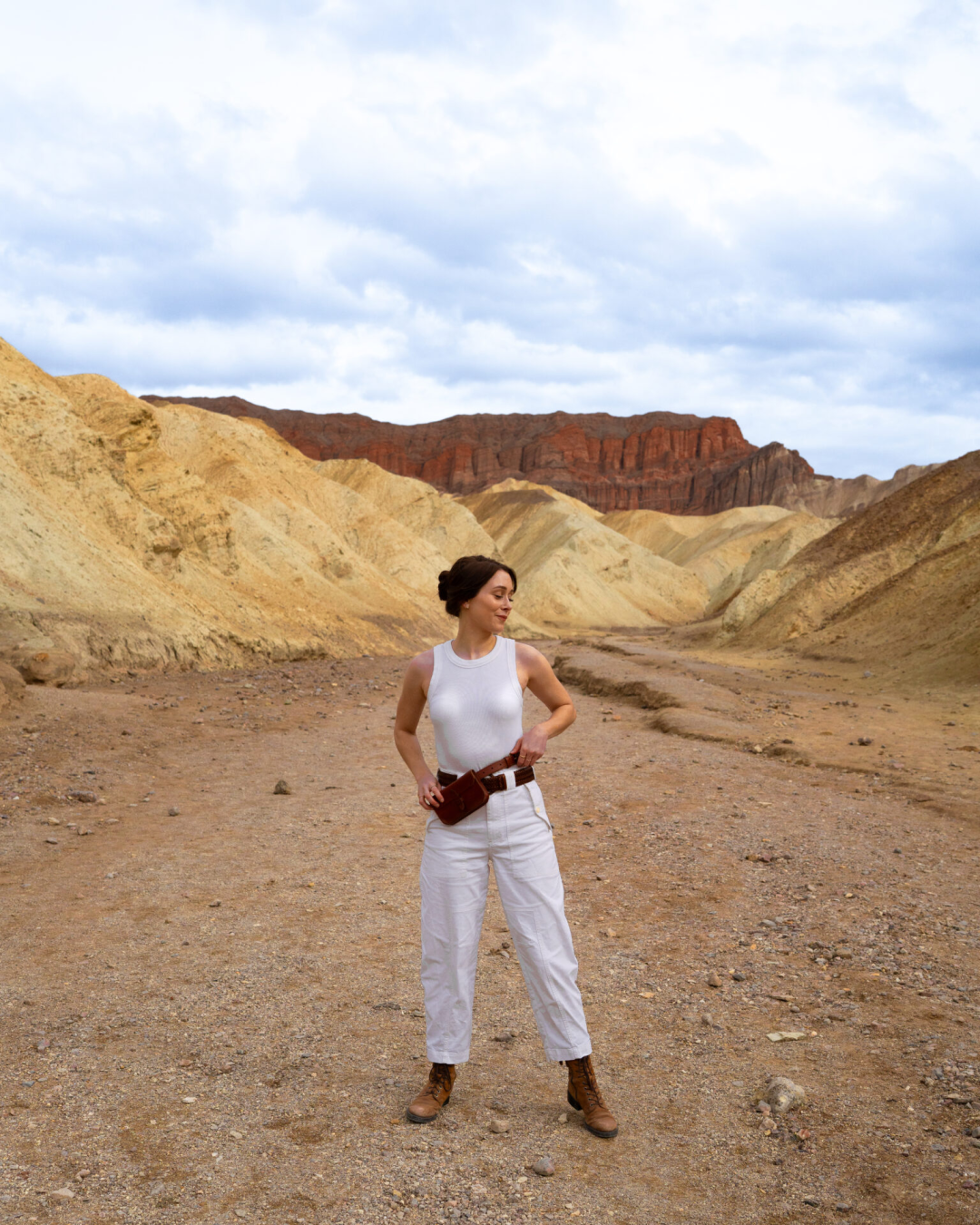
I went in the winter, which I’d highly recommend for the lighter crowds, much more manageable hiking temperatures, and extraordinary morning light. I also wore a Padmé-inspired, hiking-appropriate outfit during my first day here, which was absolutely the move. Below is a breakdown of all the confirmed Star Wars filming locations inside the park, what was shot there, and exactly how to visit each one.
Before you go…
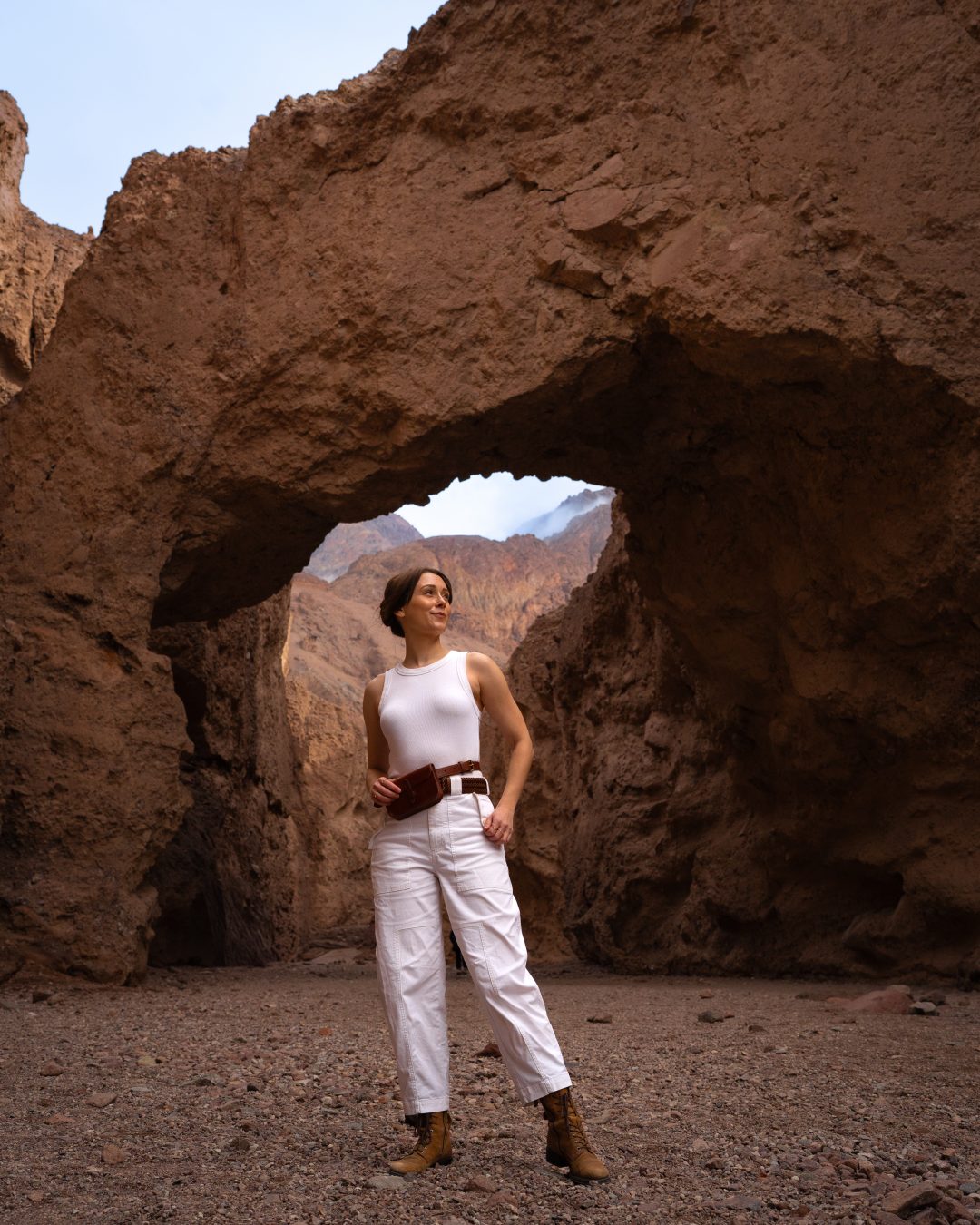
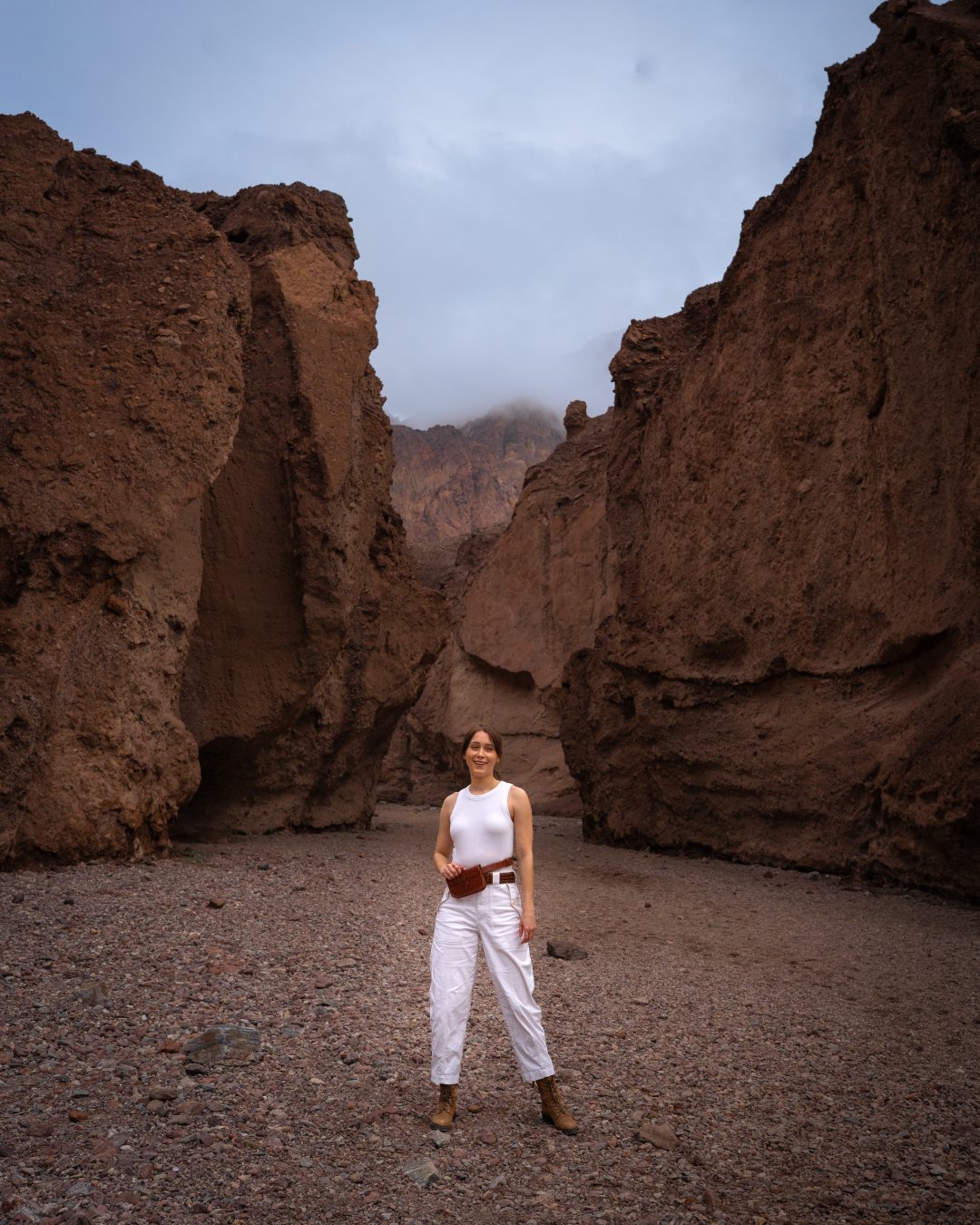
The filming of both A New Hope and Return of the Jedi happened decades ago, when commercial filming was still permitted inside the park. The National Park Service has noted that the majority of that filming would not be allowed today due to current restrictions on commercial filming in wilderness areas. In other words, these landscapes are preserved exactly as they were, and you’re walking through genuine film (and natural) history!
Most locations are clustered along or near Badwater Road and Highway 190, within reasonable driving distance of Furnace Creek, one of the main “hubs” in the park. The Death Valley Natural History Association has a self-guided Star Wars tour on their website that’s also worth bookmarking before you lose cell service, which is almost 100% a guarantee here. Download the National Parks app before you go as well for offline maps and audio guides (these were extremely helpful for my partner and I while hiking through Golden Canyon)!
And a quick heads up: many of the filming spots are unmarked, so looking up reference photos in advance really does help. Have a few screenshots from the films already saved to your phone if you want to do side-by-side comparisons on the ground.
Mesquite Flat Sand Dunes
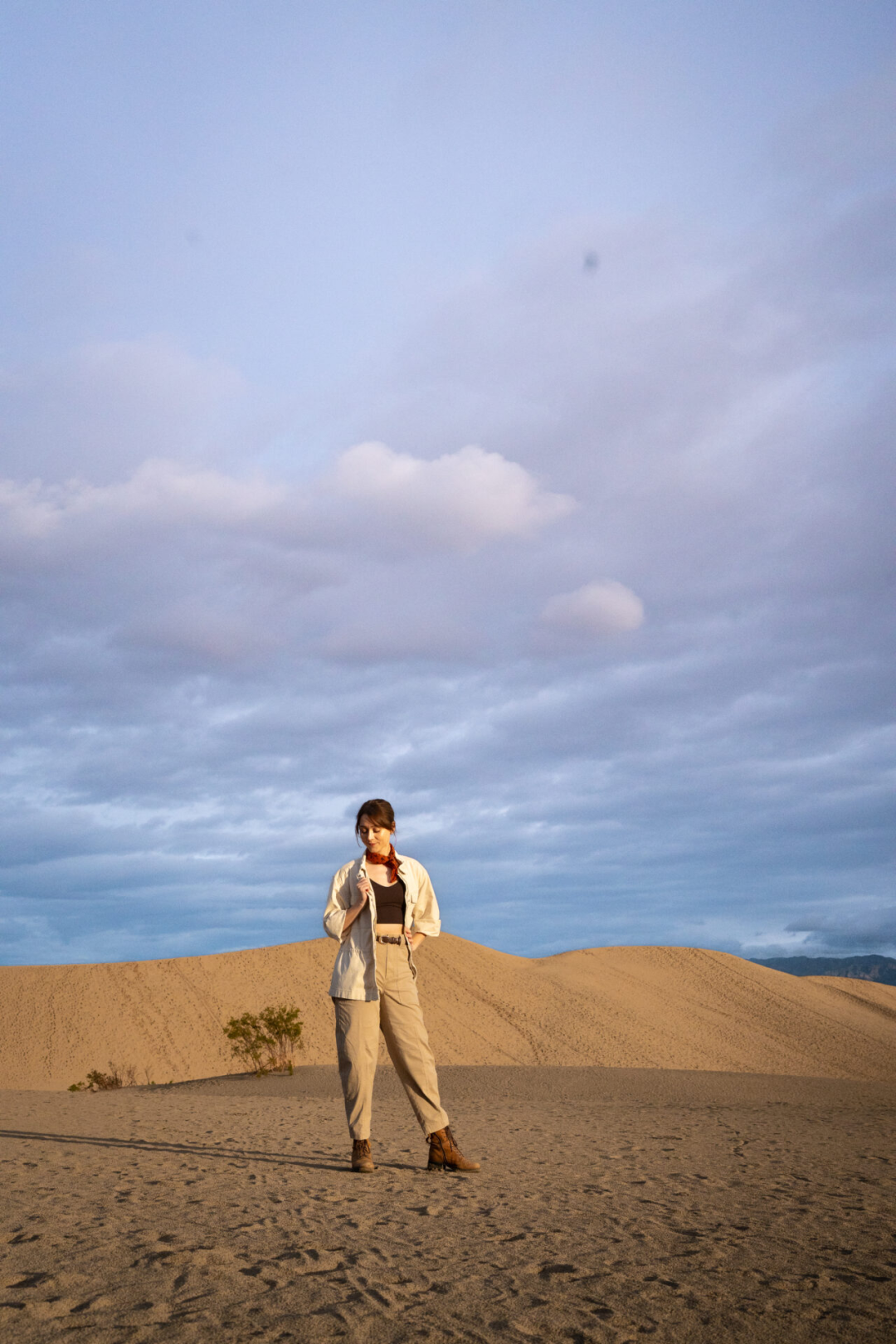
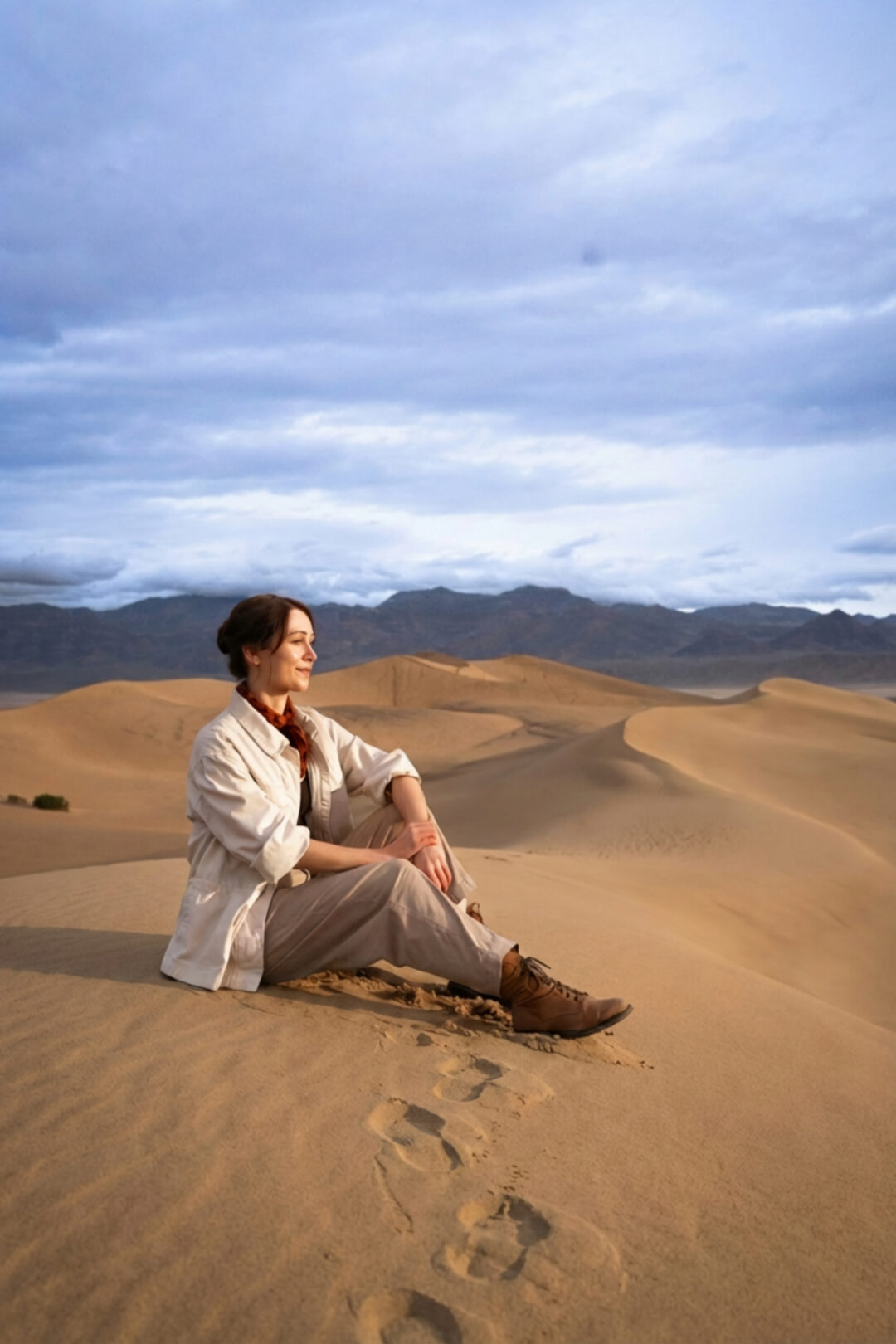
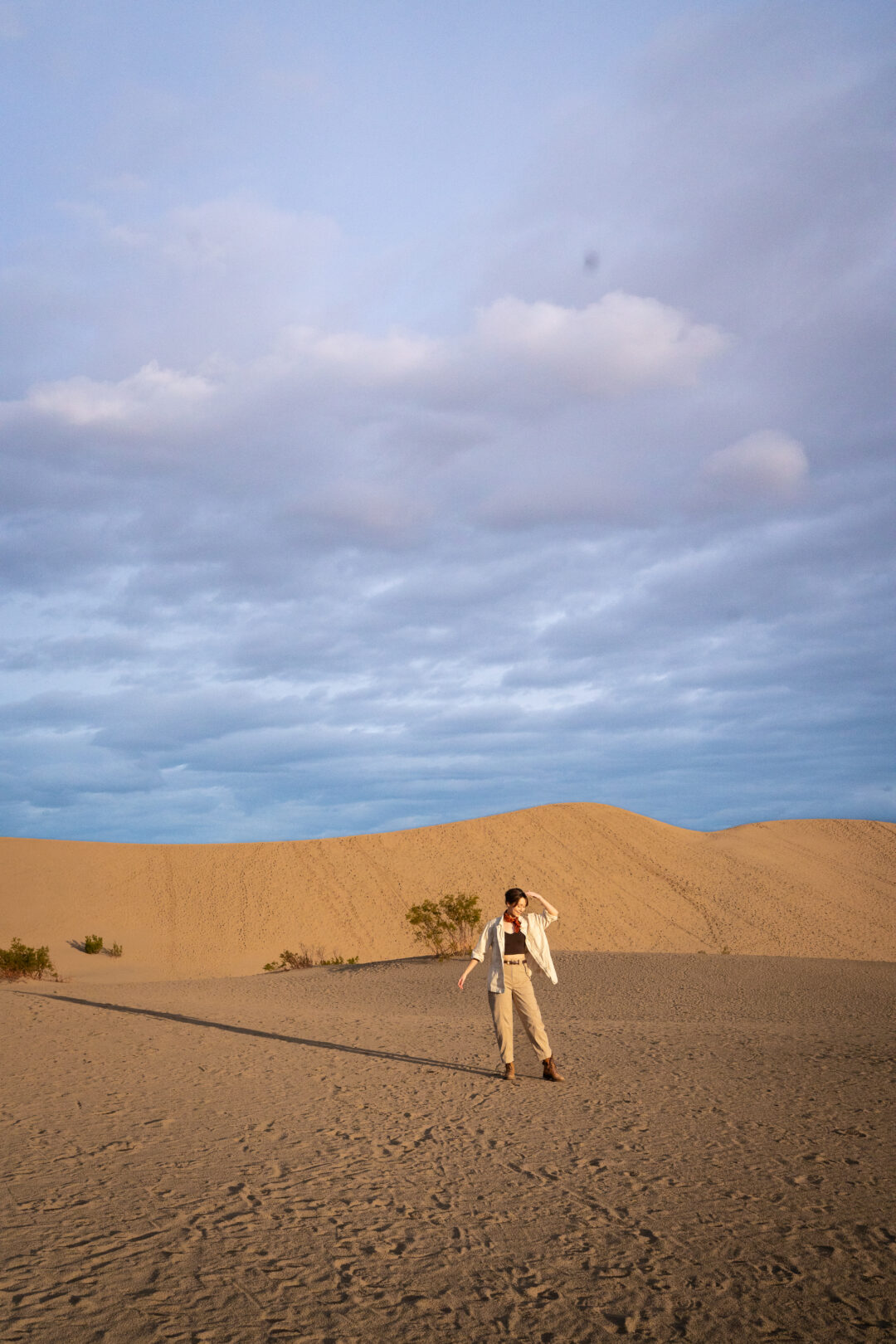
Film: Star Wars: Episode IV – A New Hope
Scene: Opening where C-3PO and R2-D2 trudge across the Tatooine desert, after separating from their escape pod while fleeing from Darth Vader.
The dunes are located right off Highway 190, just east of Stovepipe Wells, one of the park’s other “hubs” and close to the west side entrance. There’s no actual trail here so you can just park in the lot and start walking straight toward the dunes. I visited with my partner the morning after after a rare winter rain, which meant the sand was packed firm and much easier to hike than during dry spells. But on a normal day, expect a slow climb over loose sand (and if you really plan ahead, I recommend bringing some sleds along so you can ride them down the dunes)!
Plan for a stop lasting at least 60-90 minutes if you want to hike out to one of the taller dunes. Everything here is exposed and open to the elements, which means zero shade! Try to visit early in the morning or at sunset, both for the temperatures and for the light (at sunrise or dusk, the shadows across the dunes can feel even more cinematic!)
Secret Tip
Sand dunes shift with the wind over the years, so they obviously won’t look exactly like the 1977 shots, but if you have time, you can always try to match the tops of the mountains in the distance with those from the film to figure out roughly where the scene took place.
Artist’s Drive and Artist’s Palette
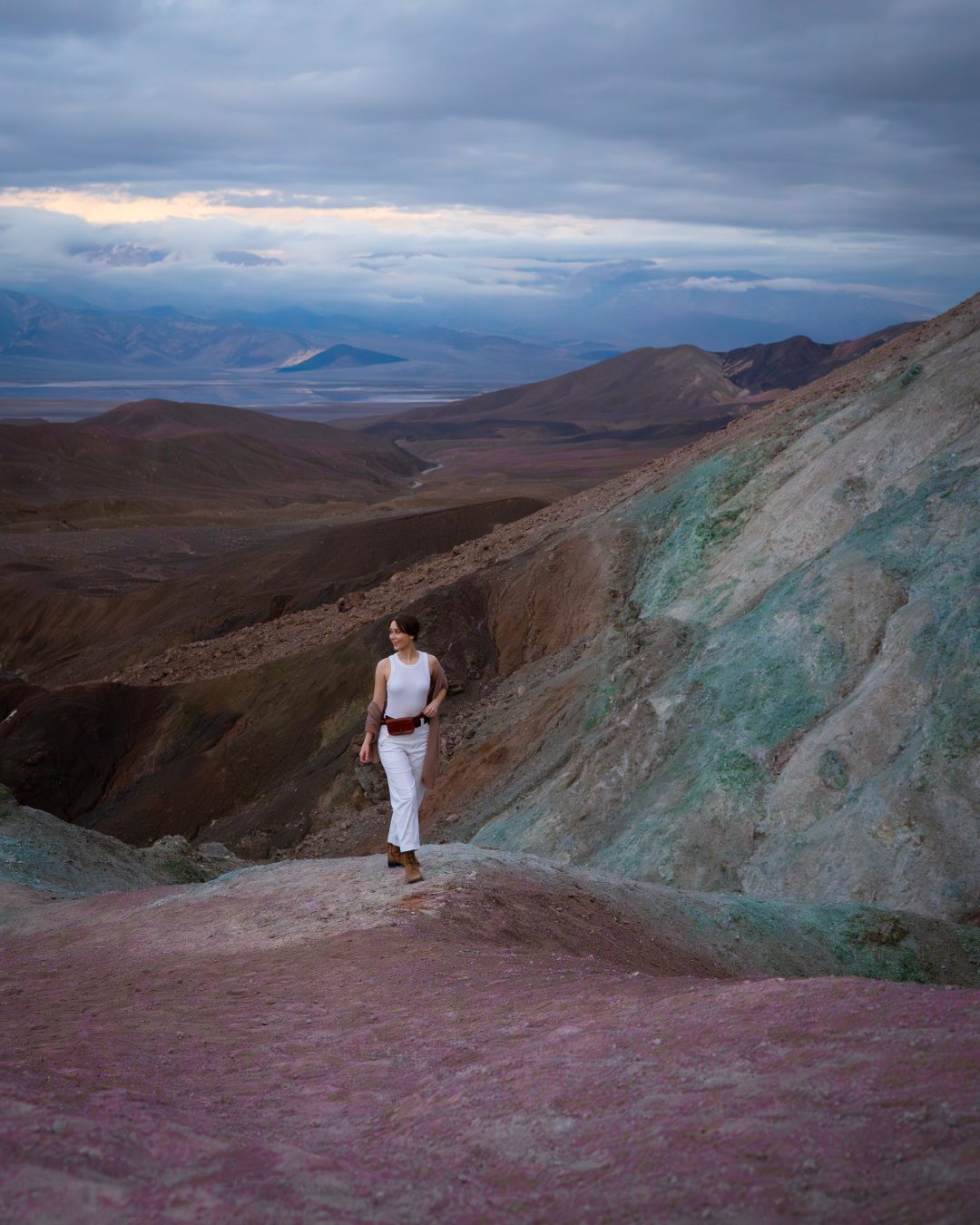
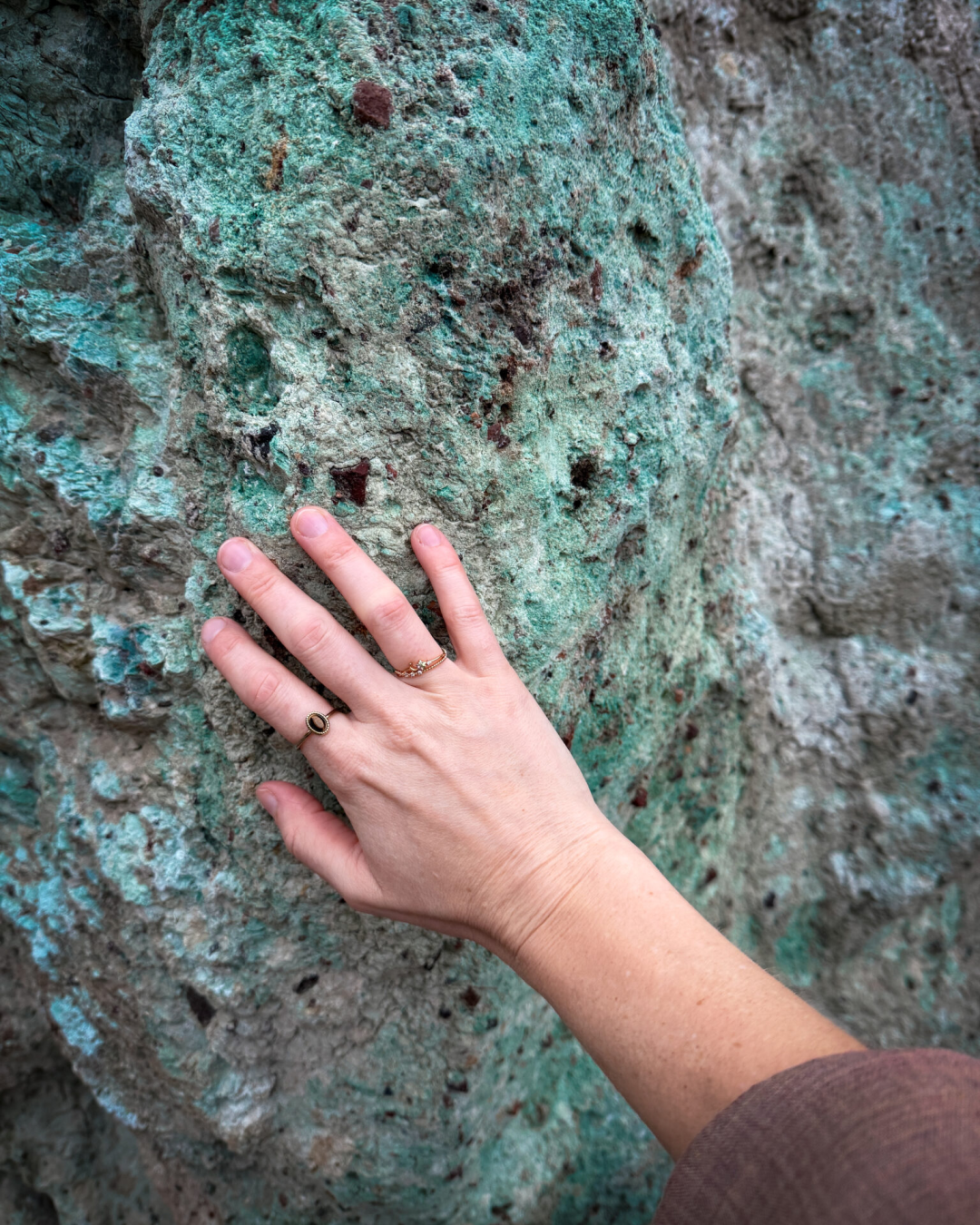
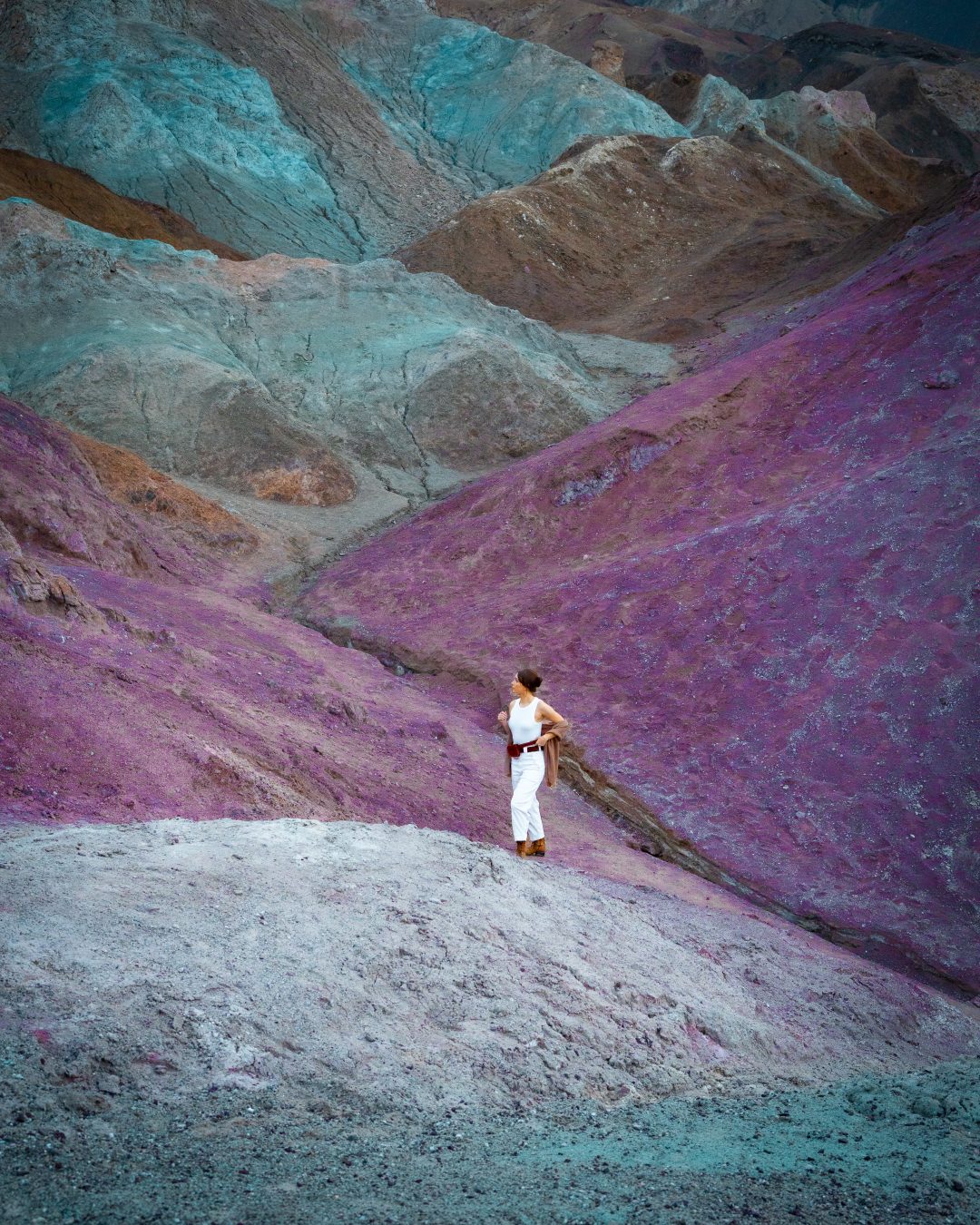
Film: Star Wars: Episode IV — A New Hope
Scenes: Two separate moments were filmed here: the Jawas’ Sandcrawler station and R2-D2’s solo trek through the desert canyon!
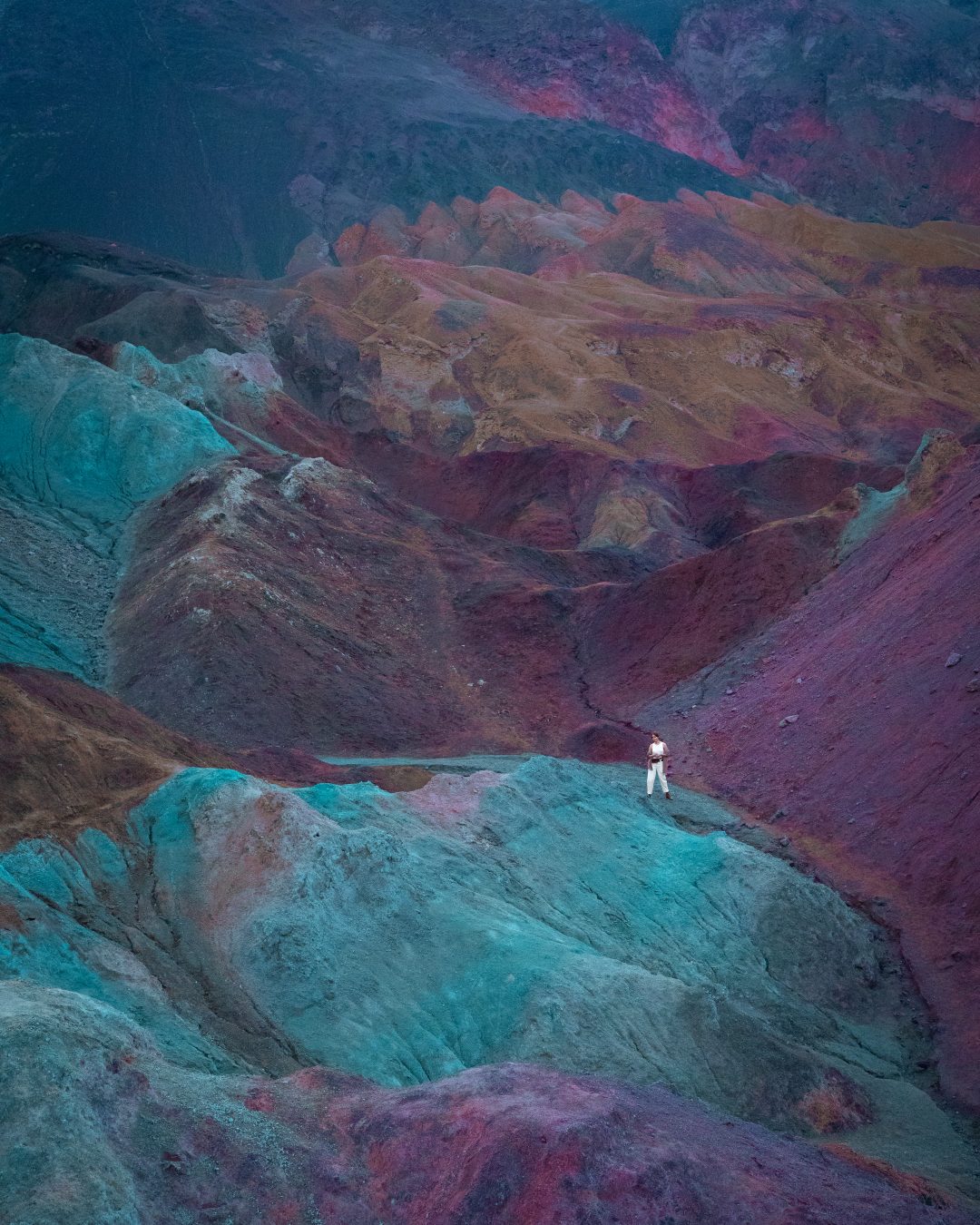
Artist’s Palette is one of the most beautiful spots in all of Death Valley regardless of your Star Wars knowledge, but knowing what was filmed here makes it that much better:
The Jawas’ Sandcrawler scene was filmed just south of the turn into the Artist’s Palette parking lot, along Artist’s Drive. To find it, drive the 9 mile one-way Artist’s Drive scenic route until you approach the right turn toward the Artist’s Palette parking area. The Sandcrawler location is just before that turn, on the south side. The site is largely unchanged from 1977, and local rangers have noted it’s a popular stop for fans.
The second moment that filmed here is the one where R2-D2 goes on a solo trek through the desert. This one was shot directly in front of the colorful mineral hills of Artist’s Palette itself.
My honest recommendation for visiting is to arrive 30 minutes before sunrise. Because of how the Palette sits within the mountains, the sun rises from the opposite direction and so the hills will stay in the cool shadows and blue-purple light for longer than you’d expect. The mineral colors (pinks, greens, golds, blues) are at their most vivid in that early light and in late afternoon. Midday blows them out completely, so timing really does matter here. Also, important to note that most people tend to visit this spot before sunset. This is also an option, but if you hate crowds like me, sunrise is the way to go!
Like the Mesquite Flat Sand Dunes, there’s no formal trail at Artist’s Palette. You’ll just take the stairs leading down from the parking lot into an open area of hills and small canyons that you’re then free to wander through.
Golden Canyon
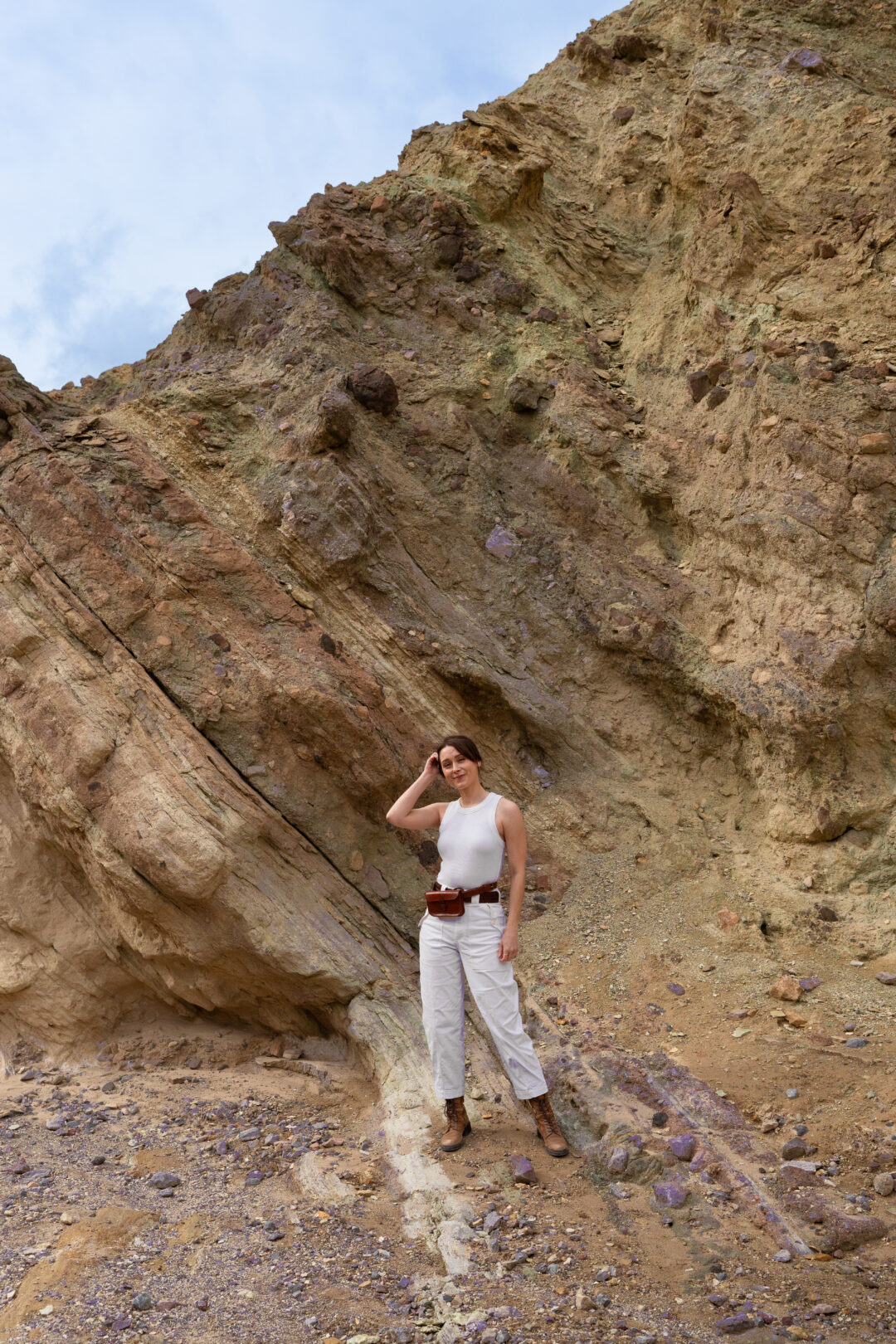
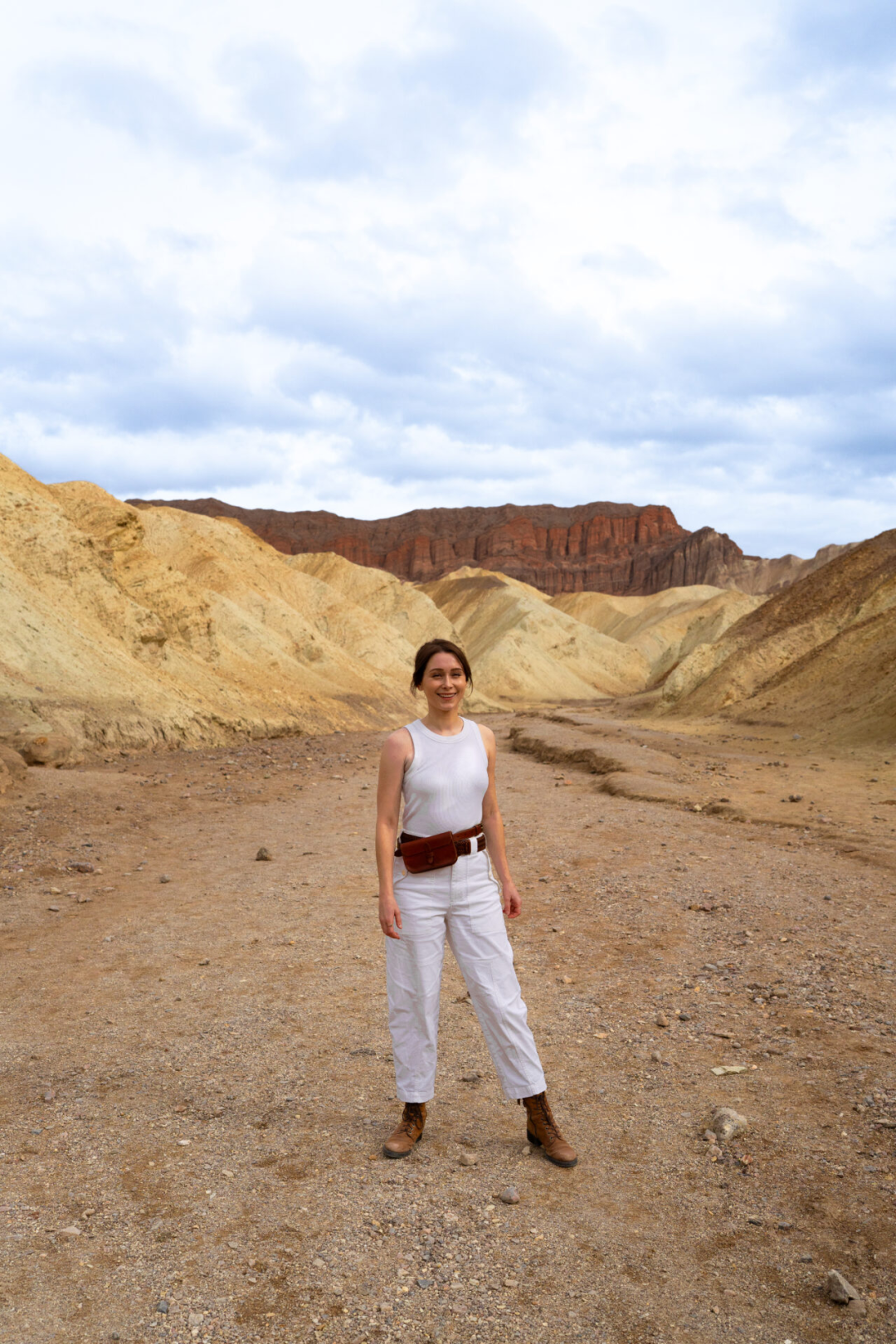
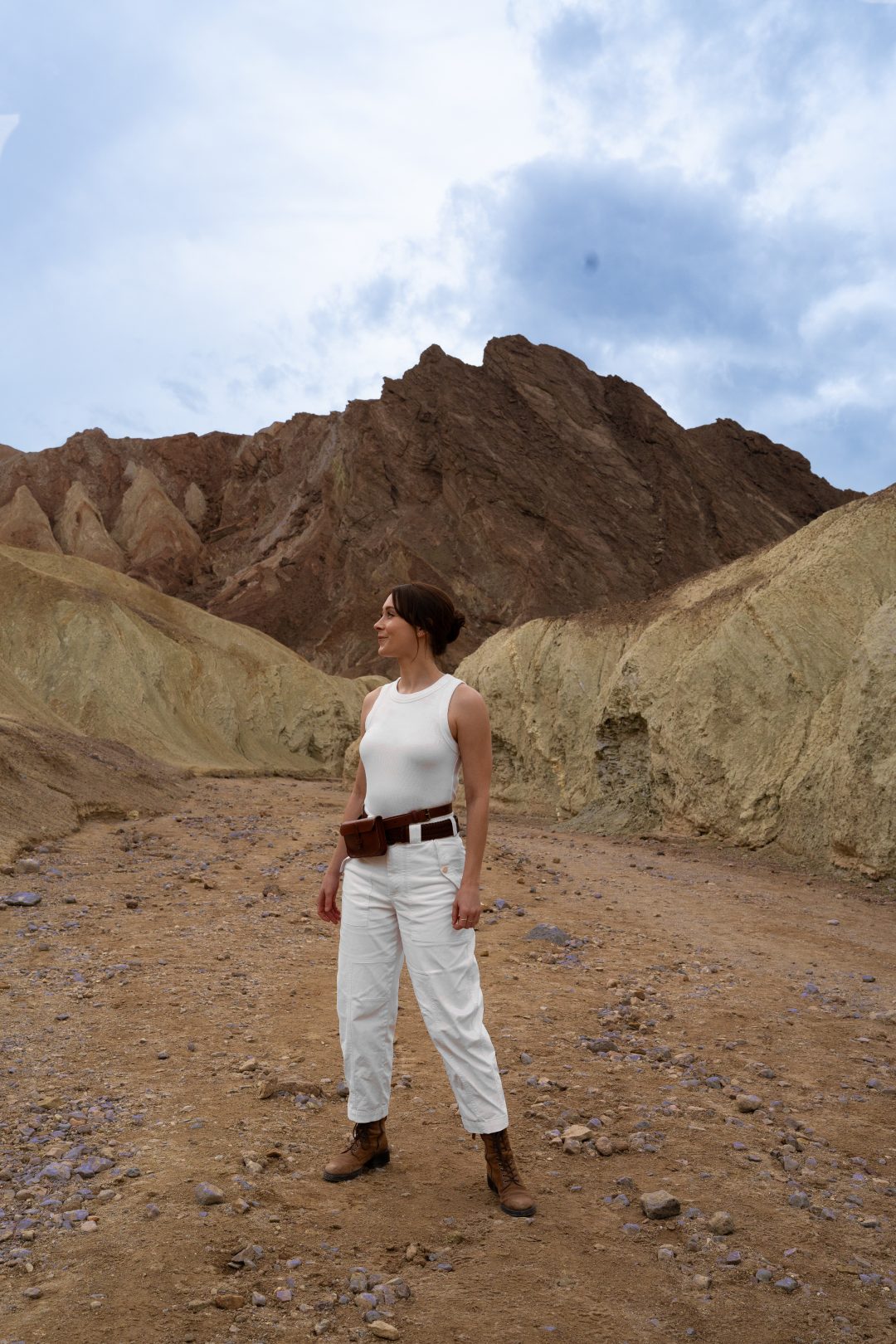
Film: Star Wars: Episode IV — A New Hope
Scene: The Jawas watch and capture R2-D2
Golden Canyon is one of the most popular hikes in Death Valley, and it’s more than earned that reputation (it’s gorgeous to see!). The canyon walls here glow in golden, red, and amber tones with the morning light, and there are enough turns and sub-canyons to keep you exploring for hours without reaching the end.
In A New Hope, this is where the Jawas spy on and eventually capture R2-D2. The canyon’s narrow passages and rocky walls create that close, alien feeling that comes through on screen. In fact, we even saw a guerilla film shoot for a music video happening during our hike! Undoubtedly trying to recreate that same feeling and experience.
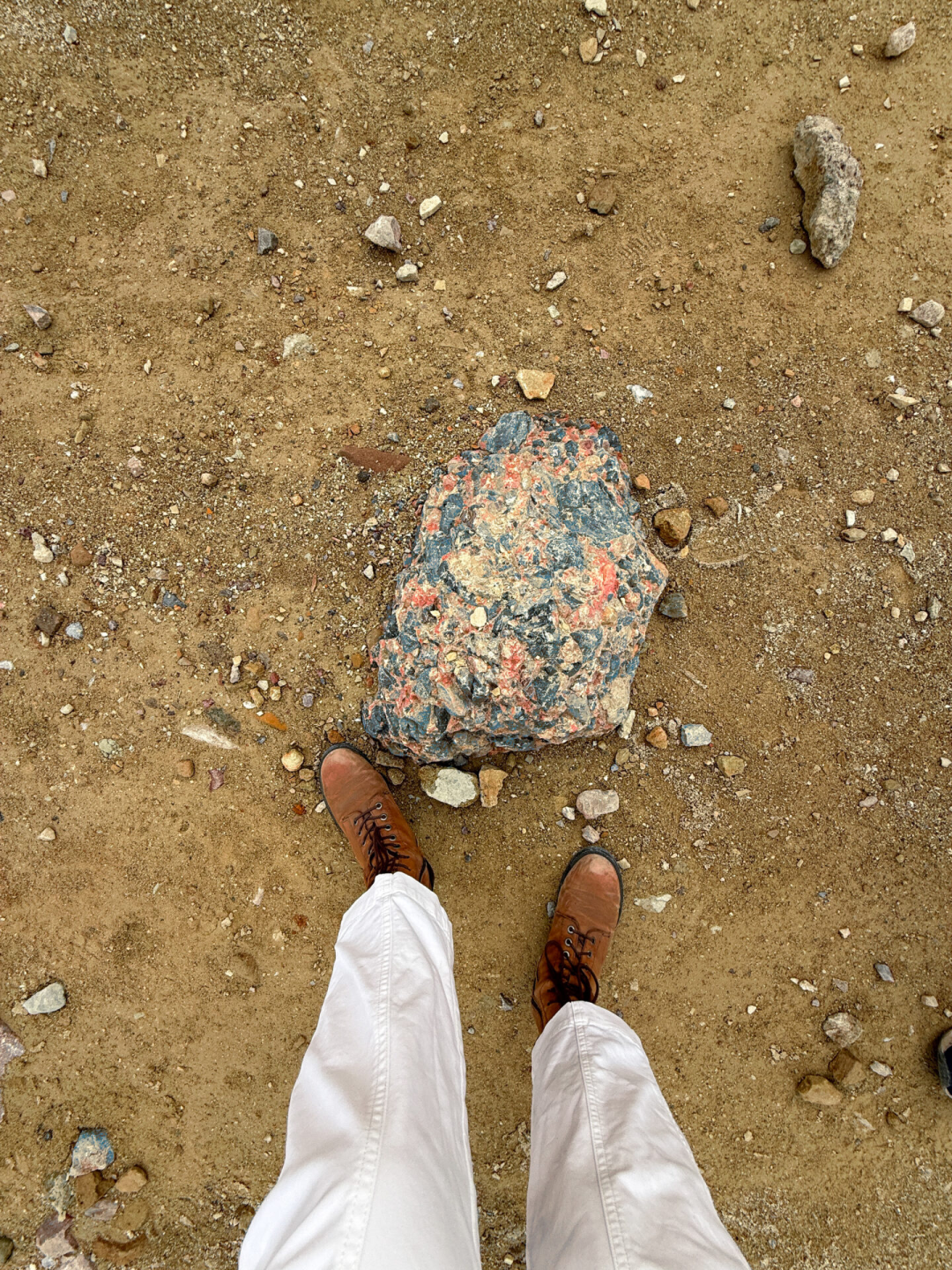
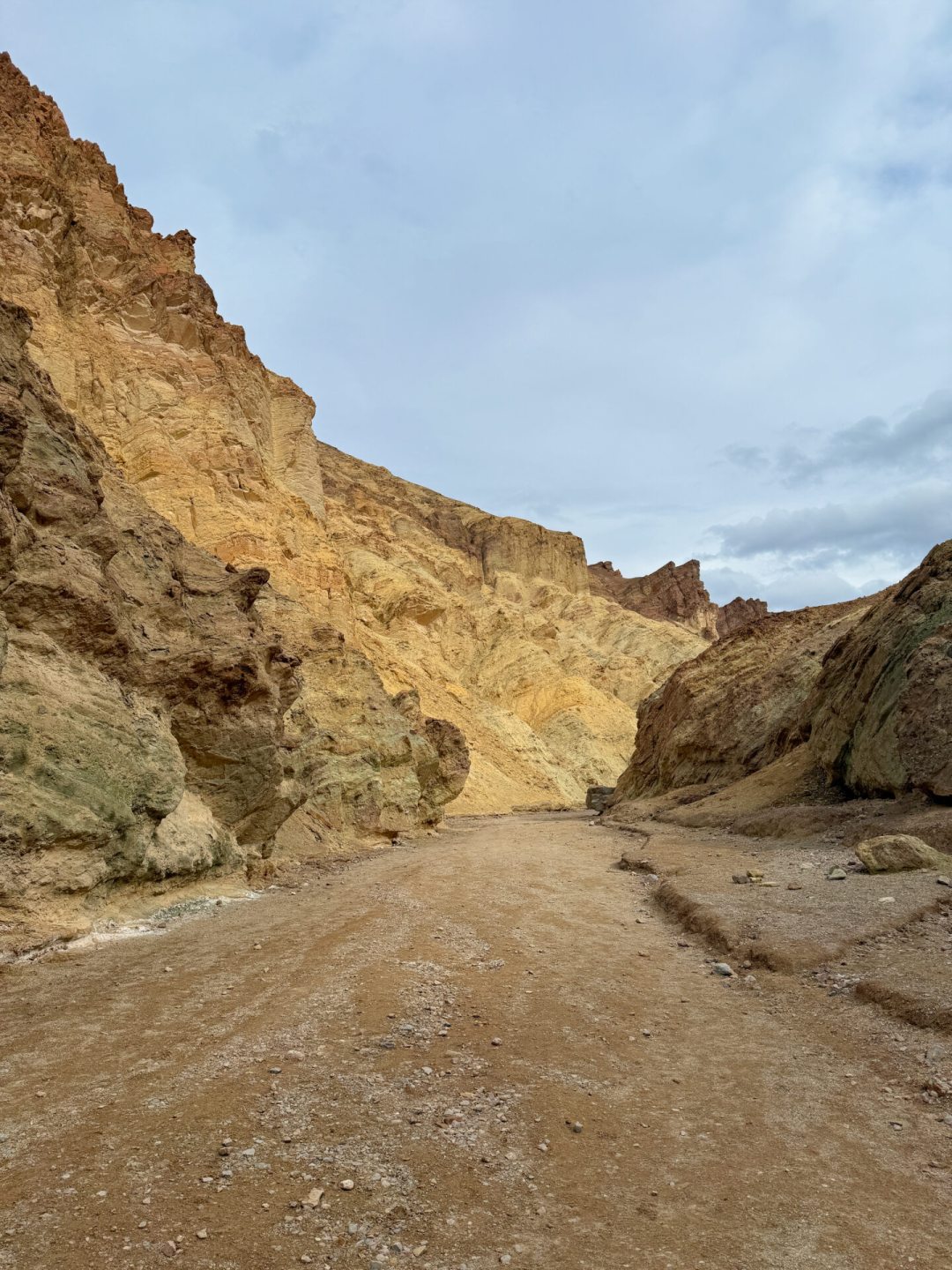
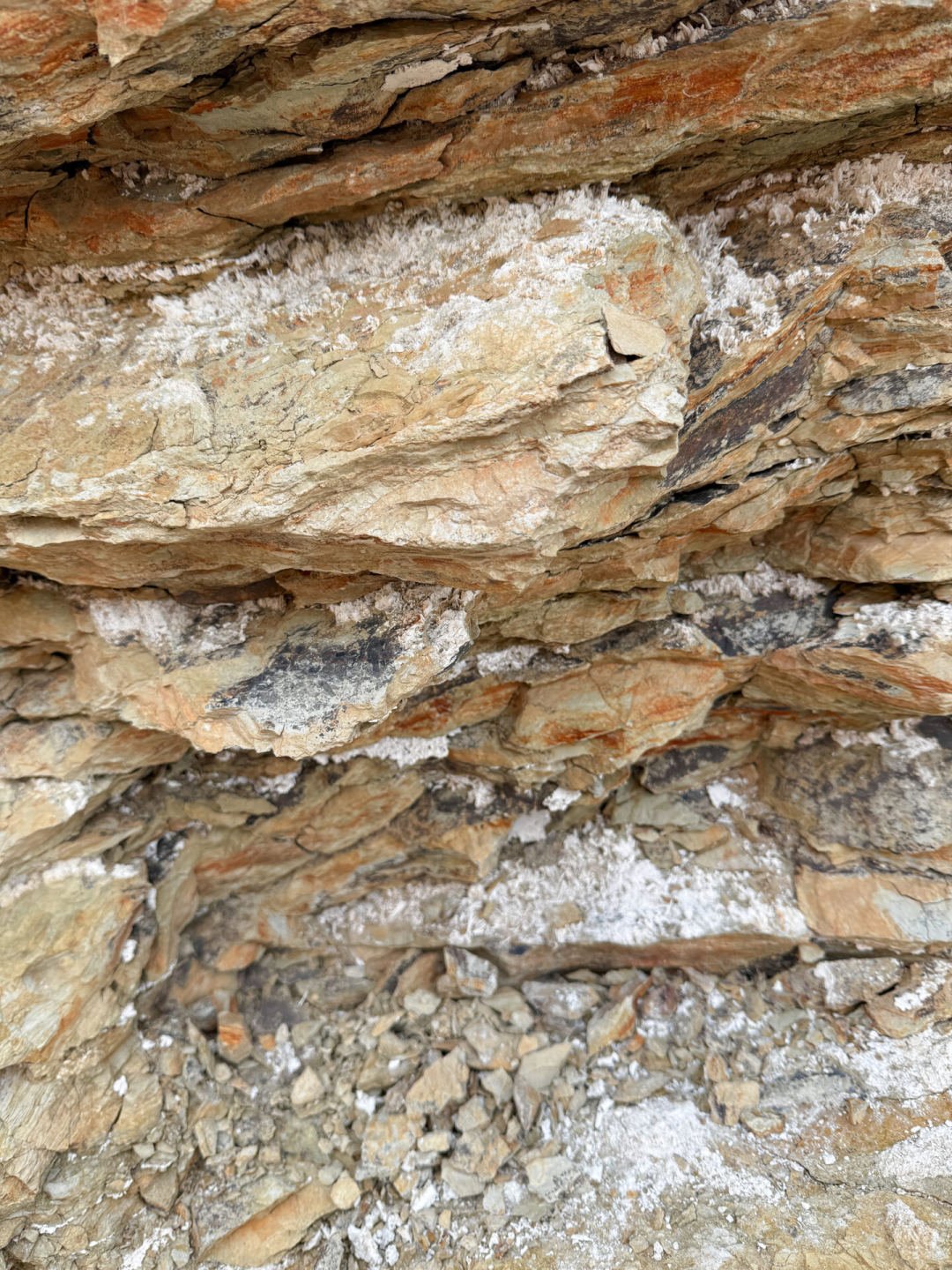
The main 2 mile roundtrip trail is moderate (in my opinion, this is only due to how much and often the loose gravel kicks up at your feet while you’re walking, but otherwise it’s an easy one!) and takes you to around at the Red Cathedral junction. That said, you also have the option to extend your hike another 0.5 miles up into the vertically fluted amphitheater or complete the full 7.8 mile Zabriskie Point/Gower Gulch Loop, if you wish. There are informational markers throughout the trail, and the National Parks app audio guide syncs to them perfectly (it’s easily one of the best guided trail experiences we’ve had at any park!).
Know Before You Go
Golden Canyon is in a flood zone. So if you’re going during a rare rainy week, keep a close eye on the weather forecast. We turned around before reaching the end when rain was approaching, and it started pouring less than an hour after we got back to the car. We saw some crazy flash flooding just outside of the canyon near the road and were so glad we didn’t get stuck anywhere from the weather!
Desolation Canyon
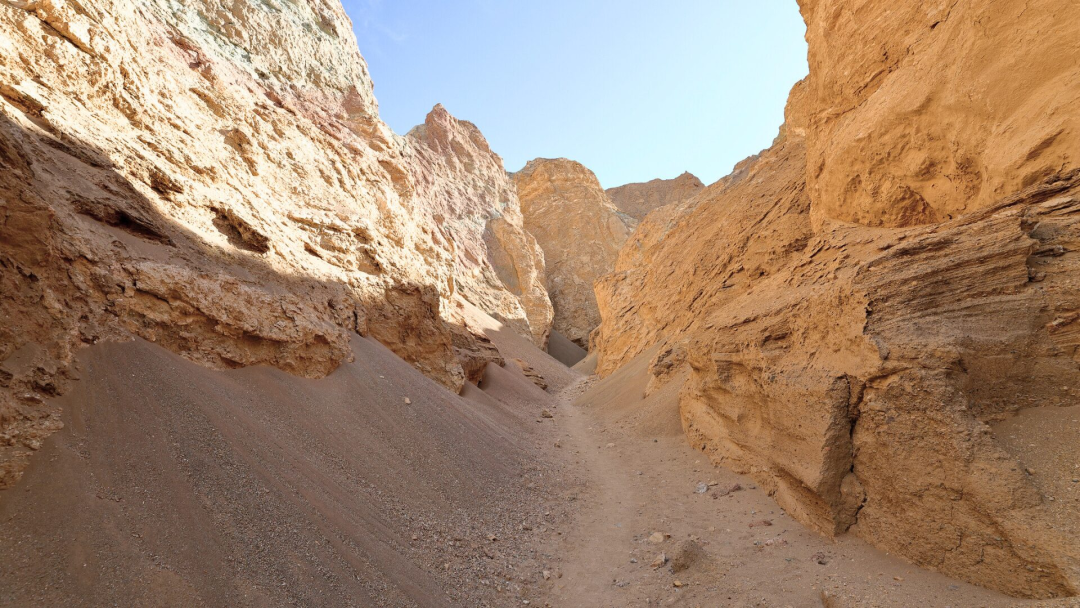
Film: Star Wars: Episode IV — A New Hope
Scene: Tusken Raider attack on Luke Skywalker
Desolation Canyon is located off Badwater Road and is a bit more off the beaten path compared to Golden Canyon and the Dunes. It’s a 3.6-mile out and back moderate trail. To reach the filming spot, you’ll want to walk east, staying north of the small hill instead of going directly over it. You’ll then drop into a wash that will take you toward Desolation Canyon, with “Bantha Canyon” (the filming location) located just before Desolation Canyon’s mouth.
A little known fact about the Tusken Raiders attack scene that was filmed here: the bantha they were riding was an actual Asian elephant named Mardji, that they dressed up for filming. So as you’re hiking through the canyon, you can try to picture a full elephant making its way through these rocks.
Secret Tip
Bring sturdy shoes. The terrain here is even MORE rocky and less trafficked than other trails in the park, which are already a bit more challenging than normal due to all the gravel)!
Dante’s View
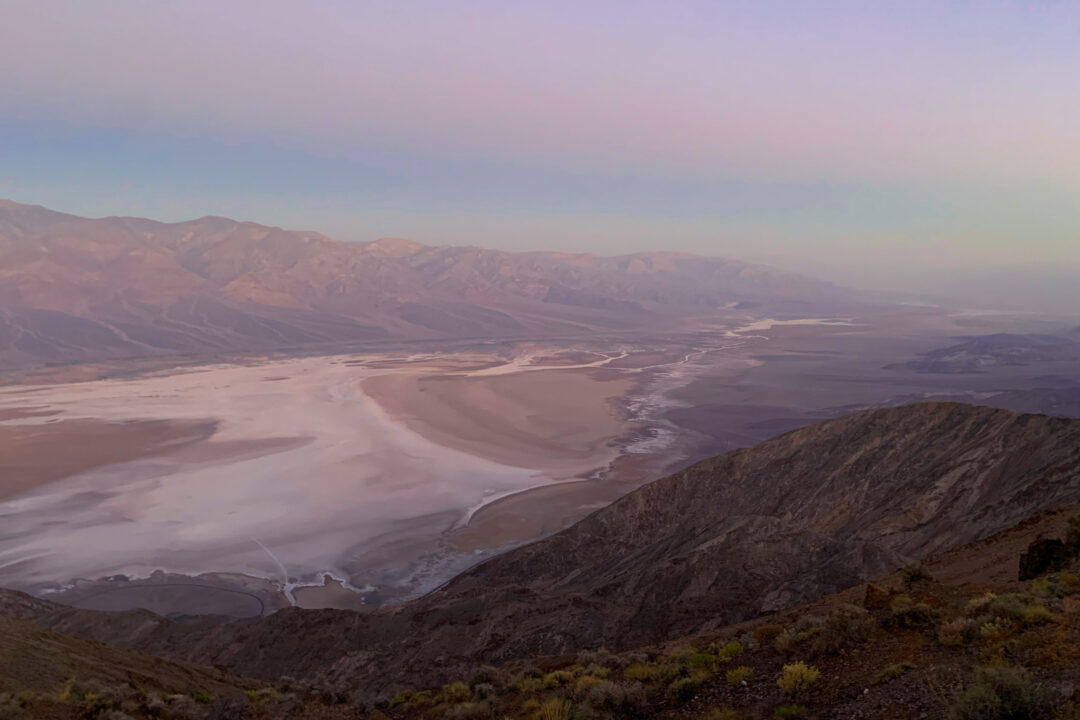
Film: Star Wars: Episode IV — A New Hope
Scene: Obi-Wan and Luke overlook Mos Eisley
Dante’s View is the panoramic overlook high above the valley floor where Obi-Wan Kenobi and Luke Skywalker survey Mos Eisley from above in A New Hope. It’s about a 40 minute drive from Furnace Creek, which makes it more of a dedicated excursion than a quick stop.
I heard the views are worth every minute of the drive, but when we drove up in the rain on our trip and the peak was completely inside the clouds. I saw absolutely nothing and turned around after 15 minutes trying to wait out the storm. So in other words, if the weather isn’t cooperating, save this one for a different (clearer) day!
And if the weather is cooperating? When you stand up there and look out over the basin, you’ll see the salt flats stretching out below, with 360 degree views of the mountains. The scale’s enormous!
There’s also a few short trails along the ridgeline, though some have steep drop-offs, so watch your footing. Sunrise and sunset are particularly spectacular here for both photography and the Star Wars experience.
Twenty Mule Team Canyon
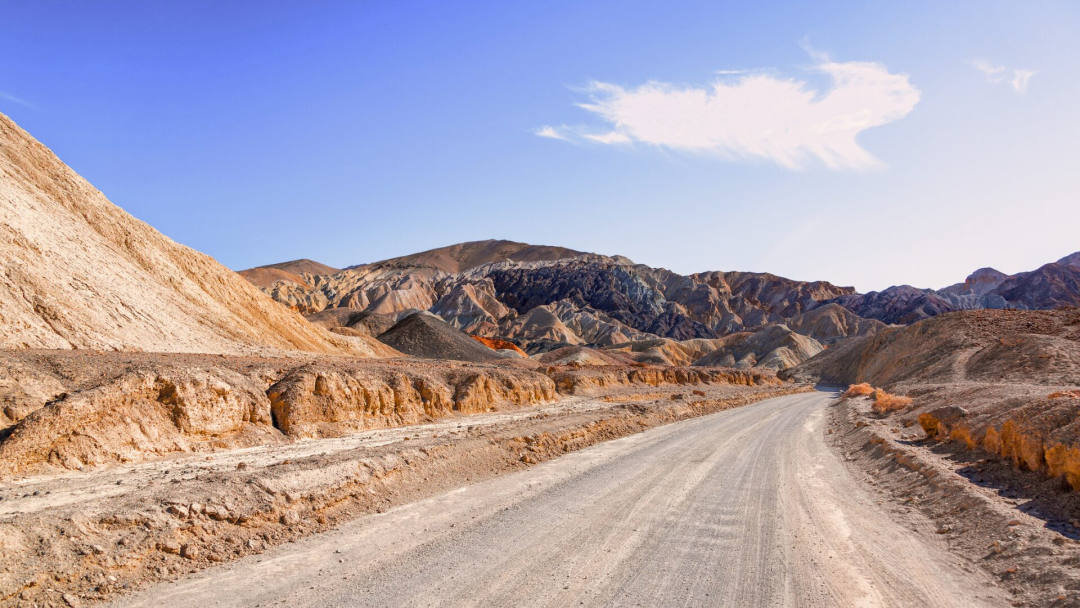
Film: Star Wars: Episode VI — Return of the Jedi
Scene: Luke rescues Han Solo at Jabba the Hutt’s Palace
This is the only location from Return of the Jedi on the filming locations list! Twenty Mule Team Canyon is where the exterior shots of Jabba’s Palace were filmed, specifically the approach where R2-D2 and C-3PO make their way to the palace as part of Luke’s plan to free Han Solo.
The canyon is accessible as a self-guided drive, bike ride, or walk along a dirt road. It’s one of the quieter spots in the park and has a different feel from the other locations. It’s a bit more enclosed and layered, with eroded badlands walls.
Secret Tip
This is a dirt road, so make sure to check conditions before heading in, especially after the rain to avoid getting stuck if driving over any muddy bits.
Practical tips for embarking on your own Star Wars tour in Death Valley
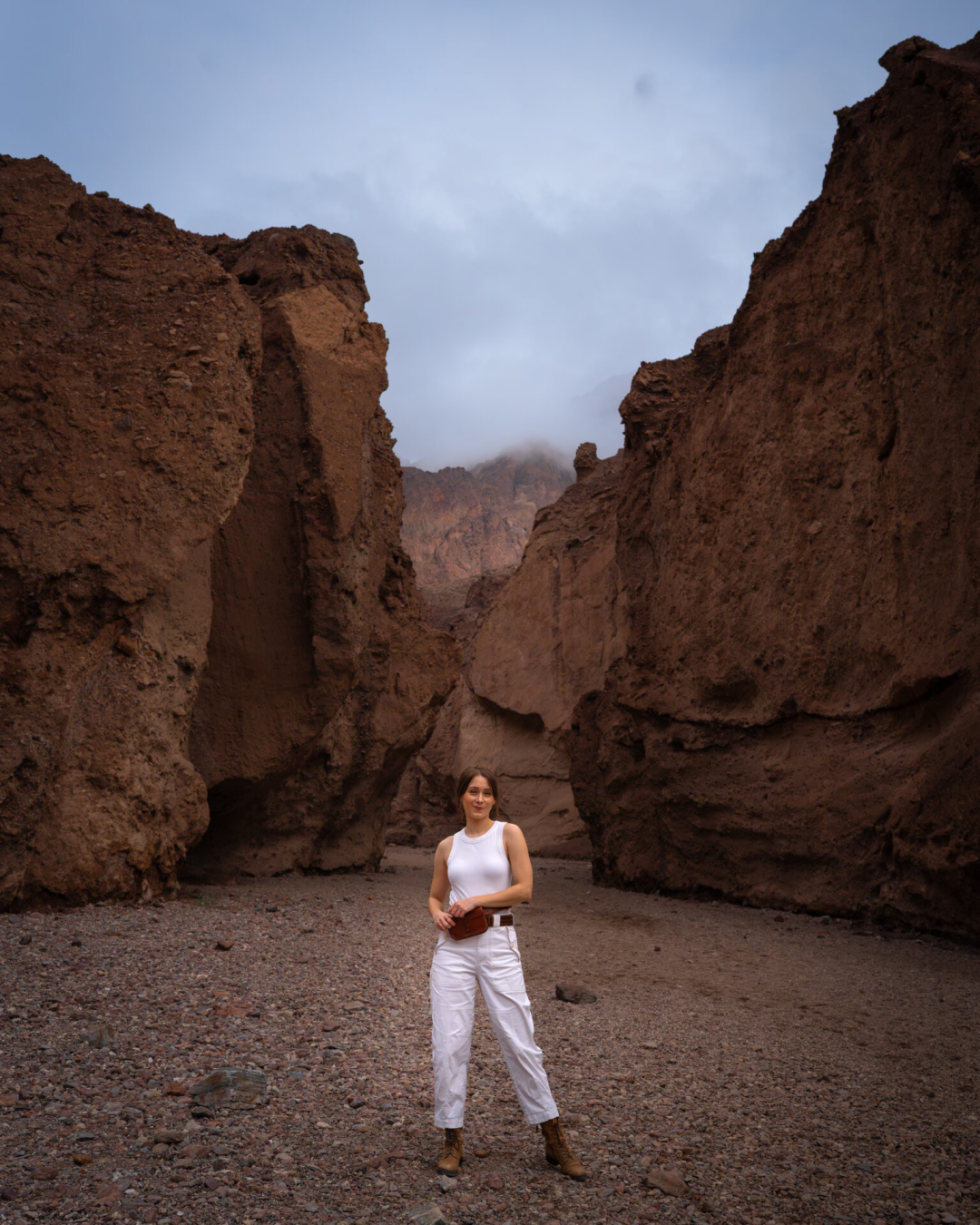
The Star Wars tie-in makes Death Valley genuinely special for fans, but even if you stripped that out entirely, these locations would still be worth visiting solely because of how beautiful and strange they are on their own. I know they’re certainly up there on my list of unique and otherworldly travel locations! So regardless of why you’re visiting, here’s a few practical tips for visiting Death Valley:
Download the NPS App before you lose service
The National Parks app has offline maps and audio guides for most of the major trails. It’s particularly good in Golden Canyon, where the numbered markers along the trail sync with specific audio segments. Download everything before you leave cell range.
Look up reference photos in advance
Many of the filming spots inside the park are unmarked. Having screenshots from the films already ready-to-go on your phone before you arrive makes a huge difference in identifying the exact spots. There are also some great photo comparisons online that are worth saving!
Wear layers (especially in winter!)
There’s virtually no shade anywhere in Death Valley. In winter, mornings at sunrise can be quite cold (I’m talking beanies and down jackets cold), but it warms up significantly throughout the day! The ability to layer up and down is essential. And yes, stay hydrated. Even on cool winter days, the lack of shade will easily sneak up on you.
Have a game plan for food
Food options inside the park are limited and can sell out. The Ranch at Death Valley has a coffee shop and the Ice Cream Parlour, but they are only open at specific times of the day, and dinner reservations for the nicer restaurants fill up fast! So pack more food than you think you’ll need. Ridgecrest is probably your last reliable stop if you’re coming from LA; Stovepipe Wells has a general store if you need a few basics once you’re in the park.
Check road conditions
Flooding can close roads without much warning! Devil’s Golf Course was completely inaccessible during our visit because the road was underwater. Always check the NPS Death Valley page for current road closures before heading to a specific location.
Secret Tip
This is a dirt road, so make sure to check conditions before heading in, especially after the rain to avoid getting stuck if driving over any muddy bits.